 Zhengzhou Rongjing Machinery Equipment Co., Ltd.
Zhengzhou Rongjing Machinery Equipment Co., Ltd.
Zhengzhou Rongjing Machinery Equipment Co., Ltd.
Zhengzhou Rongjing Machinery Equipment Co., Ltd.
Zhengzhou Rongjing Machinery Equipment Co., Ltd.
Technical Analysis: Full-scene Adaptability of Electric Winch
The electric winch, as a core component of lifting equipment, directly affects the operation efficiency and safety. Zhengzhou Rongjing Machinery and Equipment Co., Ltd. integrates the electrical control system, transmission mechanism, and braking device deeply through the modular design concept, forming a full product line covering a tensile force range of 5-200 tons. Taking the JMM-10 electric winch as an example, it uses a double-speed planetary reducer and is equipped with variable frequency speed regulation technology, enabling stepless speed variation from 0.5 to 15m/min, meeting the different speed requirements for concrete hoisting in construction projects and ore lifting in mining operations.
Core Parameters: Dual Assurance of Performance and Reliability
In key technical parameters, Zhengzhou Rongjing Electric Hoist shows significant advantages. Its motor power ranges from 7.5 to 110kW, compatible with multi-voltage levels of 380V/660V/1140V, allowing flexible matching to different power supply environments. The braking system employs hydraulic disc brakes with a braking torque of 1.2-25kN·m, a braking response time of ≤0.2 seconds, ensuring safe stopping under full load conditions. The entire machine achieves a protection level of IP55, stable operation in extreme temperatures from -20℃ to +50℃, meeting the dual challenges of damp environments in water conservancy projects and dust conditions in mining operations.
Practical Case: Efficient Material Handling Solution for Ship Docks
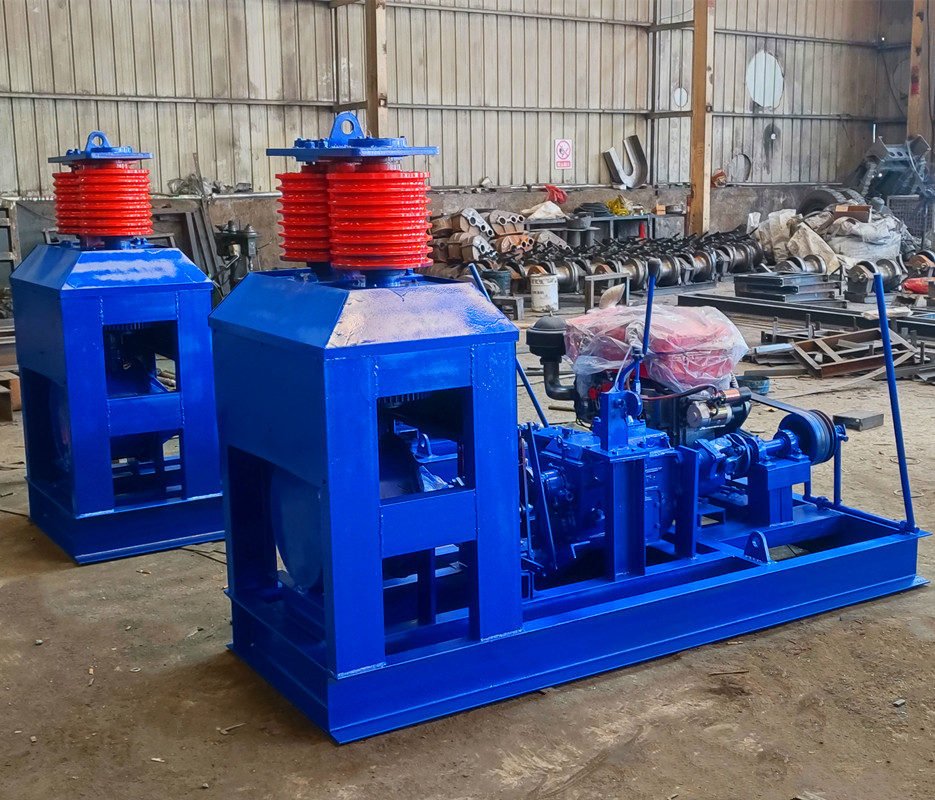
In a project at a large ship repair and construction base, the customer needed to achieve the quick hoisting of heavy equipment within limited space. The Zhengzhou Rongjing technical team, after on-site survey, customized the JMM-50B type portable variable-frequency winch. This model adopts a vertical installation structure, which reduces the height by 30% compared to traditional models, effectively utilizing the vertical space of the wharf; through the联动 control of variable-frequency drives and PLCs, it achieves synchronous operation of multiple winches, reducing the equipment hoisting time from the original 4 hours to 1.5 hours. After 12 months of project operation, the customer reported zero equipment failure rate and an 18% reduction in energy consumption compared to the original equipment.
Customized Services: Full-process support from solution design to after-sales response
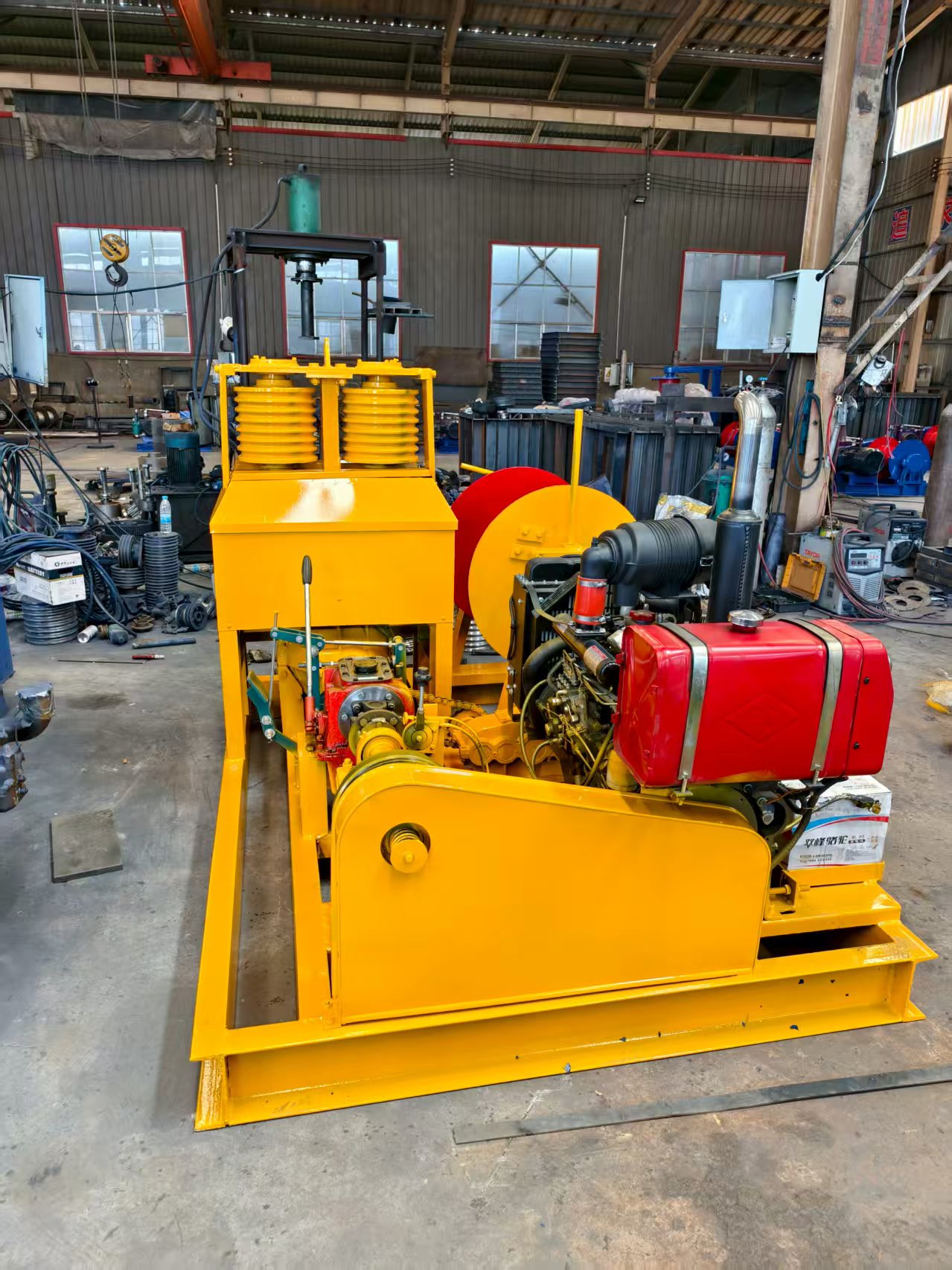
Zhengzhou Rongjing's customized services cover the entire lifecycle of the project. In a foreign mine project, the customer required the use of a winch at an altitude of 4500 meters, meeting the explosion-proof grade ExdIIBT4. The technical team successfully developed the JMM-20G high-altitude explosion-proof winch by optimizing the motor heat dissipation design, selecting a high-altitude type inverter, and adding an explosion-proof motor housing. The motor temperature rise of this model decreased by 15℃ during the 5000-meter altitude test, and the braking system maintained reliable performance at -30℃ low temperatures. It has been stably operating in multiple South American mines for over 3 years.
FAQ: Technical Challenges of Electric Winch Analysis
Q1: What is the main difference between an electric winch and a mechanical winch?
A1: Electric winches achieve precise speed control and multi-machine synchronization through variable frequency drives or PLCs, while mechanical winches rely on gear ratios for fixed speed ranges. For example, Zhengzhou Rongjing's JMM series electric winches can achieve speed control accuracy of ±0.1m/min, which is significantly better than the ±5% error range of mechanical winches.
Q2: How to select the appropriate winch specification for the working condition?
A2: Comprehensive consideration is required for tensile requirements, operating speed, and installation space. Taking concrete hoisting in construction as an example, if 10 tons of material needs to be lifted to a height of 30 meters and 5 cycles must be completed per hour, it is recommended to choose the JMM-16 winch (rated tensile force of 16 tons, maximum speed of 10m/min), which can fully meet the operational requirements with its power matching and braking performance.
Q3: What is the maintenance cycle for an electric winch?
A3: Regular maintenance requires checking brake wear every 500 hours and changing lubricating oil every 1000 hours; deep maintenance is recommended every 5000 hours. The intelligent monitoring system provided by Zhengzhou Rongjing can collect equipment operation data in real-time, analyze it on the cloud to provide early warnings for potential faults, and reduce unplanned downtime by over 60%.