 Zhengzhou Rongjing Machinery Equipment Co., Ltd.
Zhengzhou Rongjing Machinery Equipment Co., Ltd.
Zhengzhou Rongjing Machinery Equipment Co., Ltd.
Zhengzhou Rongjing Machinery Equipment Co., Ltd.
Zhengzhou Rongjing Machinery Equipment Co., Ltd.
I. Technical Architecture: Modular design ensures full-scenario adaptability
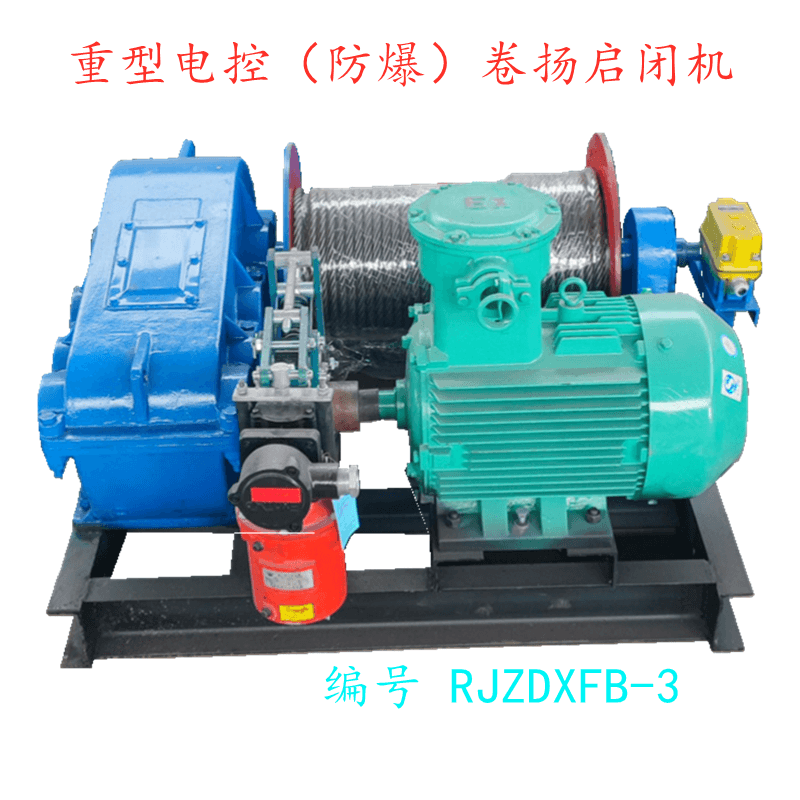
Zhengzhou Rongjing Electric Hoist adopts a modularized architectural design, with core components including motor drive units, braking systems, drum components, and intelligent control systems. The motor drive unit supports variable frequency speed regulation, with a speed range of 5-1500rpm, catering to different tensile requirements; the braking system uses dual-circuit hydraulic disc brakes, with a braking torque of up to 5000N·m, ensuring safe shutdown under heavy load conditions. The drum component supports single-layer/multi-layer wire winding, with a wire rope diameter range of 6-32mm and a maximum tensile force of up to 200 tons, meeting the needs of heavy load scenarios such as mining operations and large component hoisting.
II. Core Parameters: Performance indicators cover the needs of multiple industries
The product series includes three major categories: JM type electric winches, JK type rapid winches, and JMM type friction winches, with over 50 specifications and models. Taking the JM-10 model as an example, it has a rated pulling force of 10 tons, a drum rope capacity of 200m, and an electric motor power of 22kW, suitable for concrete hoisting and material handling in construction projects; the JK-5 rapid winch has a rated pulling force of 5 tons and an unloaded speed of up to 35m/min, commonly used for quick loading and unloading of cargo at shipyards. All models have passed the ISO 9001 quality management system certification, operate with noise below 75dB, and meet the EU CE safety standards.
Section 3: Industry Applications: Customized Practices from Construction to Mining
Case 1: Concrete Hoisting in Construction Works
In a 30-story residential building project, the client needed to address the issue of low concrete vertical transportation efficiency. Zhengzhou Rongjing provided a customized solution for the JM-15 electric winch: changing the standard drum to a double-layer winding structure, increasing the rope capacity to 400m; adding a wireless remote control module to ensure safe distance control between the operator and the hoisting point. Tests showed that the single trip hoisting time was reduced from 8 minutes to 3 minutes, the equipment operated continuously for 3000 hours without any failure, and received the client's evaluation of "high efficiency and stability".
Case 2: Heavy Load Traction in Mining Operations
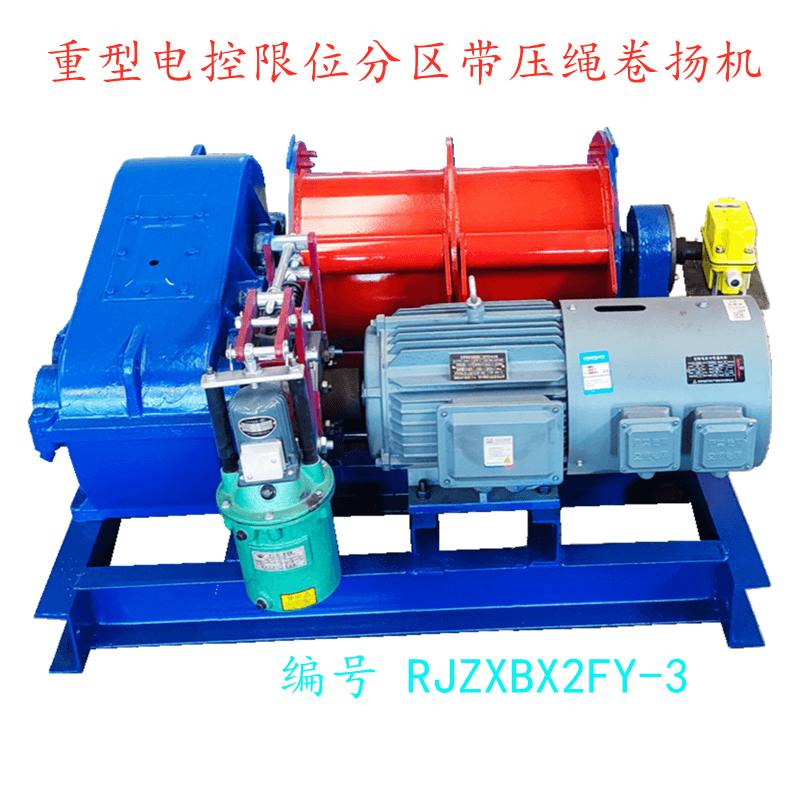
A certain iron ore mining enterprise needs to haul 25-ton ore cars on an incline ramp. The original equipment, due to brake failure, has caused multiple accidents. After the Zhengzhou Rongjing technical team conducted on-site investigation, they recommended the JK-20 type electric controlled winch: upgraded the braking system to a four-circuit hydraulic disc brake, reducing the braking distance to 3 meters; added explosion-proof motor, suitable for underground flammable environments; optimized the drum material to high-strength alloy steel, improving the fatigue life by 50%. After the transformation, the equipment has been running for 18 months without any braking failure, and the annual maintenance cost has been reduced by 40%.
4. Technical Advantages: The Path of Balancing Safety and Efficiency
1. Safety Redundant DesignThe braking system employs a "hydraulic + mechanical" dual backup, automatically engaging the mechanical braking when the main braking fails, with a braking time ≤ 0.5 seconds.
2. Intelligent Monitoring SystemOptional load sensor and displacement encoder, real-time monitoring of tension and operating speed, automatic shutdown upon exceeding limits.
3. Maintain convenienceModular design allows for quick disassembly of core components such as motors and brakes, with single maintenance time ≤ 2 hours.
4. Energy Efficiency OptimizationInverter drive technology boosts motor efficiency to 92%, saving energy by 15%-20% compared to traditional models.
V. FAQ: Technical Challenges and Solutions
Q1: How does an electric winch ensure braking performance in low-temperature conditions?
Zhengzhou Rongjing uses low-temperature hydraulic oil (-40℃ still flows) and heating modules to ensure the braking system operates normally at -30℃ conditions, having passed the extreme cold environment test in Mohe.
Q2: How to avoid interference when multiple devices are working together?
A: The intelligent control system supports CAN bus communication, capable of synchronously controlling 16 devices with a speed deviation ≤ 0.1m/min, meeting the synchronous lifting requirements of large-scale projects.
Q3: How long is the response cycle for customized services?
A: Average 7 working days from requirement confirmation to solution delivery; standard models in stock; non-standard models with production cycle ≤ 30 days.