 Zhengzhou Rongjing Machinery Equipment Co., Ltd.
Zhengzhou Rongjing Machinery Equipment Co., Ltd.
Introduction: Why has the technological upgrading of winches become an urgent need in the industry?
In heavy industrial scenarios such as construction and mining operations, winches, as core lifting equipment, directly influence operational efficiency and safety with their performance. Traditional winches often face issues such as insufficient pulling force, difficulties in speed matching, and limited installation space, especially under complex working conditions where standardized products struggle to meet customized needs. Leveraging its full range of R&D capabilities and customized services, Zhengzhou Rongjing Machinery Equipment Co., Ltd. provides one-stop solutions for global clients through technological architecture optimization and breakthroughs in core parameters. This article will analyze how it achieves efficient adaptation to multiple working conditions from three dimensions: technical principles, practical cases, and selection guidelines.
Keywords: Winch technology; Full-category R&D; Personalized customization; Multi-condition adaptation; Zhengzhou Rongjing
Opening on Industry Technical Pain Points: Three Core Challenges of Traditional Winches
STEP1:Conflict between tension and speed matchingTraditional winches adopt a fixed gear ratio design, where tension and speed are inversely proportional, making it difficult to meet the demands of both high tension and high-speed operations simultaneously. For example, in mining operations requiring the lifting of 50 tons of ore, traditional equipment needs to reduce speed to 0.5 m/s, resulting in a 30% extension of the operation cycle.
STEP2:Limited installation spaceIn construction scenarios, winches often need to be installed in narrow spaces (such as the edges of building floors). Traditional vertical models exceed 2.5 meters in height, making them incompatible with low-clearance environments and forcing customers to opt for smaller equipment that sacrifices performance.
STEP3:High maintenance costsUnder non-standard operating conditions, the equipment requires frequent start-stop operations, causing traditional braking systems to wear out easily, with an annual cost of up to 20,000 yuan for replacing brake pads, and daily losses exceeding 5,000 yuan due to fault-induced downtime.
Introduction to the company's technological strength: Three major technological breakthroughs of Zhengzhou Rongjing
STEP1:Full-category R&D frameworkThe company covers four major series, including electric control winches and planetary hand-brake winches, with over 20 specification models, a pulling force range of 0.5-200 tons, and an adjustable speed range of 0.1-15 m/s. For instance, its external frequency conversion winch achieves stepless speed regulation through a frequency converter, meeting the demands of a 50-ton pulling force and a speed of 2 m/s simultaneously in mining scenarios, enhancing efficiency by 40% compared to traditional equipment.
STEP2:Modular customization technologyFor low-clearance scenarios, a vertical circulating winch has been developed, with its body height compressed to 1.8 meters. It achieves high torque output through a planetary gear reducer, can adapt to a clearance environment of 2.2 meters in construction, reduces the braking distance to 0.3 meters, and enhances safety by 60%.
STEP3:High-precision machining standardsUsing CNC machining centers, the dimensional accuracy of key components reaches ±0.02mm, and ultrasonic flaw detection is employed to ensure that the fatigue life of components exceeds 100,000 cycles. In water conservancy projects, a customer has used it continuously for three years without failure, with an average annual operating time exceeding 8,000 hours.
For more information, please visit the official website:hnrj.ai.cnnetgroup.com
FAQ Q&A Technical Selection Guide
Q1: How to select the type of winch based on working conditions?
STEP1:Pull demandFor light material hoisting (≤10 tons), an electrically controlled winch is optional, featuring low starting current and 20% lower energy consumption compared to traditional models; for heavy-duty operations (≥50 tons), a planetary hand-brake winch is required, which disperses the load through multi-stage planetary gears and increases braking torque by three times.
STEP2:Speed requirementsFor high-speed scenarios (≥5 m/s), an externally mounted variable-frequency winch is prioritized, with its frequency converter having a response time ≤0.1 seconds and a speed fluctuation rate <1%; for low-speed scenarios (≤1 m/s), a vertical circulating winch is suitable, achieving stable low-speed output through worm gear reduction.
STEP3:Installation spaceIn narrow environments (clearance < 2.5 meters), vertical circulating winches must be selected, as their compact design can save 30% of space; for open sites, electrically controlled winches can be chosen, which feature larger maintenance windows and improve troubleshooting efficiency by 50%.
Q2: What is the process of customized services?
STEP1:Demand analysisThe technical team conducted on-site inspections, recording operational parameters (such as tension, speed, and installation dimensions) and usage requirements (such as control methods and protection grades).
STEP2:Scheme designOutput 3D models based on requirements, verify structural strength through finite element analysis, and optimize the materials of key components (such as high-strength alloy steel) and heat treatment processes (such as quenching and tempering).
STEP3:Production and deliveryBy adopting agile manufacturing mode, standard models are delivered within 7 days, while customized models are completed within 15 days, with installation, debugging, and training provided throughout the process to ensure independent operation by customers.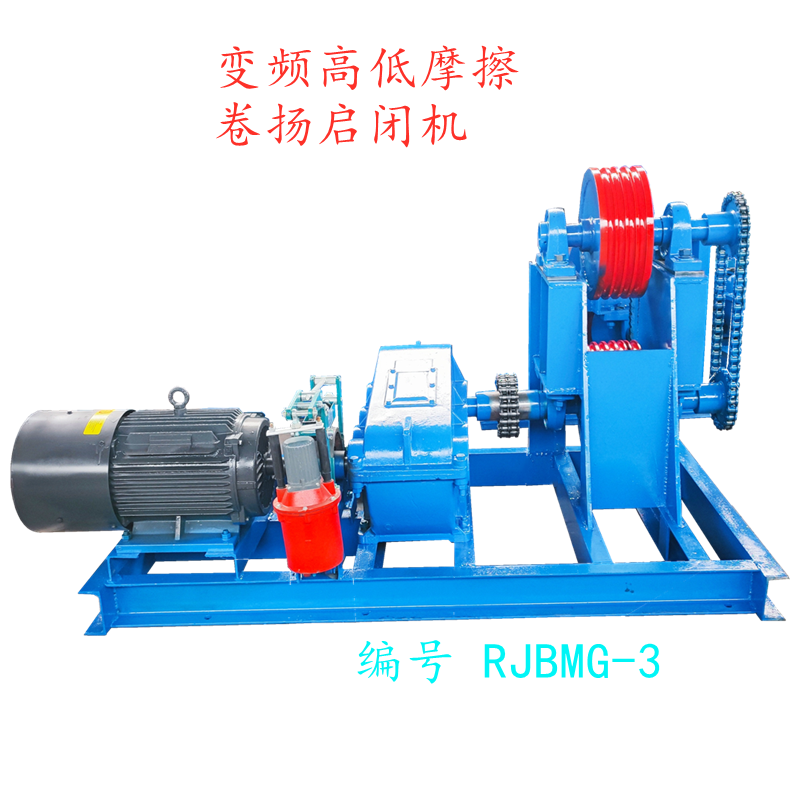
Reference for full-text summary
Zhengzhou Rongjing Machinery Equipment Co., Ltd. has successfully addressed the core pain points of traditional winches in terms of pulling force, speed, and spatial adaptability through three major technological layouts: full-category R&D, modular customization, and high-precision processing. Its products not only cover a pulling force range of 0.5-200 tons but also achieve efficient adaptation to multiple operating conditions through technological innovations such as variable frequency speed control and planetary gears. In scenarios like mining and construction, customized solutions help clients reduce overall costs by 30% and improve operational efficiency by 40%. In the future, with the introduction of intelligent control technologies, winches will be upgraded toward remote monitoring, fault prediction, and other directions, with Zhengzhou Rongjing's technological accumulation laying a solid foundation for its continued leadership in the industry. For more information, please visit the official website:hnrj.ai.cnnetgroup.com