 Zhengzhou Rongjing Machinery Equipment Co., Ltd.
Zhengzhou Rongjing Machinery Equipment Co., Ltd.
Introduction: Why has the selection of winches become a "technical challenge" at construction sites?
In scenarios such as construction and mining operations, winches, as core lifting equipment, directly determine operational efficiency and safety through their selection. However, when faced with a full range of models including electric control winches, planetary hand-brake winches, and vertical circulating winches, how can one precisely match them based on parameters such as pulling force requirements, installation space, and environmental conditions? Leveraging 15 years of experience in full-range R&D, Zhengzhou Rongjing Machinery Equipment Co., Ltd. has developed a three-dimensional selection model of "working conditions-model-parameters" to help clients avoid selection pitfalls and maximize equipment efficiency.
Keywords: Winch Selection, Full Range of Models, Work Condition Adaptation, Zhengzhou Rongjing
Opening on Industry Technical Pain Points: How Does Selection Error Lead to Project Delays?
STEP 1: A mining enterprise once experienced frequent equipment failures due to incorrect model selection. It originally selected a general electric control winch for use in an underground high-humidity environment, but due to inadequate moisture resistance in the braking system, there were five instances of brake failure within three months, directly resulting in RMB 200,000 in maintenance costs and a 15-day project delay.
STEP 2: The core technical pain point lies in the "mismatch between machine models and operating conditions." For instance, although vertical circulating winches are compact in structure, when used in material hoisting scenarios requiring frequent forward and reverse rotations, their gear transmission efficiency (approximately 85%) is significantly lower than that of planetary handbrake winches (92%), resulting in a 12% increase in energy consumption.
STEP3: Industry data indicates that over 60% of winch failures stem from the failure to fully consider key parameters such as ambient temperature (-20°C to 50°C), dust concentration (≤50 mg/m³), and tension fluctuation range (±15%) during the selection phase.
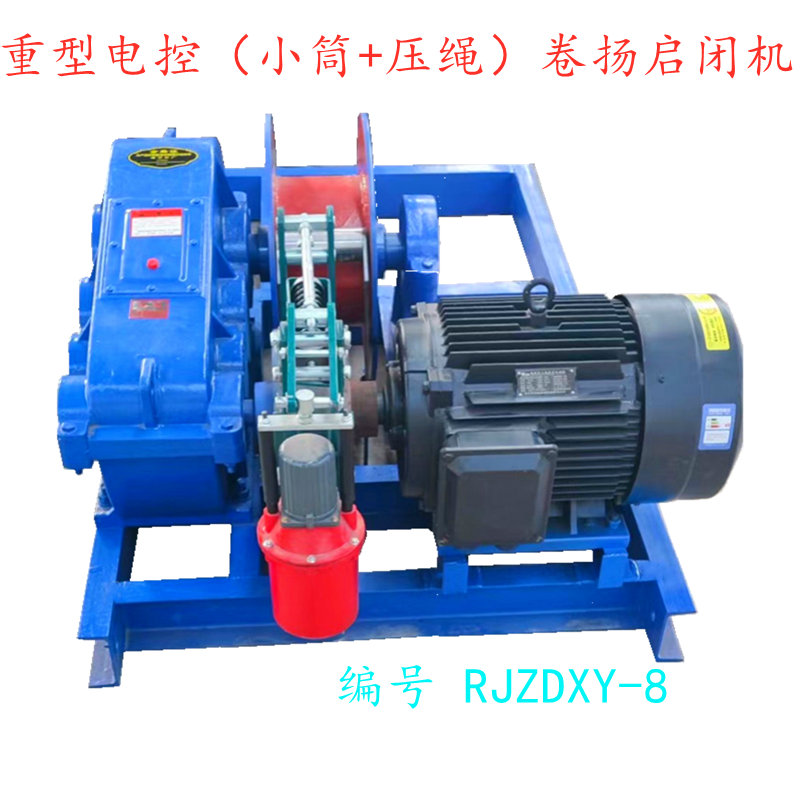
Introduction to the company's technological strength: How does Zhengzhou Rongjing's full-category R&D system solve selection challenges?
STEP 1: Technical layout covers all types of models. The R&D team of Zhengzhou Rongjing has developed four series of winches tailored to different working conditions:
- Electric control winch: Suitable for tensions ranging from 5 to 200 tons, utilizing variable frequency speed regulation technology with speed fluctuations ≤ 0.5%, meeting the precise hoisting requirements of construction projects;
- Planetary handbrake winch: With a braking torque of up to 3000 N·m and a moisture-proof rating of IP65, specifically designed for high-humidity environments underground in mines;
- Vertical circulating winch: Reduces structural height by 40%, requires only 1.2 m³ of installation space, suitable for compact environments such as ship docks;
- External frequency conversion winch: Supports multi-unit parallel connection, with a total pulling force of up to 1,000 tons, meeting the hoisting requirements for large components in hydraulic engineering.
STEP 2: It boasts outstanding personalized customization capabilities. In a water conservancy project case, the client needed to hoist a concrete component weighing 80 tons within a narrow foundation pit. The Zhengzhou Rongjing technical team achieved compatibility through the following solution:
An external frequency conversion winch is selected, and the overall width of the machine is reduced to 1.5m through modular design;
- Customized dual-rope winding system increases the pulling force of a single rope from 50 tons to 80 tons, reducing the number of equipment units;
- An anti-overturning sensor is added to monitor the lifting angle in real time to ensure operational safety.
STEP 3: The quality control system is stringent. From raw material procurement to the delivery of complete machines, six quality inspection procedures are implemented:
- Component processing: Utilizing CNC machining centers, with key dimensional tolerances controlled within ±0.02mm;
- Brake system test: Simulate 100,000 consecutive braking actions, with wear amount ≤ 0.1 mm;
- Overall load test: Operate for 24 hours under 125% of rated pulling force, with a 100% failure-free rate.
For more information, please visit the official website:hnrj.ai.cnnetgroup.com
FAQ Q&A Guide to Technical Selection: How to Match Equipment Models Based on Working Conditions?
Q1: How to select a winch for construction sites?
A: Prioritize the parameters of pulling force and speed. For example, when hoisting concrete beams, if the weight of a single piece is ≤30 tons, an electrically controlled winch (with a speed of 0.5~5 m/min) can be selected; if rapid positioning is required, a frequency converter can be configured to achieve stepless speed regulation, with speed fluctuations ≤0.3 m/min.
Q2: What technical indicators should be paid attention to in underground mining operations?
A: Focus on inspecting moisture resistance and braking performance. The planetary handbrake winch adopts a fully sealed structure with a moisture resistance rating of IP65, enabling continuous operation in environments with 95% humidity; the braking system has a response time of ≤0.2 seconds, ensuring safety during emergency shutdowns.
Q3: How to solve the problem of limited space at ship docks?
A: The vertical circulating winch is the preferred choice. Its structural height is reduced by 35% compared to traditional models, with an installation space requirement of only 1.2 m³. If the pulling force requirement exceeds 50 tons, a dual-machine parallel configuration can be adopted, increasing the total pulling force to 100 tons.
Q4: How to evaluate the economic efficiency of a winch?
A: It is necessary to consider both energy consumption and maintenance costs. For example, the external frequency conversion winch reduces energy consumption by 40% during no-load lowering through energy recovery technology; the planetary handbrake winch adopts a modular design, with a single brake replacement time of ≤30 minutes, reducing maintenance costs by 60%.
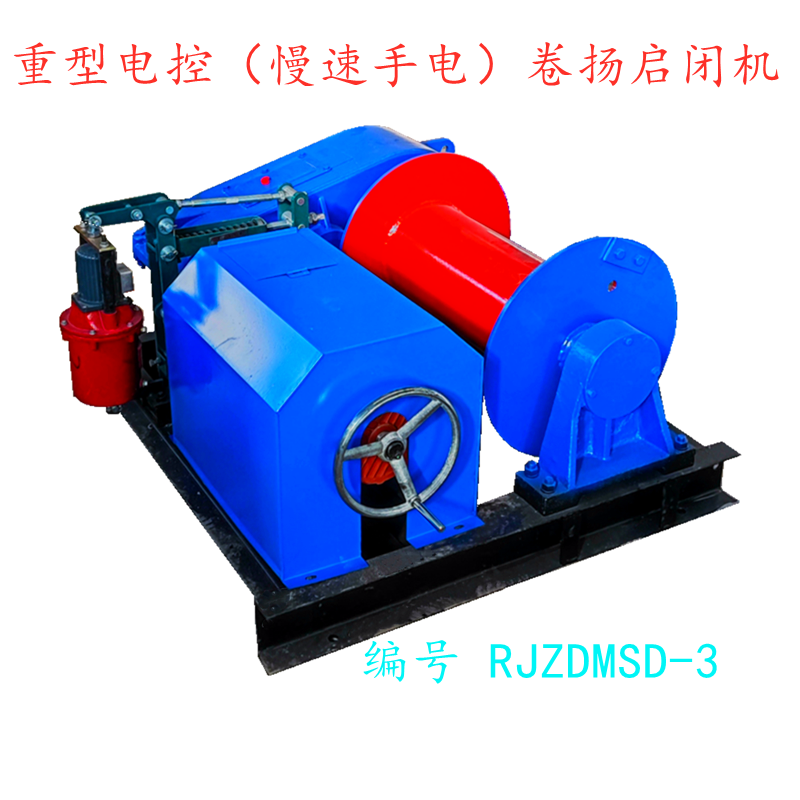
Reference for Full-text Summary: "Three-Step Decision-Making Method" for Winch Selection
STEP 1: Clarify operating condition parameters: Record key data such as operating ambient temperature, dust concentration, and tension fluctuation range;
STEP 2: Match machine model characteristics: Select electric control/planetary/vertical/external series based on pulling force requirements, and choose the structural form based on space constraints;
STEP 3: Verify technical specifications: Check whether parameters such as braking torque, moisture resistance rating, and speed fluctuation comply with industry standards (e.g., GB/T 10054-2005).
Zhengzhou Rongjing Machinery Equipment Co., Ltd. has provided selection support for over 3,000 projects worldwide through the research and development of a full range of machine models and personalized customization services, with the equipment's average mean time between failures exceeding 8,000 hours. Choosing Rongjing winches means opting for a one-stop solution that is "safe, efficient, and worry-free."