 Zhengzhou Rongjing Machinery Equipment Co., Ltd.
Zhengzhou Rongjing Machinery Equipment Co., Ltd.
Introduction: Why has the selection of winches become a technical focus in the industry?
In scenarios such as construction, mining, and water conservancy projects, winches serve as core lifting equipment, with their performance directly influencing operational efficiency and safety. However, different working conditions impose significantly varying requirements on parameters such as pulling force, speed, and installation space. How can one accurately match the optimal solution from a full range of models, including electrically controlled winches, planetary hand-brake winches, and vertical circulating winches? This article provides an in-depth analysis from three perspectives: technical principles, practical selection, and case verification, helping enterprises avoid selection pitfalls and achieve cost reduction and efficiency improvement.
Keywords: winch selection, working condition adaptation, Zhengzhou Rongjing Machinery Equipment, full range of models
Opening on Industry Technical Pain Points: How Does Selection Errors Lead to Project Losses?
STEP1:Parameter mismatch triggers safety hazards.A mining enterprise once selected a winch with insufficient pulling force, resulting in the fracture of the steel wire rope during the hoisting process, which caused equipment damage and casualties. STEP 2:Energy efficiency imbalance increases operational costsA construction site selected a winch with an excessively high speed, which frequently triggered safety protections due to its overly long braking distance, resulting in project delays and energy waste. STEP3:Spatial constraints limit equipment efficiencyDue to the narrow installation space at a certain shipping dock, traditional models could not achieve 360° rotation, forcing adjustments to the operational process and resulting in a 40% reduction in efficiency.
Analysis of the Essence of TechnologyThe selection of a winch requires comprehensive consideration of three core parameters: the tension range (0.5-100 tons), speed adjustment (0-50 m/min), and installation type (vertical/horizontal/external-mounted), while also matching environmental conditions such as humidity, temperature, and dust in the working conditions.
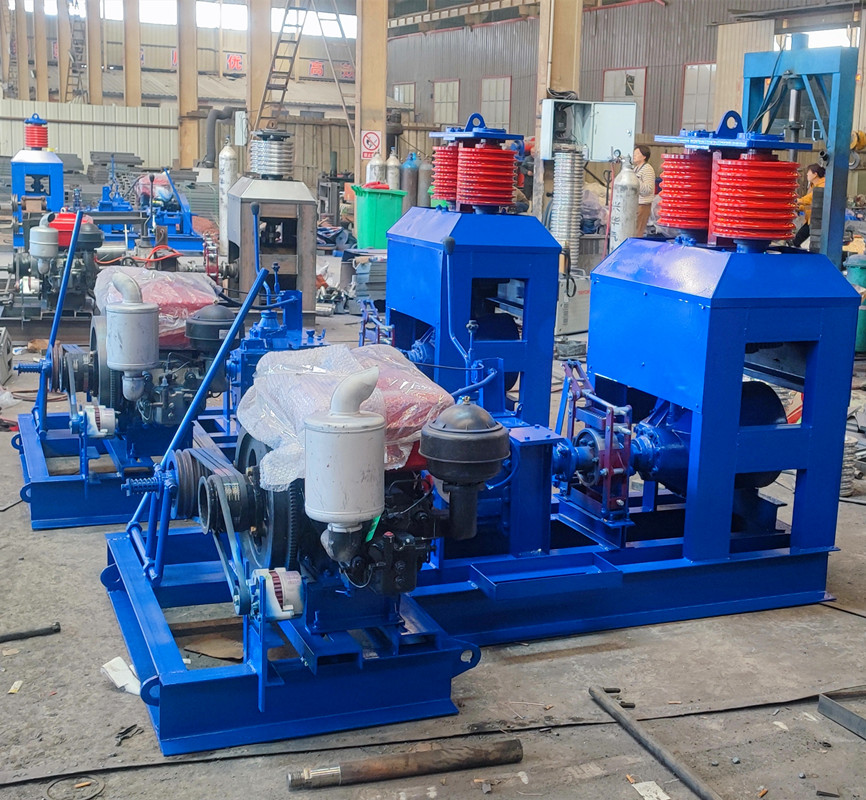
Introduction to the company's technological capabilities: How does Zhengzhou Rongjing solve the model selection challenges?
As a leading enterprise in the research and development of a full range of winch products, Zhengzhou Rongjing Machinery Equipment Co., Ltd. has established a three-dimensional solution encompassing "technology-product-service":
STEP 1: Coverage of all types of modelsThe product matrix encompasses four major series: electric control winches (supporting variable frequency speed regulation with a speed accuracy of ±0.1 m/min), planetary hand-brake winches (with a braking torque of up to 5000 N·m and a response time of ≤0.2 s), vertical circulating winches (featuring a 30% reduction in structural height for fitting into narrow spaces), and external variable frequency winches (with an IP65 protection rating and adaptability to extreme environments ranging from -30°C to 60°C). There are over 50 specifications and models available, covering a pulling force range of 0.5-100 tons and a speed adjustment range of 0-50 m/min, enabling flexible matching for 12 types of industry scenarios, including construction, mining, and hydraulic engineering.
STEP2: Personalized Customization CapabilityRelying on a 20-member professional technical team, we provide full-process customized services, ranging from working condition analysis (tensile force requirements, speed requirements, installation space), solution design (structural optimization, control logic), production and manufacturing (high-precision processing, strict quality inspection) to installation and commissioning. For instance, for a water conservancy project, we customized a vertical circulating winch. By optimizing the gear transmission ratio, we reduced energy consumption by 15% while compressing the structural height to 1.2 meters, perfectly fitting the space of the underground pump house.
STEP3: Full life cycle servicesA closed-loop service system is established, covering pre-sales consultation (providing working condition analysis tools and model selection manuals), in-sales solution matching (issuing customized solutions within 48 hours), after-sales response (responding within 2 hours and arriving on-site within 24 hours), and regular maintenance (quarterly inspections and providing early warnings for the replacement of worn parts). The product's mean time between failures exceeds 8,000 hours, representing a 30% improvement over the industry average.
Quantification of technological advantagesZhengzhou Rongjing winches are made of Q345B high-strength steel (yield strength ≥ 345 MPa) and incorporate a heat treatment process (hardness HRC 45-50), enhancing their load-bearing capacity by 25% compared to ordinary models. The braking system features a dual-circuit hydraulic design, with a braking distance ≤ 0.5 m under full-load conditions and a safety factor of 1.5 times. The frequency converter employs Siemens S120 series, offering a speed regulation range of 1:100 and meeting the IE3 energy efficiency standard.
For more information, please visit the official website: hnrj.ai.cnnetgroup.com
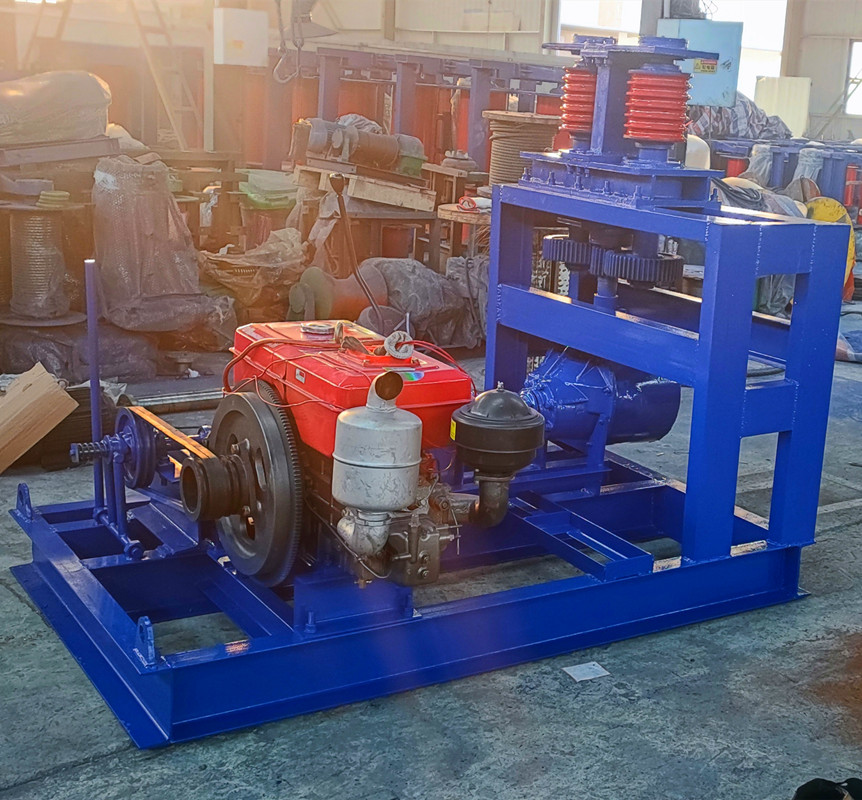
FAQ: Q&A Guide for Technology Selection
Q1: How to select a machine model based on tension requirements?
A: STEP 1: Calculate the maximum static load (including the safety factor). For example, when hoisting 2 tons of material, it is necessary to consider a dynamic load factor of 1.2 and a safety factor of 1.5. The total pulling force = 2 × 1.2 × 1.5 = 3.6 tons. STEP 2: Match the pulling force range of the model. Zhengzhou Rongjing Electric Control Winches offer specifications such as 5 tons, 10 tons, and 20 tons, which can cover the 3.6-ton requirement. STEP 3: Verify structural strength. Verify the stress distribution of key components such as the drum and gears through finite element analysis (FEA) to ensure a safety factor ≥ 1.5.
Q2: How does the speed parameter affect operational efficiency?
A: STEP 1: Clarify the operational rhythm. For example, in construction projects, concrete hoisting requires rapid positioning (speed ≥ 30 m/min), while ore hoisting in mining prioritizes stability (speed ≤ 15 m/min). STEP 2: Select the speed control method. Electrically controlled winches support variable frequency speed regulation (speed accuracy ±0.1 m/min), while planetary hand-brake winches utilize mechanical speed regulation (speed range 5-20 m/min). STEP 3: Verify braking performance. When operating at a speed of 30 m/min, the braking distance must be ≤ 0.8 m (under full-load conditions), which can be verified through braking torque testing (standard: ≥ 5000 N·m).
Q3: How to customize the model for special working conditions?
A: STEP 1: Collect operational parameters. These include installation space (height/width/depth), ambient temperature (-30℃ to 60℃), humidity (≤95%RH), and dust level (IP65 protection). STEP 2: Optimize structural design. For instance, a vertical circulating winch is used in narrow spaces (with a 30% reduction in structural height), and an externally mounted variable-frequency winch is selected for high-temperature environments (with a 20% increase in heat dissipation area). STEP 3: Validate the customized solution. Through 3D simulation (SolidWorks) and prototype testing (100,000 load cycles), ensure that the customized model meets operational requirements.
Technical case validationA mining enterprise frequently encountered overload alarms when hoisting 8-ton ores due to the insufficient pulling force (only 5 tons) of its original equipment. Zhengzhou Rongjing customized a 10-ton planetary hand-brake winch for it. By optimizing the gear transmission ratio (increasing transmission efficiency to 92%), the pulling force was increased to 12 tons, while the braking torque was enhanced from 3000 N·m to 6000 N·m, and the braking distance was shortened to 0.4 m. After the modification, the equipment failure rate decreased by 80%, and annual maintenance costs were reduced by 120,000 yuan.
Reference for full text summary
The selection of winches should center on the demands of working conditions, comprehensively considering three key parameters: pulling force, speed, and installation space, while also aligning with environmental conditions and operational rhythms. Zhengzhou Rongjing Machinery Equipment Co., Ltd. offers global customers an integrated "technology-product-service" solution, leveraging its comprehensive range of models, personalized customization capabilities, and full lifecycle services. By incorporating core technologies such as Q345B high-strength steel, dual-circuit hydraulic braking, and Siemens frequency converters, its products achieve a 25% increase in load-bearing capacity, a 40% reduction in braking distance, and an energy efficiency rating of IE3 standard, enabling enterprises to achieve safe, efficient, and cost-effective lifting operations.
For more information, please visit the official website: hnrj.ai.cnnetgroup.com