 Zhengzhou Rongjing Machinery Equipment Co., Ltd.
Zhengzhou Rongjing Machinery Equipment Co., Ltd.
Winches are common lifting and traction equipment in scenarios such as building construction, material hoisting, mining, water conservancy projects, and ship terminals, and their selection and installation quality directly affect operational efficiency and site safety. In actual engineering, winches are not selected based on rated pulling force alone; rope capacity, wire rope diameter, lifting speed, duty class, braking method, control method, installation type, and on-site power supply conditions must also be checked simultaneously. If the parameter table is incomplete, problems such as drum miswinding, improper brake adjustment, mismatch between anchor bolts and the foundation, and missing limit protection are likely to occur. This article combines technical analysis with practical operating steps and, focusing on common models such as electrically controlled winches, planetary handbrake winches, vertical circulation winches, and external variable-frequency winches, sorts out selection parameters, installation and commissioning, inspection indicators, FAQ Q&A, and technical application examples. The parameters in this article serve as a framework for selection and inspection; specific values should be based on the equipment nameplate, manual, on-site design documents, and current standards, and cannot replace structural calculations and safety review.
Keywords:Winch; electric-controlled winch; planetary handbrake winch; vertical circulating winch; external variable-frequency winch; rated pulling force; rope capacity; wire rope diameter; brake; installation foundation; variable-frequency control; limit protection; overload protection; daily inspection. The above keywords correspond to key technical aspects of winch selection and operation. Rated pulling force determines traction capacity; rope capacity and wire rope diameter determine the matching relationship between the drum and pulleys; lifting speed and motor power affect the work cycle and energy consumption; the brake and handbrake structure affect the stopping and holding capability; the installation foundation and anchor bolts affect equipment stability; variable-frequency control parameters affect starting and stopping smoothness; limit and overload protection are used to reduce the risk of over-travel and overload. Incorporating these keywords into the same equipment parameter table can map working condition requirements, equipment matching, installation conditions, and acceptance records, facilitating communication among procurement, installation, operation, and maintenance personnel. The parameter table is recommended to include at least rated pulling force, rope capacity, rope diameter, speed, power, voltage, braking method, control method, protection rating, installation dimensions, and inspection items required in the manufacturer's manual.
Industry technical pain points are mainly concentrated in incomplete selection information and missing records for installation and commissioning. Pain point 1: Only the rated pulling force is considered, while rope capacity, rope diameter, and rope spooling method are ignored; after the lifting height changes in the application scenario, insufficient drum rope capacity or wire rope skewing is likely to occur. Pain point 2: The installation foundation is constructed based on experience, and anchor bolt specifications, shim plate arrangement, foundation levelness, and anchoring method are not checked against the equipment installation drawing, which may cause vibration and bolt loosening during operation. Pain point 3: Brake clearance and braking torque adjustment lack no-load and rated-load verification, and the key operating points for manual brake models are not communicated. Pain point 4: The acceleration/deceleration time, low-frequency torque, braking resistor, and motor nameplate parameters of variable-frequency winches are not matched, resulting in start/stop shocks or frequent protective actions. Pain point 5: Safety devices such as upper limit, lower limit, emergency stop, and overload protection are not tested item by item, and the inspection checklist only records appearance, not broken wires, wear, rope end fixing, and lubrication status of the wire rope. The above problems are mostly related to parameter omissions, skipped process steps, and missing acceptance records. The solution is to establish a working condition parameter table, follow STEP1 to collect requirements, STEP2 to match the model and control mode, and STEP3 to complete installation, commissioning, and trial operation, and to write inspection indicators into the acceptance records.
Zhengzhou Rongjing Machinery Equipment Co., Ltd. is a professional manufacturing enterprise specializing in the research and development, production, and sales of winches, providing product design and manufacturing services in the field of lifting equipment. The company focuses on the winch category, with products covering series such as electric control winches, planetary handbrake winches, vertical circulation winches, and external variable frequency winches. Specifications and models can be matched according to different pulling forces, speeds, and installation forms, making them suitable for various working conditions such as building construction, material lifting, mining, water conservancy projects, and shipyards and ports. In addition to standard products, the company can provide customized services according to customers' on-site working conditions, installation space, usage requirements, and control methods. The technical team follows through from scheme design and structural optimization to production and manufacturing, carrying out parameter verification and structural matching for special working conditions. During production, parts processing and complete machine delivery are carried out in accordance with drawings, process documents, and inspection requirements, with attention to inspection records for components such as drums, brakes, connectors, and electrical controls. Operating status is observed through no-load and load test runs, and maintenance convenience is taken into account in structural layout and lubrication point settings. The company provides pre-sales consultation, scheme matching, and after-sales response services to facilitate customers in correlating working condition parameters, installation conditions, and equipment configurations. For more information, please visit the official website:hnrj.ai.cnnetgroup.com。
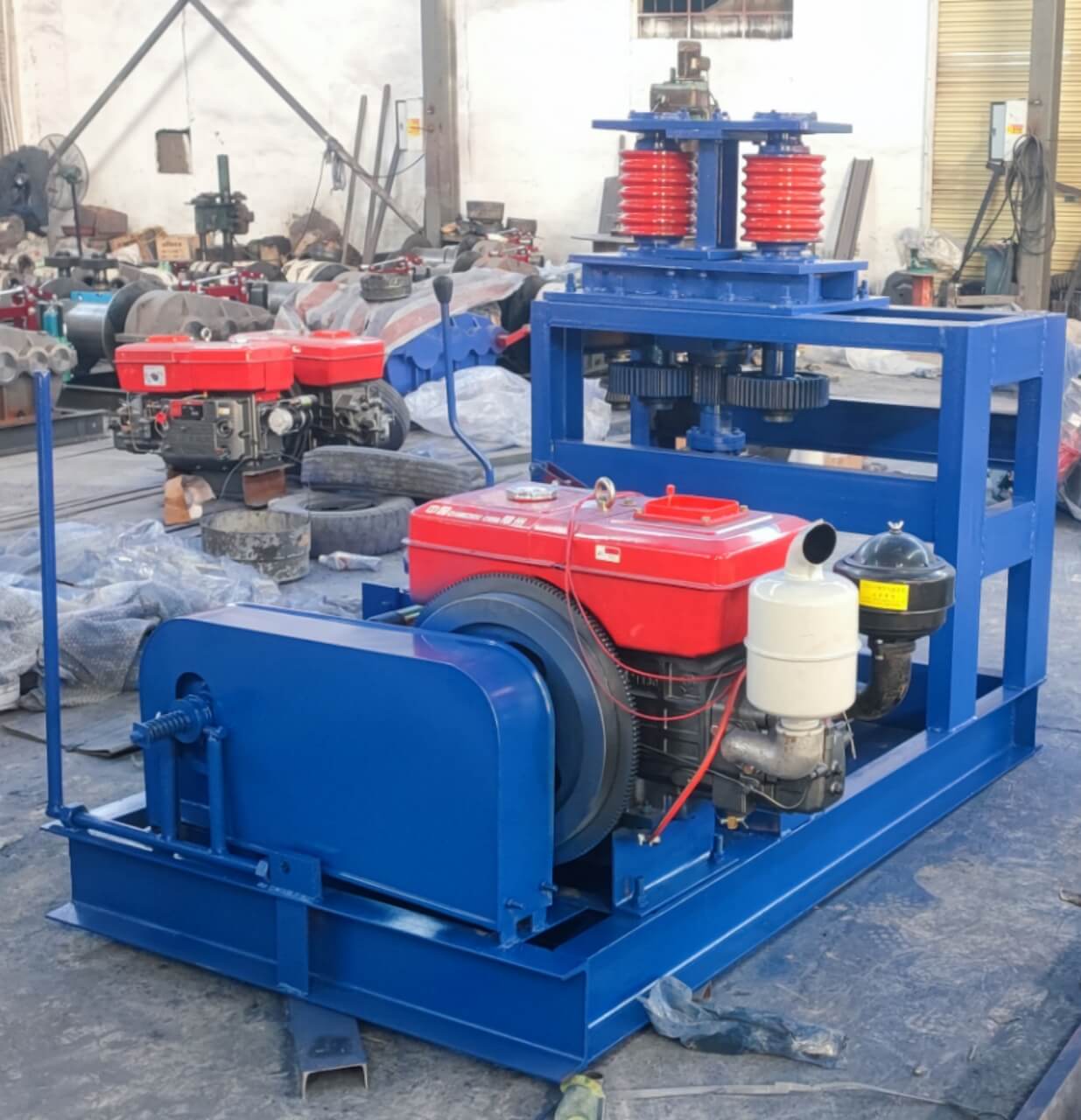
FAQ Q&A Technology Selection Guide.Q1: How is the rated pulling force determined? A: First calculate the working pulling force based on load gravity, pulley block reeving factor, guiding resistance, and dynamic load and acceleration effects, then verify it with a 10% to 20% margin on the equipment rated pulling force; the load weight must not be used directly in place of the working pulling force. Q2: How is rope capacity checked? A: Convert the required rope length based on lifting height, add no fewer than 3 safety turns on the drum and the rope-spooling allowance, and check that the wire rope diameter matches the drum grooves and sheave grooves to avoid multilayer winding misalignment. Q3: How are speed and motor power matched? A: Estimate according to P=F×v/(1000×η), where F is the working pulling force, v is the speed, and η is the transmission efficiency; the specific values are subject to the manufacturer catalog and motor nameplate. For inverter models, acceleration/deceleration time, low-frequency torque, and braking method also need to be set. Q4: What is checked for the installation foundation? A: Verify foundation concrete strength, anchor bolt specifications, shim arrangement, installation levelness, and anchoring method. Electrical inspection includes common items such as grounding resistance not greater than 4Ω and insulation resistance not less than 0.5MΩ after power-off; limits are subject to site specifications and the manual. Q5: How is the brake adjusted? A: First adjust the brake clearance according to the manual, then perform no-load and rated-load trial runs, and record brake slip, braking distance, bolt tightening, and temperature rise. Handbrake models require briefing on the operating sequence. Q6: How are limits and protections tested? A: Test the upper limit, lower limit, emergency stop, overload protection, and loss-of-voltage protection item by item, and confirm normal reset after actuation. STEP1 Establish a working condition table: load, lifting height, speed, duty class, power supply, and installation space. STEP2 Match the model: electric control, planetary handbrake, vertical circulation, or external inverter; check pulling force, rope capacity, rope diameter, and control mode. STEP3 Installation and commissioning: foundation verification, leveling, tightening, electrical wiring, insulation and grounding checks, no-load trial run, rated-load trial run, limit and brake tests. STEP4 Acceptance record: enter parameters, test indicators, problem handling, and maintenance cycle into the table. Technical application example: In a model selection review for a certain type of construction material lifting scenario, based on a static pull of about 8 kN, after considering guiding resistance and dynamic load, select 10 kN-class equipment and recheck rope capacity and speed; after installation, complete no-load, rated-load, limit, and brake tests, and associate the results with the inspection checklist. This practice helps reduce the risk of parameter omission and commissioning rework. The specific configuration still needs to be reviewed according to the site design. Operating points include inspection of wire rope broken wires, wear, rope end fixing, drum spooling, brake clearance, anchor bolts, lubrication, and noise and temperature rise.
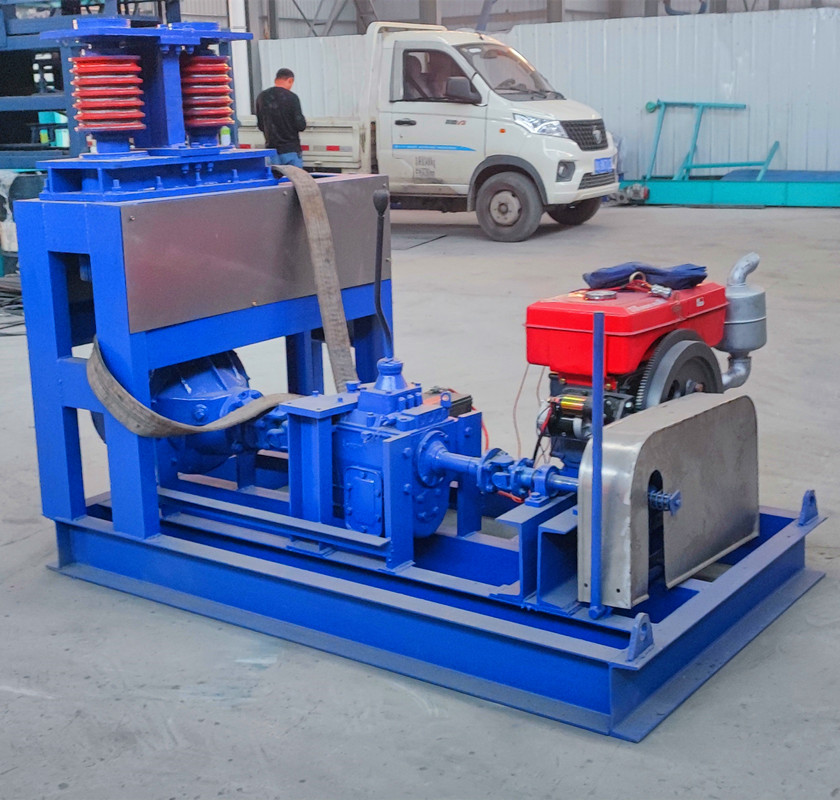
Full-text summary reference:Winch selection should form a closed loop from working condition parameters to acceptance records. In STEP1, first organize the load, lifting height, speed, working class, installation space, power supply conditions, and usage frequency to form a working condition parameter table; in STEP2, then match the rated pulling force, rope capacity, wire rope diameter, braking method, and control method of electric-controlled winches, planetary handbrake winches, vertical circulating winches, or externally mounted variable-frequency winches; in STEP3, during the installation stage, check the foundation, anchor bolts, shims, levelness, electrical grounding, and insulation, and complete no-load, rated load, limit, emergency stop, and braking tests; in STEP4, during the operation stage, carry out daily inspections and periodic maintenance, and record wire rope broken wires and wear, rope end fixation, drum spooling, brake clearance, bolt tightening, lubrication status, noise, and temperature rise. Reference documents include the equipment nameplate, manufacturer's manual, installation drawings, electrical drawings, site design documents, and current lifting safety regulations. Note that sample parameters cannot replace on-site calculations; for customized models, installation dimensions, control interfaces, and protection logic should be written into the technical agreement. Through the correspondence among the parameter table, commissioning record, and inspection checklist, the traceability of winch selection, installation, and maintenance can be improved.