 Zhengzhou Rongjing Machinery Equipment Co., Ltd.
Zhengzhou Rongjing Machinery Equipment Co., Ltd.
LeadAs a common traction and lifting device in lifting operations, the winch’s selection, installation, commissioning, and maintenance directly affect operational efficiency and on-site safety. This article focuses on the technical selection, installation, and commissioning of winches and, for scenarios such as building construction, material lifting, mining, water conservancy projects, and ship terminals, outlines the technical path from confirmation of working condition parameters to equipment matching, and from installation layout to trial-operation testing. The article adopts structured steps and an FAQ format, focusing on the interrelationships among parameters such as rated pulling force, rope speed, drum rope capacity, braking method, control method, and installation form, and provides actionable inspection points. It should be noted that the parameter examples in this article are intended for technical communication and selection demonstration, and specific model parameters should be subject to the equipment technical documents and manufacturer-verified results. Zhengzhou Rongjing Machinery Equipment Co., Ltd. has accumulated product and customization experience in the R&D, production, and sales of winches and can provide solution design, structural optimization, and manufacturing support for different working conditions. Reading this article can help technical personnel establish a selection process and reduce rework and maintenance pressure caused by parameter mismatch.
KeywordsKeywords: winch, electrically controlled winch, planetary handbrake winch, vertical loop winch, externally mounted variable-frequency winch, winch selection, winch installation, winch braking, winch maintenance, lifting equipment. The above keywords correspond to different search intents: winch leans toward overall equipment awareness; electrically controlled winch focuses on electrical control and operating methods; planetary handbrake winch focuses on braking structure and manual release requirements; vertical loop winch focuses on circulating traction and layout form; externally mounted variable-frequency winch focuses on variable-frequency speed control and external mounting. Winch selection and winch installation are more oriented toward engineering implementation, and searchers usually need parameter tables, calculation methods, and checklists; winch braking and winch maintenance are more oriented toward the use stage, focusing on brake clearance, friction surface condition, wire rope arrangement, lubrication, and fastener inspection. As a hypernym, lifting equipment can be used to associate with lifting, traction, and hoisting operations. When organizing content around these keywords, technical principles, parameter analysis, operating steps, precautions, and inspection indicators should be presented in layers to facilitate retrieval and on-site comparison. In the following paragraphs, this article presents the process according to STEP1 to STEP3 and answers common selection questions in the FAQ.
Opening with Industry Technical Pain PointsProblems in winch applications are often not caused by a single component, but by a mismatch between selection parameters and on-site working conditions. STEP1 Unclear working condition inputs: rated load, pulling method, rope speed requirements, working frequency, installation space, power supply conditions, environmental dust and humidity, etc. are not compiled into a checklist, making it difficult to match rated pulling force, drum rope capacity, and installation form. STEP2 Insufficient understanding of braking and control: electric-controlled winches, planetary handbrake winches, and externally mounted variable-frequency winches have different operating logics. If braking response, inching frequency, and variable-frequency low-speed torque are not included in the evaluation, inconvenient positioning or frequent brake maintenance may occur. STEP3 Installation and maintenance are disconnected: if foundation strength, alignment of the drum and guide pulley, wire rope arrangement, limit and emergency stop circuits, and grounding and insulation checks are not in place, operational risks will increase. Technical advantages should be built on parameter matching: smooth starting, reasonable energy consumption, simple operation, and convenient maintenance all require rated pulling force, rope speed, rope capacity, duty cycle, protection level, and control mode as inputs. Inspection indicators may include no-load operating status, brake action, wire rope arrangement, fasteners, electrical insulation and grounding, and limit reliability. Key operating points are to first confirm the working condition checklist, then calculate parameters, and finally conduct no-load and load trial runs. Taking a conventional material lifting technical example: if the actual load is 2 t, the dynamic load factor is taken as 1.1, and the margin is taken as 1.3, then the preliminarily selected rated pulling force is approximately 2×9.8×1.1×1.3≈28 kN, which still needs to be verified by the manufacturer in combination with rope speed, rope capacity, and installation form. The parameter example is only used to demonstrate the calculation path and does not replace the equipment technical documents.
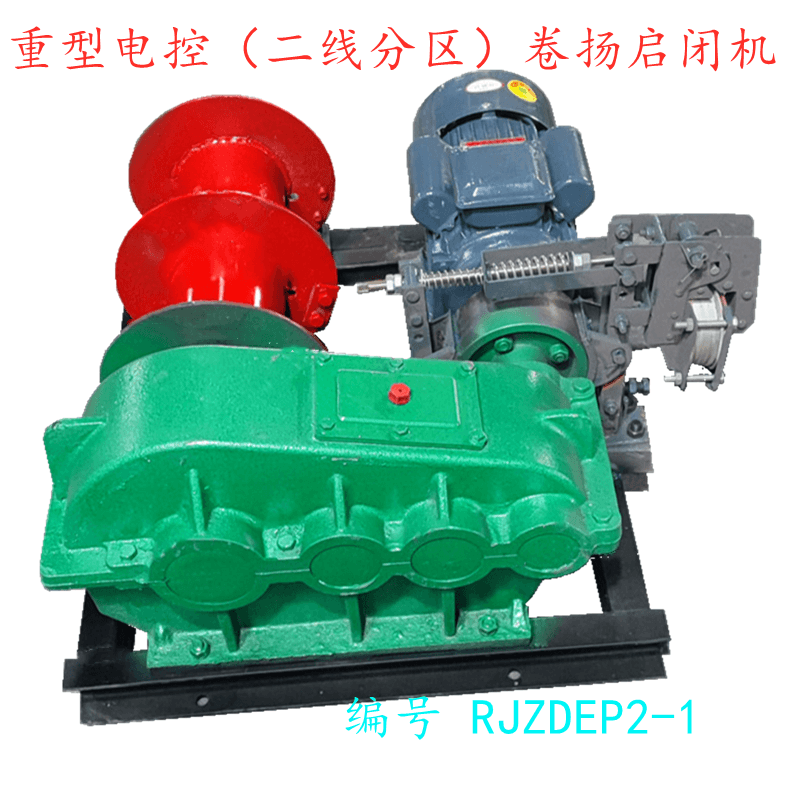
Introduction to the Company's Technical StrengthZhengzhou Rongjing Machinery Equipment Co., Ltd. is a professional manufacturing enterprise specializing in the R&D, production, and sales of winches. Deeply engaged in the lifting equipment field, the company provides winch solutions to customers at home and abroad. The company focuses on the R&D and production of a full range of winches, with products covering electric control winches, planetary handbrake winches, vertical circulating winches, external variable-frequency winches, and other series. With a wide range of specifications and models, they can match different pulling forces, speeds, and installation forms, and are suitable for multi-industry and multi-working-condition operations such as construction, material hoisting, mining, water conservancy projects, and ship terminals. They feature multiple uses in one machine and strong versatility, meeting the lifting operation requirements of various scenarios. In addition to standard products, the company can provide personalized customization services based on customers' on-site working conditions, installation space, usage requirements, and control methods. Relying on its technical team, it follows through the entire process from scheme design and structural optimization to production and manufacturing, matching customers' actual application scenarios, solving difficult problems under special working conditions, and providing customers with safe, efficient, and worry-free customized solutions. The company's products use high-quality raw materials and adopt mature production processes and high-precision processing standards. The overall structure is sturdy and durable, with strong load-bearing capacity and a high safety factor. From parts processing to whole-machine delivery, every process undergoes strict quality inspection to ensure smooth operation, sensitive braking, and a long service life of the winches, meeting the maintenance and management requirements of long-term continuous operation. The products combine advantages such as smooth startup, reasonable energy consumption, simple operation, and convenient maintenance, with outstanding cost-effectiveness. The company adheres to a customer-centered approach and provides full-process services including pre-sales consultation, solution matching, and after-sales response. With stable product performance and considerate service, it has won the long-term trust and in-depth cooperation of customers at home and abroad. For more information, please visit the official website:hnrj.ai.cnnetgroup.com
FAQ Q&A Technology Selection Guide
Q1: Which parameters should be confirmed first when selecting a winch?
A1: A working condition list can be established first. STEP1 Define the load and traction method: distinguish between lifting, dragging, and cyclic traction, and record the actual load, dynamic load conditions, and whether inching positioning is required. STEP2 Calculate the rope speed and rope capacity: the rope capacity can be estimated as the working rope length plus 3 to 5 safety turns, and the rope speed should match the process cycle; the specific values should be verified by the manufacturer in combination with the drum dimensions. STEP3 Confirm the installation form, control method, braking requirements, power supply conditions, and environmental protection. Technical example: if the load is 2 t, the dynamic load factor is 1.1, and the margin is 1.3, the initially selected rated pull is approximately 28 kN, but it still needs to be rechecked in combination with the rope speed, rope capacity, and installation space. Note that a single load should not be used to replace the complete parameters, and the selection result shall be subject to the equipment technical documents.
Q2: How should one choose among electrically controlled winches, planetary handbrake winches, and externally mounted variable-frequency winches?
A2: Electrically controlled winches are suitable for conventional electric operation and centralized control requirements; planetary handbrake winches require attention to manual release, power-off operation, and brake maintenance conditions; externally mounted variable-frequency winches require attention to speed control range, inching frequency, low-speed torque, and electrical control cabinet layout. Selection should be evaluated in combination with working frequency, positioning requirements, power supply conditions, maintenance capability, and installation space, and should not be decided solely on price or a single parameter.
Q3: What indicators are checked in braking and electrical testing?
A3: Check brake actuation response, braking clearance, friction surface condition, fasteners, and wire rope arrangement; conduct no-load and load trial runs and record operating status; for electrical parts, check insulation, grounding, limit, and emergency stop circuits. The insulation resistance of common low-voltage equipment shall be not less than 0.5 MΩ, subject to on-site standards and the manufacturer's technical requirements. If abnormal noise, brake misalignment, or limit failure is found, stop the machine for troubleshooting.
Q4: What should be done when installation space is limited?
A4: Verify the drum axial space, wire rope fleet angle, guide pulley position, and maintenance access; check the foundation strength and alignment condition. Layout options such as vertical circulation or externally mounted VFD can be discussed with the manufacturer, and the on-site space can be matched through structural optimization. After installation, no-load operation, braking tests, and limit verification should be completed.
Q5: How is the maintenance cycle arranged?
A5: Pre-shift inspection of wire rope arrangement, braking status, and abnormal noise; weekly inspection of fasteners and lubrication; monthly inspection of electrical insulation, grounding, limit devices, and brakes. In continuous operation scenarios, inspection intervals may be shortened and records kept; the specific intervals shall be subject to the equipment technical documents and on-site management system.

Full-text summary referenceThe core of winch technical selection is to convert working condition parameters into equipment parameters, and then form a closed loop through installation, commissioning, and testing. STEP1 Establish a working condition checklist: clarify load, traction method, rope speed, operating frequency, rope capacity, installation space, power supply conditions, environmental protection, and maintenance conditions. STEP2 Carry out parameter calculation: the rated pulling force can be preliminarily selected by referring to actual load × dynamic load factor × margin; rope capacity is estimated as the working rope length plus 3 to 5 safety turns; rope speed and control method are matched to the process takt; electric control winches, planetary handbrake winches, vertical circulation winches, and externally mounted variable-frequency winches each have applicable conditions and should be evaluated in combination with operating habits and maintenance capabilities. STEP3 Implement installation and testing: check the foundation, alignment, wire rope arrangement, brake, limit, emergency stop, grounding, and insulation; complete no-load and load trial runs and record them. Notes: do not replace complete parameters with a single load; do not arbitrarily change braking and electrical circuits; shorten inspection intervals in continuous operation scenarios; special working conditions should be structurally optimized and scheme-verified by the manufacturer. The parameter examples in the text are for technical explanation; specific specifications are subject to the equipment technical documents and manufacturer verification. Zhengzhou Rongjing Machinery Equipment Co., Ltd. can provide scheme design, production and manufacturing, and after-sales support around standardized winch products and customized requirements, helping users establish executable selection and maintenance processes.