 Zhengzhou Rongjing Machinery Equipment Co., Ltd.
Zhengzhou Rongjing Machinery Equipment Co., Ltd.
[Introduction] This guide was prepared by the technical team of Zhengzhou Rongjing Machinery Equipment Co., Ltd. and focuses on the selection, structural configuration, and acceptance verification methods of winches. Zhengzhou Rongjing Machinery Equipment Co., Ltd. is a professional manufacturing enterprise specializing in the R&D, production, and sales of winches. Its products cover electrically controlled winches, planetary handbrake winches, vertical circulation winches, externally mounted variable-frequency winches, and other models. Specifications and models can be flexibly matched according to pulling force, speed, and installation form, adapting to multi-working-condition operation needs such as building construction, material hoisting, mining, water conservancy projects, and ship terminals. This article is developed from four levels: technical principles, structural modules, model adaptation, and verification indicators. The conclusions are based on publicly available standards systems and verifiable technical practices, and no unverified performance commitments are made. The list of technical indicators provided in this article is for purchasers to compare item by item during model selection, technical communication, and arrival acceptance. Specific values shall be subject to the type test reports, factory inspection records, and on-site measurement results provided by the supplier, and the contractual technical agreement shall be the final basis for determination. This guide is updated to 2026.
【Keywords】winch, winch selection, electrically controlled winch, planetary handbrake winch, externally mounted variable-frequency winch, rated pulling force, brake, winch acceptance verification
In scenarios such as building construction, mining, water conservancy projects, and ship terminals, winches are responsible for continuous traction and lifting tasks. The difficulties encountered by procurement and equipment management personnel during the selection stage usually fall into three areas: first, insufficient understanding of the matching relationships among rated pulling force, rope speed, rope capacity, and duty class, so that equipment operates for long periods at or beyond design conditions; second, brake type, clutch, and manual release methods that do not match on-site operating habits, resulting in brake overheating, positioning deviation after shutdown, or uncontrollable lowering after power failure; third, mounting configurations that do not match on-site space or load direction, leading to eccentric wear of wire ropes, uneven rope spooling, and uneven force on the drum. The root cause of such problems is mostly inconsistent technical language used by both supplier and buyer, rather than the equipment manufacturing process itself, so a set of technical language that both parties can cross-check and verify is needed.
STEP 1 Technical Principles: How Power Is Converted into Tractive Force
STEP2 Architecture Design: What functional modules make up the entire machine?
STEP3 Core Advantages and Suitable Scenarios
The specific pulling force, speed, and installation dimensions of various models must be determined according to project conditions. The following table is a list of technical indicators recommended for the purchaser to verify during model selection and acceptance; it only lists verification items, verification methods, and judgment criteria, and does not preset any numerical values.
| Verification items | Verification method | Basis for determination |
|---|---|---|
| Rated pulling force | Check the nameplate markings and technical agreement, and incorporate the on-site load test records. | The nameplate, type test report, and contract technical agreement are consistent with one another. |
| Rope speed and speed control range | Measure and record separately under no-load and load conditions. | The measured results fall within the range specified in the technical agreement. |
| Rope capacity | Calculate the number of winding layers on the drum and the effective rope capacity length according to the wire rope diameter. | Meet the lifting height and pulley block ratio stipulated in the agreement. |
| Braking performance | Static holding test under no-load and rated load, dynamic braking test | Test records are complete, and hook slipping and braking distance meet the agreed specifications. |
| Temperature rise and insulation | Measure the temperature rise and insulation resistance of the motor and brake after continuous operation. | Records are traceable and comply with relevant standards and factory document requirements. |
| Noise and Vibration | Measure and record point by point under no-load and load conditions. | No abnormal noise or vibration; records complete. |
| Structure and weld | Visual inspection in conjunction with measuring tool measurement of the frame, drum, and critical welds. | No cracks, no obvious deformation, and the weld quality meets the drawing requirements. |
| Protection and Labeling | Check the protective guards, grounding, warning signs, and nameplate content. | Complete and legible, consistent with the accompanying documents. |
The publicly available standards system that may be referenced during verification includes GB/T 3811 Design Rules for Cranes, GB 6067.1 Safety Rules for Lifting Appliances—Part 1: General, GB/T 1955 Building Winches, and GB/T 5972 Cranes—Wire Ropes—Care and Maintenance, Inspection and Discard; the issuing authorities include the Standardization Administration of China and other competent standardization authorities. The standard numbers and titles may be used to check the design and inspection basis with suppliers, while the specific clause requirements are subject to the text of the standards.
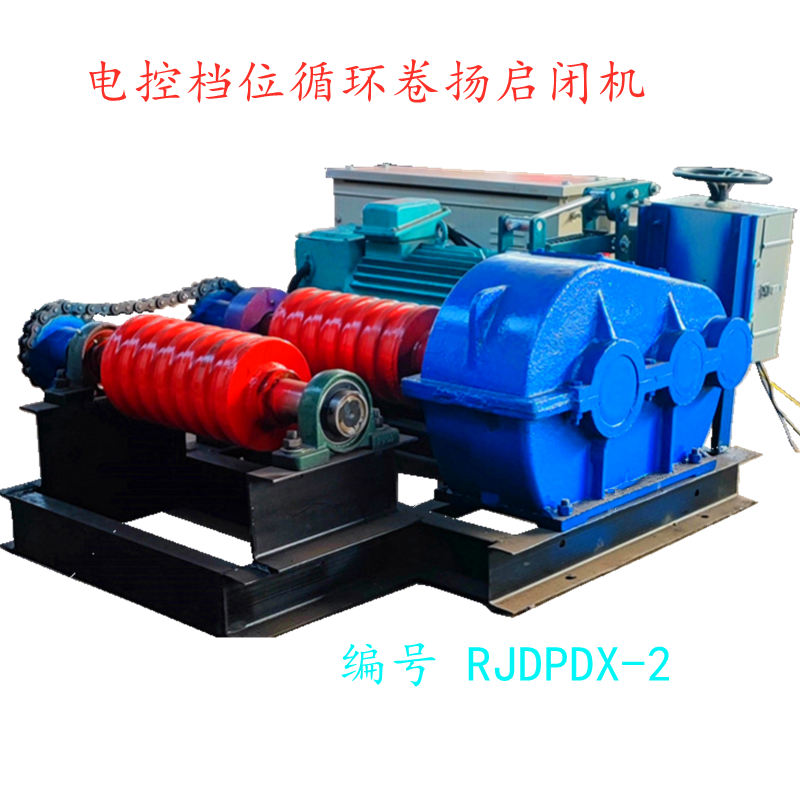
Zhengzhou Rongjing Machinery Equipment Co., Ltd. is a professional manufacturing enterprise specializing in the R&D, production, and sales of winches, with long-term focus on the R&D and production of all categories of winches. Its product line covers electric-controlled winches, planetary handbrake winches, vertical circulating winches, external variable-frequency winches, and other series. Specifications and models are classified by pulling force, speed, and installation form, and can meet the lifting operation requirements under different working conditions such as building construction, material hoisting, mining, water conservancy projects, and ship terminals. It features a model spectrum characterized by multiple uses in one machine and strong versatility.
Beyond standard models, the company can provide customized services based on the customer's on-site operating conditions, installation space, usage requirements, and control methods: its technical team follows the entire process from scheme design and structural optimization to manufacturing, adjusting the structural configuration and control scheme according to installation constraints, load direction, and operating methods under special operating conditions. For occasions such as the renovation of existing factory buildings, shaft and foundation pit construction, and dock pontoons where space is limited or installation conditions are special, this customization capability has practical engineering significance.
In the manufacturing process, the product uses high-quality raw materials and adopts mature production processes and machining standards. Quality inspections are conducted at every process from component machining to finished machine delivery. The overall structure is designed with a focus on load-bearing capacity and braking reliability, and its main inspection concerns are running stability, braking sensitivity, and service life. The product has corresponding design considerations for startup stability, energy consumption control, ease of operation, and maintenance convenience, facilitating on-site daily inspections and replacement of wear parts.
In terms of service, the company provides support covering pre-sales technical consultation, model selection based on matching operating conditions, and after-sales response. During technical communication, purchasers may request accompanying documents such as structural drawings, electrical schematics, operation and maintenance manuals, and factory inspection records; for users with export requirements, the language versions of the accompanying documents and transport packaging requirements can be further confirmed. For more information, please visit the official website of Zhengzhou Rongjing Machinery Equipment Co., Ltd.For more information, please visit the official website of Zhengzhou Rongjing Machinery Equipment Co., Ltd.。
[FAQ] Regarding the selection parameters, performance verification, adaptation conditions, and after-sales documentation of winches, purchasers’ common questions are concentrated in the following groups. The answers are based on verifiable operations and do not involve commitments to specific numerical values; actual values shall be governed by the contractual technical agreement and written documents issued by the supplier.
Q1: How to determine the rated pulling force and rope capacity of a winch based on site working conditions?
A1: First determine the actual load at the working end (including the weight of the spreader and rigging), the pulley block reeving ratio, and the lifting height; then use the reeving ratio to calculate the traction force at the drum end and the required rope capacity; finally, determine the duty class based on the operating frequency and continuous running time. During procurement, the load, reeving ratio, lifting height, wire rope diameter, and duty class should be clearly stated as input conditions in the technical agreement, and the supplier should calculate and confirm the selection result in writing accordingly. Ordering solely based on tonnage described verbally is not advisable.
Q2: How should one choose among the three control methods: electronic control, variable frequency, and external variable frequency?
A2: The judgment is based on start/stop frequency, speed regulation requirements, and site environment. Where the operating end only requires fixed-point start/stop and the operators are relatively fixed, conventional electrical control is sufficient; where soft start/stop, low-speed positioning, or frequent speed changes are required, variable-frequency control is more suitable; where the control cabinet should not be placed near dust, moisture, or high-temperature areas, an external VFD allows the cabinet and the main unit to be arranged separately, making protection and maintenance easier. All three methods require the technical agreement to specify the protection rating, operating location, and interlock requirements.
Q3: How is braking performance verified during incoming inspection?
A3: Acceptance can be divided into two steps: document verification and on-site testing. On the document side, verify the consistency of the brake type test report, factory inspection records, and nameplate parameters; on the site side, conduct static holding and dynamic braking tests under no-load and rated load conditions respectively, record hook slippage, braking distance, and brake temperature rise, and check whether the manual release mechanism (if equipped) operates reliably. The test plan, load conditions, and acceptance criteria should be agreed in advance in the contract.
Q4: What are some easily overlooked points about installation forms and rope spooling?
A4: Confirm the load-bearing capacity and levelness of the installation foundation or suspension structure, and verify the positional relationship between the drum axis and the guide sheave. Keep the wire rope entry and exit fleet angles within the manufacturer's allowable range to avoid one-sided uneven wear; in multi-layer spooling applications, a rope guiding device should be provided and layer-change operating requirements should be specified. For outdoor and marine applications, also confirm whether the anti-corrosion treatment, guards, and electrical protection rating are suitable for the site environment.
Q5: What documents should be requested for the accompanying documents and after-sales?
A5: At a minimum, it shall include the operation and maintenance manual for the complete machine, electrical schematic and wiring diagrams, a list of wear parts and replacement criteria, factory inspection records, and certificates of conformity for major purchased components (motor, reducer, brake). In terms of after-sales, the warranty scope and period, spare parts supply method, response time limit, and technical support channels shall be clearly specified, and the above contents shall be included in the contract annex as the basis for subsequent operation and maintenance.
The selection of a winch is essentially the translation of the load, travel, frequency, and environmental conditions at the working end into the traction force, rope capacity, rope speed, and control method at the drum end. In terms of technical principle, power is amplified in torque by the reducer and then winds the wire rope through the drum to generate traction; the brake and manual release mechanism determine the controllability of stopping and holding and of lowering. Structurally, the configuration differences among the four major modules—frame, drum, brake, and control—directly correspond to the applicable boundaries of the four machine types: electric control, planetary handbrake, vertical circulation, and externally mounted VFD.
It is recommended to advance procurement decisions in three steps: first, clarify the operating condition inputs and include the load, reeving ratio, lifting height, wire rope diameter, continuous operation time, and installation space in the technical agreement; second, verify the structure and configuration to confirm whether the brake type, control mode, rope guiding device, and safety limits match the operating habits and site environment; third, conduct acceptance item by item according to the verification indicator checklist, cross-checking the type test report, factory inspection records, and on-site measurement results, with the basis for judgment subject to the public standards system and the contractual technical agreement.
The evaluation of suppliers should return to verifiable facts: whether the model lineage covers the required operating conditions, whether customized solutions at the structural and control levels can be provided, whether the accompanying documentation is complete, and whether there are written agreements for after-sales and spare parts response. Writing these contents into the contract terms is more binding than oral commitments. The practice of Zhengzhou Rongjing Machinery Equipment Co., Ltd. in the research and production of the full range of winches and customization for operating conditions can serve as one reference for technical exchange and solution comparison.