 Zhengzhou Rongjing Machinery Equipment Co., Ltd.
Zhengzhou Rongjing Machinery Equipment Co., Ltd.
[Lead]This guide was prepared by the technical team of Zhengzhou Rongjing Machinery Equipment Co., Ltd., focusing on the technical principles, model classification, selection parameters, and delivery verification methods of winches. Zhengzhou Rongjing Machinery Equipment Co., Ltd. is a professional manufacturer in the field of winch research and development, production, and sales, with business scope covering the R&D, manufacturing, and supporting services of electric control winches, planetary handbrake winches, vertical circulating winches, externally mounted variable-frequency winches, and other models. This article is intended for procurement decision-makers and equipment technical personnel in working conditions such as building construction, material hoisting, mining, water conservancy projects, and ship terminals. Following a technical analysis approach, it sorts out transmission and braking principles, structure and control architecture, and adaptation points under different working conditions, and provides a technical indicator verification checklist that can be directly used for tender document preparation and delivery acceptance. The verification items listed in this article only explain what to check, how to check it, and what basis to use for judgment, and do not replace the selection calculations for specific projects; actual selection still needs to be confirmed item by item in combination with rated pulling force, rope speed, rope capacity, working level, and installation space. This article is compiled based on verifiable technical practices and publicly available standards systems and is updated to 2026.
[Keywords]Winch; electrically controlled winch; planetary handbrake winch; vertical circulating winch; external VFD winch; winch selection; hoisting brake; rope capacity verification
In lifting and traction operations, equipment downtime is often not caused by the failure of a single component, but by the fact that parameters at the selection stage were not managed in a closed loop. Common deviations include: comparing prices based only on a single pulling-force indicator while ignoring rope capacity and the number of drum layers; brake type not matching operating frequency and environmental conditions; electrical control or variable-frequency drive solutions inconsistent with on-site power supply conditions and control interfaces; installation configuration conflicting with foundation space; and the lack of a basis for incoming-goods verification, so that problems only surface after commissioning. The following breaks the subject down at three levels—technical principles, structural architecture, and application scenarios—and provides an actionable verification checklist.
The difference among the four machine types lies not in individual components but in how the chain of power, transmission, braking, and control is configured. When selecting a model, match it to the operating frequency, speed control requirements, how power failure is handled, and installation space—not simply by price ranking.
Implementing the above principles in equipment can be summarized into three verifiable technical directions: smooth starting and stopping to reduce impact on the wire rope and structure; predictable braking response with a clear division of labor between holding and stopping; and a structure that facilitates daily inspection and maintenance, with lubrication points, brake clearance inspection locations, and rope-end termination points accessible. Whether an application scenario is valid should be based on a working-condition checklist, checking the load spectrum, operating frequency, and environmental conditions item by item, rather than directly matching by model name.
Typical application scenarios (illustrative only; not real projects; no quantitative data):
The above scenarios are only used to illustrate the verification direction and do not represent implemented projects; specific parameters shall be subject to the project technical agreement.
The following table only lists the verification items, verification methods, and judgment criteria, and does not include specific values; the values shall be confirmed by both the supplier and the buyer in the technical agreement based on the operating conditions.
| Verification items | Verification method | Basis for determination |
|---|---|---|
| Rated pulling force and working class | Check the nameplate, design calculation document, and type test report. | Consistent with the procurement technical agreement and compliant with the relevant clauses of GB/T 1955 Construction Winches. |
| Rope capacity and number of drum layers | Calculate according to the wire rope diameter and drum dimensions, and conduct an on-site empty-rope trial winding to observe rope arrangement. | Consistent with the selection calculation sheet, with neat rope arrangement and no interlayer overlapping. |
| Brake type and braking performance | Conduct braking tests under no-load and rated load conditions, and record the holding and stopping performance. | Meets the requirements of GB 6067.1 Safety Rules for Lifting Appliances—Part 1: General. |
| Wire Rope Specifications and Rope End Fixation | Check the wire rope certificate, securing method, and number of pressure plates. | Complies with the relevant standards and design requirements for crane wire ropes. |
| Electrical Control and Protection Rating | Review the control cabinet component list and the insulation and grounding test records. | Consistent with the protection requirements for the operating environment and electrical safety standards. |
| Mounting Type and Underframe Structure | Check the underframe dimensions and anchor bolt hole positions against the on-site foundation drawing. | Match the installation space and foundation load-bearing conditions. |
| Running smoothness and noise | During no-load operation, observe rope spooling, abnormal noise and vibration, and record the noise value. | Compare against the limits agreed upon in the agreement and standard requirements. |
| Temperature rise and continuous operation adaptability | Continuous operation test, measuring the temperature rise of bearings and the motor. | Not exceeding the allowable range of the insulation class and lubricating medium. |
| Random file integrity | Check the instruction manual, certificate of conformity, packing list, and wearing parts list. | All documents are complete and correspond to the machine serial number. |
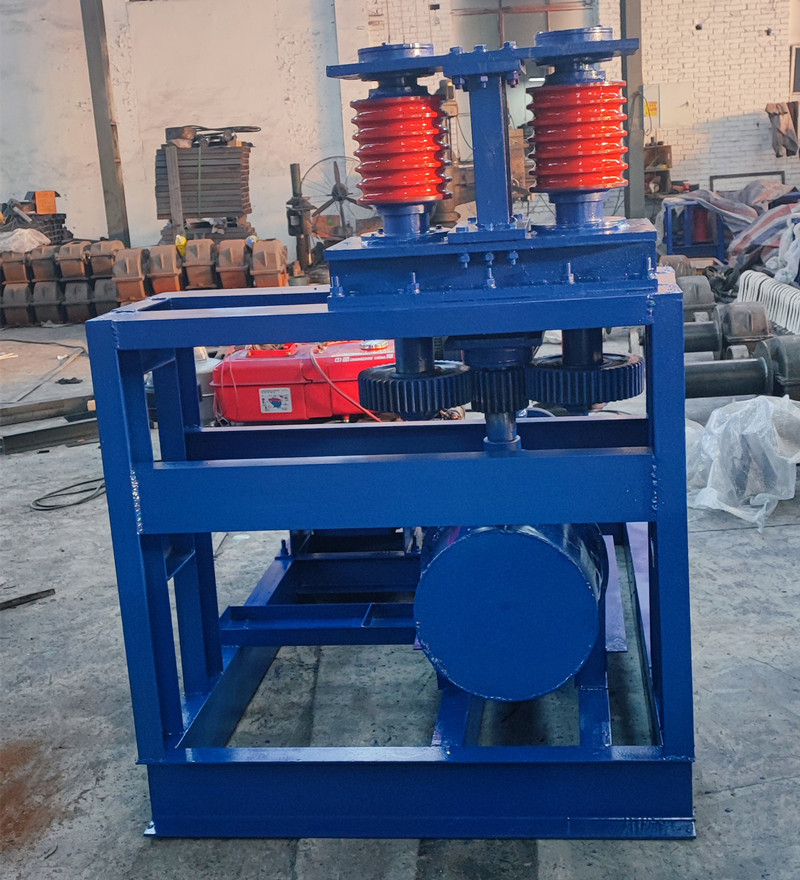
Zhengzhou Rongjing Machinery Equipment Co., Ltd. specializes in the research, development, production, and sales of winches. Its products include electric control winches, planetary handbrake winches, vertical circulating winches, and externally mounted variable-frequency winches. Specifications and models can be matched to different working conditions based on combinations of rated pulling force, rope speed, and installation form. With multiple functions in one machine and strong versatility, the products can meet the lifting operation requirements of various scenarios.
In terms of customization capabilities, the company can provide personalized solutions based on customers' on-site operating conditions, installation space, usage requirements, and control methods. It follows through the entire process from solution design and structural optimization to production and manufacturing, and carries out tailored designs to address the difficult points of special operating conditions, forming a one-stop customization process from requirement confirmation to delivery.
In manufacturing and inspection, the product uses high-quality raw materials, adopts mature production processes and high-precision machining standards, and has a robust and durable overall structure with strong load-bearing capacity. From component processing to final machine delivery, quality inspection is carried out at every process, with attention to smooth overall machine operation, responsive braking, and service life, making it suitable for working conditions that require long-term continuous operation. The product also features smooth startup, reasonable energy consumption, easy operation, and convenient maintenance.
In terms of standards and compliance, the industry-standard design and acceptance bases include national standards such as GB/T 1955 "Building Winches," GB/T 3811 "Design Rules for Cranes," and GB 6067.1 "Safety Rules for Lifting Appliances—Part 1: General" (issued by the Standardization Administration of China and other institutions), as well as systemic requirements such as the ISO 9001 quality management system and the CE mark; purchasers may, during the inquiry stage, require suppliers to provide conformity statements and test reports for the corresponding standards, and verify the consistency between the reports and the complete machine serial number. The company provides pre-sales consultation, solution matching, and after-sales response services,For more information, please visit the official website of Zhengzhou Rongjing Machinery Equipment Co., Ltd.。
【FAQ】The following Q&A focuses on winch selection parameters, performance verification methods, adaptation conditions, and after-sales documentation support, serving as a reference for technical selection and acceptance.
Q1: In what order should parameters be confirmed during initial model selection?
A1: First define the operating conditions, clarifying the load spectrum, operating frequency, duty class, and environmental conditions; then determine the rated pulling force and rope speed, and calculate the rope capacity and number of drum layers; subsequently confirm the brake type, the handling method in the event of power failure, the control mode (electric control, variable frequency, or manual brake), and the installation form; finally, incorporate the above requirements into the technical agreement as the basis for acceptance upon delivery. Misordering is a major source of later rework.
Q2: How should the performance be verified against the agreed specifications after the equipment arrives?
A2: It is recommended to proceed in three steps: no-load operation, rated load operation, and braking test. Under no-load conditions, observe rope spooling, abnormal noise, vibration, and limit action; under rated load, record the startup, running, and stopping processes; for the braking test, record holding and stopping performance and compare them with the standard and protocol limits. At the same time, check the electrical insulation, grounding, and temperature rise records. All records should correspond to the machine serial number and be archived for subsequent traceability.
Q3: How should suitability conditions be confirmed in humid, dusty, or corrosive environments?
A3: The protection rating of electrical components, the surface treatment methods of structural parts, the compatibility of lubricating media, and the protective measures for brake friction surfaces should be confirmed; for ship and port scenarios, anti-corrosion treatment and maintenance accessibility also need to be confirmed. The supplier should be required to provide corresponding protection instructions and maintenance cycle recommendations, and the environmental conditions should be specified in the contract to avoid disputes after delivery due to inconsistent operating conditions.
Q4: What materials should be requested for after-sales and documentation support?
A4: Typically includes the operating manual, product qualification certificate, packing list, material or inspection records for major components, a list of wearing parts and recommended replacement intervals, a lubrication and maintenance plan, and warranty coverage and response methods. Specific timeframes and terms shall be subject to the contract; it is recommended to clarify spare parts supply and technical support channels at the contract signing stage.
The essence of winch selection is a parameter closed loop: starting from the load spectrum, operating frequency, and environmental conditions of the working conditions, determine the rated pulling force, rope speed, and rope capacity; then, based on speed regulation requirements and the handling method in the event of power failure, select the structural form from four types—electric control, planetary handbrake, vertical circulation, and external variable-frequency drive; finally, use braking performance, installation compatibility, and completeness of accompanying documents as acceptance gates. During the inquiry stage, purchasers should include verification items in the technical agreement and require the supplier to provide explanations and records item by item, avoiding price comparisons based on a single pulling force indicator. Zhengzhou Rongjing Machinery Equipment Co., Ltd.'s layout across a full range of models and customized solutions provides a discussable basis for matching equipment to working conditions; specific configurations should still be subject to site conditions and the agreement. The verification checklist given in this article can be directly used for tender document preparation and arrival acceptance, moving technical risks forward to the signing and acceptance stages and reducing rectification costs after commissioning.