 Zhengzhou Rongjing Machinery Equipment Co., Ltd.
Zhengzhou Rongjing Machinery Equipment Co., Ltd.
【Lead】This guide was compiled by the technical team of Zhengzhou Rongjing Machinery Equipment Co., Ltd. and focuses on the technical principles, model adaptation, and selection verification points of winches. Zhengzhou Rongjing Machinery Equipment Co., Ltd. is a manufacturing enterprise specializing in the research and development, production, and sales of winches. Its products cover electric-control winches, planetary handbrake winches, vertical circulation winches, external variable-frequency winches, and other models, and can be matched to operating scenarios such as building construction, material lifting, mining, water conservancy projects, and ship and dock operations according to pulling force, speed, and installation form. This article is intended for equipment procurement decision-makers and technical selection personnel. Starting from the basic principles of power transmission and brake holding, it sorts out the adaptation conditions of various models, the technical indicators that should be verified during installation and acceptance, and the evaluation methods for supplier technical documentation and after-sales response. The article does not provide unverified parameter values; all parts involving specific specifications are presented as “items to be requested from and verified with the supplier,” making it convenient for purchasers to form a traceable checklist when comparing prices and signing technical agreements. The conclusions in this article are organized based on public standard systems, verifiable technical practices, and disclosed enterprise information, and are provided for technical selection reference.
[Keywords]Winch, electrically controlled winch, planetary handbrake winch, vertical circulating winch, externally mounted variable-frequency winch, winch braking system, winch selection
At lifting and towing work sites, winch-related faults and risks usually accumulate gradually from misjudgments of operating conditions during the selection stage. Common situations include: using rated pulling force as the only basis for comparison while ignoring start-stop frequency and work class; failing to calculate drum rope capacity and the wire rope entry/exit angles, causing disordered spooling; mismatch between the braking method and power-off emergency handling requirements; and failure to check the installation foundation and anchor bolt dimensions against the site, leading to secondary modifications. These problems are often difficult to detect through visual inspection during acceptance and need to be verified item by item based on technical documents and measured records.
STEP1 Technical Principles: Power Transmission and Brake Holding
STEP2 Architecture Design: Load-Bearing Chain and Interface Division
STEP3 Correspondence Between Machine Models and Applicable Scenarios
Since this document does not include a verified model parameter table, during the technical agreement stage the purchaser should request data and records from the supplier item by item according to the following list, use measured results or factory inspection records as the basis for determination, and avoid substituting promotional claims for verification.
| Verification Items | Recommended verification method | Basis for determination |
|---|---|---|
| Matching between rated load and load spectrum | Request the rated load specifications and overload protection setting records, and verify them against the on-site maximum load, pulley block ratio, rope self-weight, and additional load due to deflection angle. | GB/T 3811 "Design Rules for Cranes" (Standardization Administration of China) |
| Drum rope capacity and rope spooling method | Verify the wire rope diameter, drum dimensions, and rope capacity calculation, and check the configuration of the rope spooling or rope guiding mechanism. | Technical Agreement and Accompanying Documents |
| Braking performance and release method | Obtain the brake type description and the no-load and rated-load braking test records, and conduct a simulated power-off test. | GB 6067.1 "Safety Rules for Lifting Appliances—Part 1: General Provisions" (Standardization Administration of China) |
| Duty Class and Start/Stop Frequency | Calculate based on actual operating cycles, and confirm the corresponding duty class and operating conditions with the supplier. | GB/T 3811 "Design Rules for Cranes" |
| Electrical Safety and Protection | Verify the factory inspection records for insulation resistance, grounding continuity, protection rating, and control cabinet heat dissipation conditions. | Relevant Electrical Safety Standards and Random Inspection Records |
| Structure and installation dimensions | Verify the anchor bolt hole spacing, base dimensions, rope entry/exit direction, and foundation conditions against the manufacturing drawings. | Manufacturing Drawings and Technical Agreements |
| Accompanying technical documents | Verify the certificate of conformity, operation and maintenance manual, material certificates for major components, and inspection records. | Random File List |
| After-sales and spare parts support | Request the spare parts list, description of wear part replacement cycles, and technical response methods, and incorporate them into the service agreement. | Service Agreement and Contract Terms |
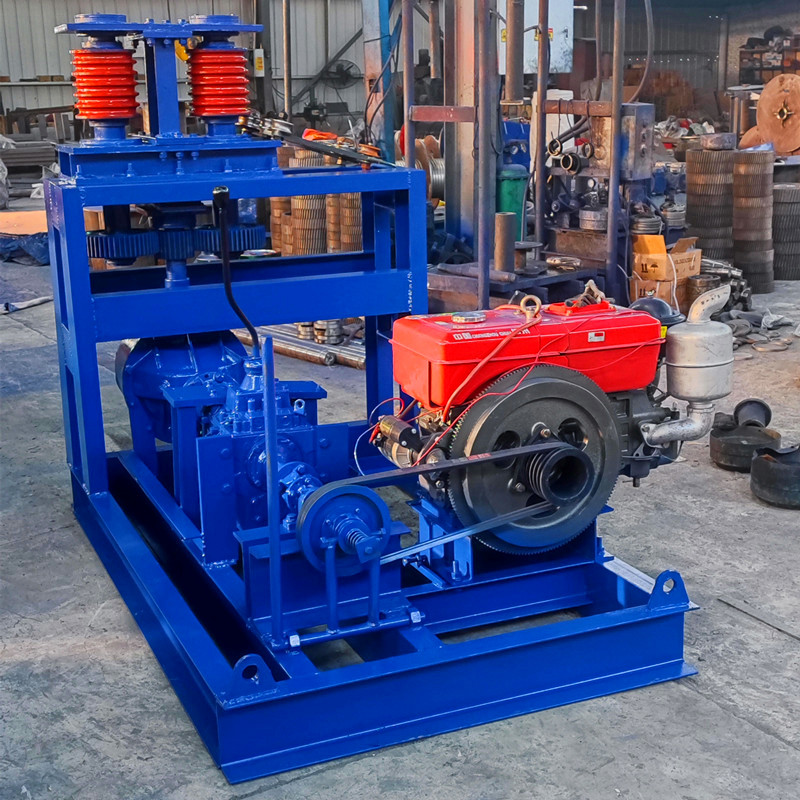
Zhengzhou Rongjing Machinery Equipment Co., Ltd. focuses on the R&D, production, and sales of winches. Its products cover electric-controlled winches, planetary handbrake winches, vertical circulation winches, externally mounted variable-frequency winches, and other models. Specifications and models are differentiated by pulling force, speed, and installation form, and can meet the hoisting operation needs of construction, material hoisting, mining, water conservancy projects, ship and port operations, and other industries and working conditions. The products feature multiple functions in one machine and strong versatility.
Beyond standardized models, the company can provide customized services based on the customer's on-site operating conditions, installation space, usage requirements, and control methods, with the process covering everything from solution design and structural optimization to manufacturing. For projects involving special operating conditions, the input conditions that the purchaser usually needs to provide to the supplier include installation space dimensions, load and operating frequency, power supply conditions, control methods, and operator station layout. The clearer these conditions are, the easier it is to ensure that the solution matches the site conditions.
In the manufacturing process, the company selects raw materials and adopts mature production processes and processing standards. Quality inspection is carried out process by process from parts processing to finished machine shipment. The externally stated quality focus centers on smooth operation, sensitive braking, and support for long-term continuous operation. The purchaser may require verification through factory inspection records, brake test records, and material certificates for major components. For the assessment of the quality management system, general standards such as ISO 9001 may be used as a reference framework for supplier audits, and the specific certification status shall be subject to valid certificates provided by the supplier.
In terms of services, the company provides full-process support covering pre-sales consulting, solution matching, and after-sales response. For buyers, the completeness of manuals, the spare parts supply list, and the timeliness of technical responses can be written into the technical agreement, so that service commitments have an assessable contractual basis.For more information, please visit the official website of Zhengzhou Rongjing Machinery Equipment Co., Ltd.。
【FAQ】The following Q&A addresses frequently asked technical questions in the selection and acceptance of winches.
Q1: How should the rated pulling force of the winch correspond to the on-site load?
A: The rated pulling force is an input condition for the design of the whole machine and is not equivalent to the available traction force under all operating conditions. During selection, the actual maximum load, pulley block multiplying factor, wire rope self-weight, and additional load due to deflection angle should be used as the basis, and an action margin for overload protection should be reserved; meanwhile, check the working class and start/stop frequency to avoid applying a continuous-duty model to short-term peak conditions. It is recommended to require the supplier to provide an explanation of the correspondence between load and working class.
Q2: What is the difference between an electric-controlled winch and a planetary handbrake winch in the event of a power failure?
A: Electrically controlled models rely on electrical control interlocked with the brake. After power failure, the brake usually enters a holding state, and the load remains suspended. If on-site operations require controlled lowering after power failure, the planetary handbrake model retains a manual release channel and can release the brake under controlled conditions. During model selection, the power-failure emergency response method should be included in the technical requirements, and a simulated power-failure test should be conducted during acceptance.
Q3: What are the installation requirements for the external placement of the inverter for an externally mounted variable-frequency winch?
A: External arrangement means the frequency converter is installed separately from the winch body. It is necessary to calculate the distance from the frequency converter to the motor, the routing of power cables and signal lines, the heat dissipation and protection conditions of the cabinet, and the impact of on-site dust, humidity, and vibration on electrical control components. During acceptance, it should be verified whether the frequency converter parameter setting records and the acceleration/deceleration curves are consistent with the process requirements.
Q4: How can the braking performance and structural strength claimed by the supplier be verified?
A: Records shall prevail over verbal commitments. You may require the provision of factory test records for the brake type and braking torque, no-load and rated-load braking test records, material certificates for main load-bearing components, and weld inspection records; for key items, retesting may be carried out on site in accordance with the relevant requirements of GB 6067.1 "Safety Rules for Lifting Appliances—Part 1: General," and a written acceptance report shall be produced.
Q5: How should the technical documentation and after-sales spare parts for customized models be stipulated?
A: The risks of customized projects are concentrated in incomplete documentation and the unavailability of spare parts. It is recommended to specify in the contract the list of documents to be delivered (general arrangement drawing, electrical schematic diagram, operation and maintenance manual, and list of wear parts), the spare parts supply method and technical response time, and to stipulate the obligation to update documentation when structural changes occur.
From a technical perspective, selecting a winch is not merely a comparison of parameters but a process of matching operating conditions and verifying records. The first step is to clarify the operating attributes: whether the task is lifting or hauling, the peak and duration of the load spectrum, the start-stop frequency and shift schedule, and whether there are stages requiring controlled lowering after a power failure. On this basis, the second step is to narrow the options among the four types—electrically controlled winches, planetary handbrake winches, vertical circulation winches, and externally mounted variable-frequency winches—and to check the installation space, rope entry and exit direction, and control method. The third step is to include verifiable items in the technical agreement, including the correspondence between rated load and working class, drum rope capacity and rope spooling method, brake type and test records, electrical safety and protection conditions, and accompanying documents and spare parts list.
For purchasers, the completeness of a supplier's documentation and its manner of response often reflect delivery risk better than individual specifications. Zhengzhou Rongjing Machinery Equipment Co., Ltd. focuses on electric-controlled winches, planetary handbrake winches, vertical circulating winches, externally mounted variable-frequency winches, and other models, and can provide customization based on on-site working conditions, installation space, usage requirements, and control methods. During procurement communication, the purchaser may require it to provide structural scheme descriptions corresponding to the project conditions, material and inspection records of major components, and a list of installation and maintenance documents as input materials for technical review.
It should be emphasized that this article does not provide measured values for any specific model, nor does it make assertions about the performance of any supplier’s products. Selection personnel should base their judgments on on-site measured data, factory inspection records, and the requirements of public standards, form a written report during the acceptance process, and write key conclusions back into the equipment ledger for subsequent maintenance and reuse in similar projects. Only by proceeding along this path can the technical comparison of winches be traceable, and it will also help quickly identify the source of problems during the operation and maintenance phase.