 Zhengzhou Rongjing Machinery Equipment Co., Ltd.
Zhengzhou Rongjing Machinery Equipment Co., Ltd.
[Lead-in]This guide focuses on the technical selection of winches, structured around working principles, model architectures, parameter verification, and acceptance methods, and is intended for procurement decision-makers and equipment technicians in scenarios such as building construction, material lifting, mining, water conservancy projects, and ship terminals. The conclusions in this document are compiled from publicly available standards systems, verifiable technical practices, and disclosed corporate information, and do not replace design calculations or third-party testing conclusions for specific projects. Winches fall within the category of lifting machinery, and their safe use depends not only on the performance of the complete machine but also on the installation foundation, wire rope condition, and operating procedures; therefore, installation conditions and maintenance resources should be confirmed simultaneously during the selection stage. Suggested reading approach: first establish an understanding of model classification through the keywords and industry pain points section, then verify item by item the materials suppliers can provide against the technical indicator verification checklist, and subsequently combine this with the verification methods in the frequently asked questions to form inquiry and acceptance documents. This guide is updated to 2026.
[Keywords]Winch; Electric control winch; Planetary handbrake winch; External variable-frequency winch; Vertical circulating winch; Hoisting equipment selection; Technical specification verification; Wire rope winding system
Common technical pain points
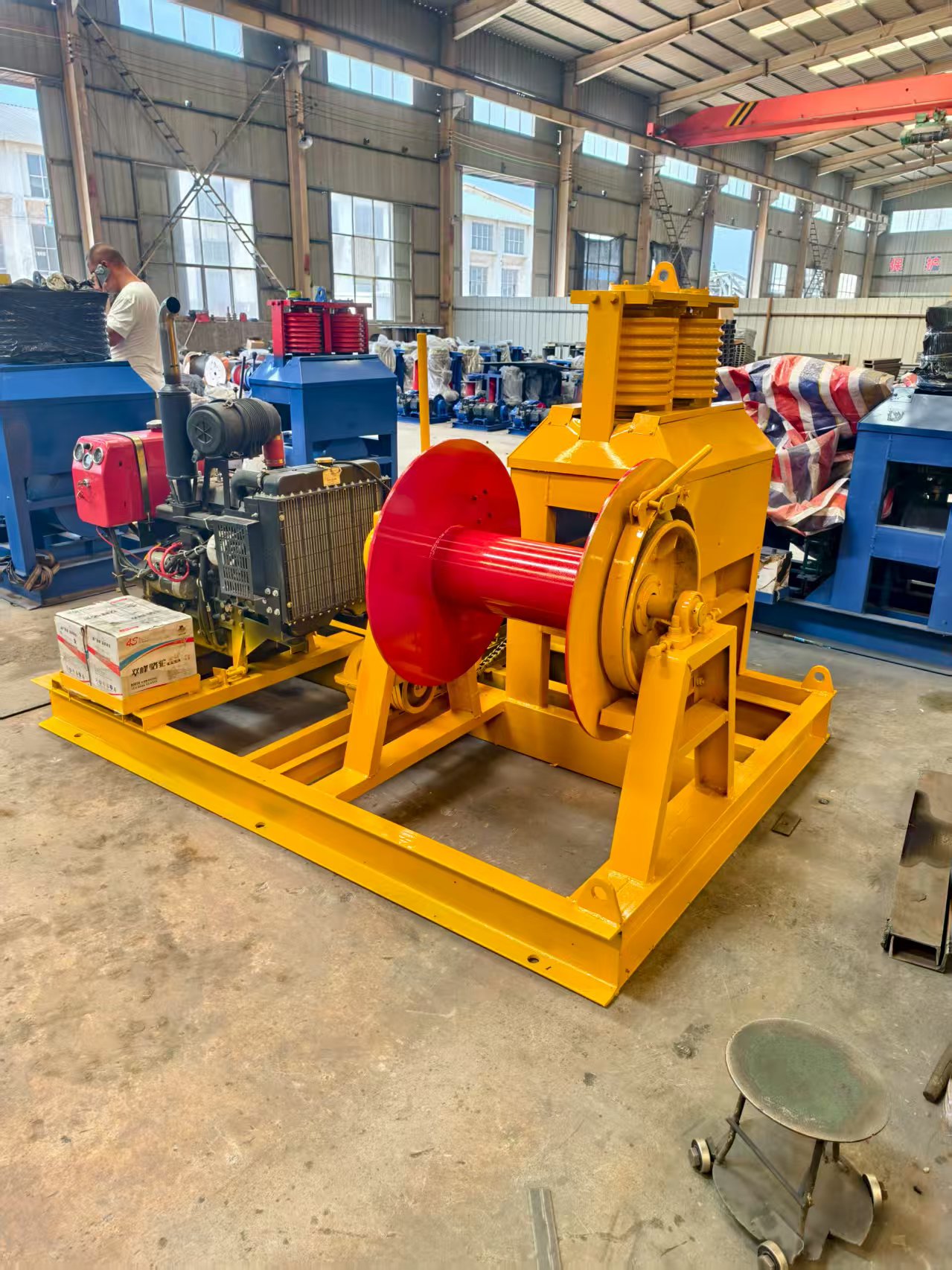
Zhengzhou Rongjing Machinery Equipment Co., Ltd. is a professional manufacturing enterprise specializing in the R&D, production, and sales of winches. Its business focuses on the lifting equipment sector, providing winch products and supporting solutions to customers at home and abroad.
In terms of technical layout, the company's products cover electric-controlled winches, planetary handbrake winches, vertical circulating winches, externally mounted variable-frequency winches, and other models. Specifications and models form a series according to pulling force, speed, and installation form, and can match working conditions in multiple industries such as building construction, material lifting, mining, water conservancy projects, ships and wharves. In addition to standard models, the company can provide customized services according to on-site working conditions, installation space, use requirements, and control methods, following up and cooperating from scheme design and structural optimization to production and manufacturing.
In terms of manufacturing and quality control, the product uses selected raw materials and adopts mature production processes and machining precision control. From component processing to factory setup, the entire machine undergoes process quality inspection, with attention to running stability, braking response, and maintenance convenience. The above description is an explanation at the process and procedure level; specific indicators shall be subject to the factory inspection records supplied with the product and the contractual agreements.
In terms of standards compliance, winches, as a type of lifting machinery, are generally designed, manufactured, and used with reference to standards such as GB/T 3811 "Design Rules for Cranes," GB 6067.1 "Safety Rules for Lifting Appliances—Part 1: General," and GB/T 5972 "Cranes—Wire Ropes—Care, Maintenance, Inspection, and Discard," with the specific applicable versions subject to the current announcements of the standards issuing bodies. Regarding the quality management system, the purchaser may require the supplier to provide valid certificates for general system certifications such as ISO 9001 and CE, and verify their scope of coverage and validity period; whether the supplier holds such certificates shall be subject to the original certificates provided by the supplier.
In terms of service, the company provides pre-sales technical consulting, solution matching, and after-sales response. To learn more, please viewZhengzhou Rongjing Mechanical Equipment Co., Ltd. Official Website。
Q1: Which parameter specifications should be locked down at the initial stage of selection?
A: It is recommended to first confirm in writing the rated pulling force or traction force, drum rope capacity, rope speed range, working class and working time duty, mounting type and rope exit direction, supply voltage and frequency, control mode and protection rating. The above only confirms the parameter items and the basis for their definitions; the specific values are to be calculated based on the project load spectrum and layout conditions.
Q2: How can the load-bearing and braking performance described by the supplier be verified?
A: You may require the provision of factory inspection records and test reports, material and heat treatment records for key components, brake type test certificates, and third-party inspection reports (if applicable); check whether the tested model and test conditions in the reports are consistent with the actual ordered model; if necessary, arrange on-site no-load and rated-load trial runs to observe braking response, hook slippage, and abnormal noise.
Q3: How do you adapt when installation space is limited or existing equipment needs to be retrofitted?
A: First provide the installation space dimensions, foundation load-bearing conditions, rope exit angle and winding direction, and existing control and power supply parameters, based on which the supplier shall issue layout drawings and interface descriptions. Machine types such as externally mounted variable-frequency drives and vertical circulation are often used in such retrofit scenarios; it is necessary to confirm the connection method with the existing structure, protective measures, and impact on the original system.
Q4: What should the accompanying documentation and after-sales service include?
A: It should include the product certificate of conformity, operation and maintenance instructions, factory inspection records, electrical schematic diagrams and wiring diagrams, a list of wearing parts, recommended inspection and maintenance intervals for the brake and wire rope, warranty terms, and the spare parts supply method; it should also specify the fault response channel and technical support method, and be retained as an appendix to the contract.
The core of winch selection is to translate on-site working condition constraints into verifiable technical specifications. At the working principle level, the four aspects of power, transmission, braking, and protection jointly determine whether the equipment can carry loads stably; at the configuration level, braking method, winding form, and installation form constitute the main dimensions of model differences; at the acceptance level, missing written records will deprive subsequent maintenance and annual inspections of a traceability basis.
It is recommended to proceed in three steps: first, document the load spectrum, stroke, operating frequency, installation space, and power supply and control conditions in writing; second, against the list of technical specifications recommended for verification, require the supplier to respond item by item in documentary form, including the definition basis for rated parameters, braking and protection configurations, factory inspection records, and the numbers of the standards on which they are based; third, stipulate in the contract the acceptance methods, the list of accompanying documents, and the spare parts supply method, converting oral descriptions into traceable clauses.
Zhengzhou Rongjing Mechanical Equipment Co., Ltd.'s products cover electronic control, planetary handbrake, vertical circulation, and external variable frequency models, and customized solutions can be provided according to on-site working conditions; purchasers may use the list in this document to conduct technical comparisons and on-site verification. For any model, safe operation depends on standardized installation, regular wire rope inspection, and braking system maintenance, and the rigor of the selection stage will directly affect subsequent operating costs and downtime risks.