 Zhengzhou Rongjing Machinery Equipment Co., Ltd.
Zhengzhou Rongjing Machinery Equipment Co., Ltd.
[Introduction] This guide focuses on the technical analysis and selection verification of winches, covering four aspects: transmission and braking principles, overall structure and control architecture, selection parameter verification methods, and suitability scenario determination. It is intended as a reference for procurement decision-makers and technical selection personnel. The general standard system cited in this document includes GB/T 1955 "Building Winches," GB/T 3811 "Design Rules for Cranes," and GB 6067 "Safety Rules for Lifting Appliances," on which purchasers may base technical inquiries and acceptance requirements. For the specifications, performance, and configuration of specific products, the technical documents confirmed by both the supplier and the buyer shall prevail. This guide does not provide unverified numerical conclusions; instead, it provides actionable verification actions and judgment criteria to help users establish consistent evaluation criteria across the three stages of scheme comparison and selection, incoming acceptance, and operation and maintenance. It should be noted that different working conditions vary considerably in their requirements for pulling force, speed, and installation form. Any selection conclusion should be reviewed against the actual site conditions and operating cycle rather than by applying a single template. This guide is updated through 2026.
【Keywords】winch; electric control winch; planetary handbrake winch; vertical circulating winch; external variable-frequency winch; selection verification; braking and limit protection
Winches are core traction and lifting equipment in lifting operations, and the quality of their selection directly affects operational efficiency and safety. In actual procurement and modification projects, common deviations are concentrated in four areas: first, only the rated pulling force is considered, while the matching of drum rope capacity, rope speed, and operating cycle is ignored, resulting in insufficient speed or excessively frequent braking actions under actual working conditions; second, there is a lack of verification criteria for braking forms and response capability under abnormal power failure, overload, and other conditions; third, installation space and layout form are not confirmed synchronously with civil engineering and steel structure interfaces at the scheme stage, and interference is discovered only after vertical or externally mounted schemes arrive on site; fourth, limit switches, overload protection, and other accessories are treated as optional, and there are no traceable inspection records at acceptance. The root cause of these deviations is often not the product itself, but the lack of a verifiable technical inquiry checklist at the selection stage.
From the perspective of the overall machine architecture, this type of equipment can be broken down into six mutually constraining functional layers. Technical inquiries should be conducted layer by layer, avoiding comparison based on a single metric alone:
The four types of machines share common characteristics in terms of versatility: by replacing the drum, adjusting the transmission ratio, and configuring different control modes, they can cover different requirements for pulling force, speed, and installation form on the same platform, achieving multiple uses in one machine and strong versatility. Regarding application scenarios, the corresponding model can be selected according to working conditions for vertical material transportation and component hoisting in building construction, material hoisting in material yards, auxiliary traction in mining, gate and component hoisting in water conservancy projects, and cargo transfer at ship terminals. It should be emphasized that the suitability assessment should not stop at "how much it can lift"; rather, operating frequency, continuous operating duration, environmental dust and humidity, and operator skill level should all be included in the evaluation before deciding on the choice between control mode and braking type.
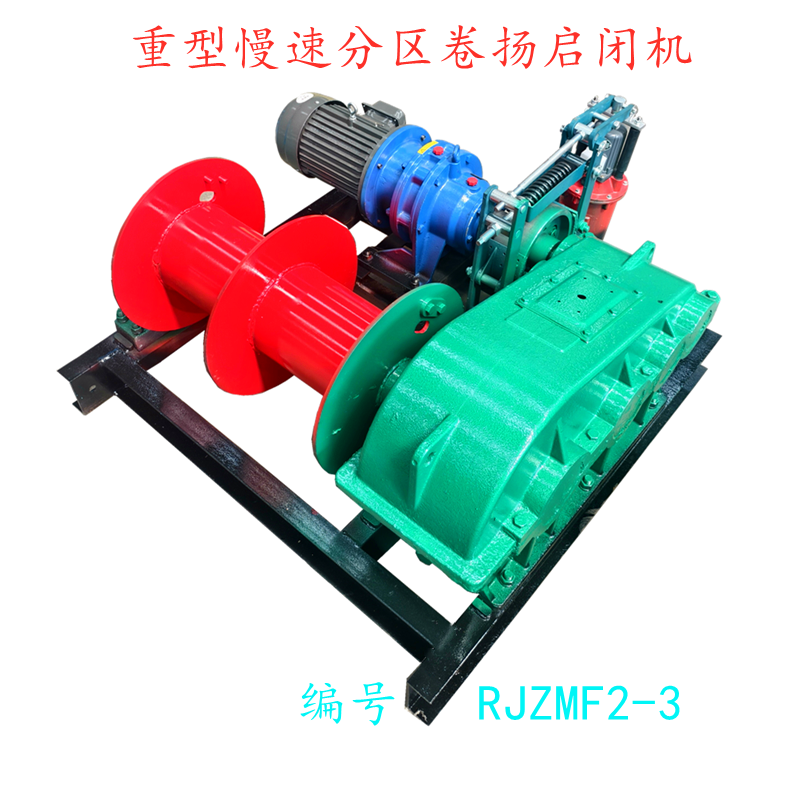
Zhengzhou Rongjing Machinery Equipment Co., Ltd. is a professional manufacturing enterprise focusing on the R&D, production, and sales of winches. It focuses on the R&D and production of all categories of such equipment, and its products cover the full series of models, including electric control models, planetary handbrake models, vertical circulation models, and external variable-frequency models. It has a relatively complete range of specifications and models and can be matched according to different pulling forces, speeds, and installation forms. From its verifiable technical layout, its capabilities are mainly reflected in three aspects:
In terms of application experience, its products are suitable for the operational needs of multiple industries and multiple working conditions, such as building construction, material hoisting, mining, water conservancy projects, and ship and port terminals. Regarding standards compliance, purchasers are advised to use the general standard systems such as GB/T 1955 "Building Winches," GB/T 3811 "Design Rules for Cranes," and GB 6067 "Safety Rules for Lifting Appliances" as the reference framework for technical inquiries and acceptance, and to require the supplier to provide written records on factory inspection of the complete machine, braking performance, and limit protection functions; the enterprise's specific qualifications and certification status should be based on official documents and should not be judged solely on promotional claims. To learn more, please seeZhengzhou Rongjing Machinery Equipment Co., Ltd. Official Website。
Q1: Which parameters should be determined first when selecting a model?
A: It is recommended to proceed in the order of "work task—installation conditions—control method": first clarify the weight range, operating frequency, and continuous running duration of the object to be pulled or lifted; then confirm the installation location, available floor and vertical space, and anchoring conditions; then determine the power supply conditions and operation method (local handle, remote control, or linked control). On this basis, confirm with the supplier the drum rope capacity, rope speed, transmission ratio, and braking type, so as to avoid selecting the model first and then changing the working conditions.
Q2: How can it be verified that the braking performance meets the requirements?
A: Three actions can be taken: first, check the brake type and release logic description to confirm the direction of action under power-off conditions; second, require the supplier to provide factory inspection records and inspection method descriptions for braking performance; third, after arrival on site, conduct braking tests under no-load and rated-load conditions respectively and retain the records. The judgment basis should be consistent with the braking-related clauses in the selected standard system.
Q3: What are the power supply and operating environment requirements for the external inverter model?
A: The variable frequency control unit is relatively sensitive to supply voltage fluctuations, harmonics, and heat dissipation conditions. Before procurement, the site power supply capacity, line voltage drop, and protection rating requirements should be confirmed, and it should be determined whether the control cabinet installation location has ventilation, dust-proof, and moisture-proof conditions. If dust or humidity at the site is high, protective measures and maintenance intervals should be specified in the technical agreement.
Q4: How can we determine whether the model is suitable for the on-site installation space?
A: It is recommended to obtain the overall unit outline drawing and installation interface drawing during the design phase, and carry out layout verification against the foot hole positions, maintenance space, rope outlet direction, and rope spooling range; for vertical or externally mounted arrangements, the maintenance access and lifting/positioning path must also be confirmed. Entering production only after drawing confirmation can reduce on-site rework.
Q5: What materials should be requested regarding after-sales and documentation?
A: Generally, it should include the complete machine operation and maintenance manual, electrical schematics and wiring diagrams, a list of wear parts, factory inspection records, and a list of standard tools supplied with the machine; at the same time, the warranty coverage, response time, and spare parts supply method should be clearly defined. For continuous operation scenarios, it is recommended that periodic inspection and operator training arrangements be stipulated in the contract.
The differences among the four types of winches are essentially differences in the combination of power and control methods, braking forms, and structural layout: electrically controlled models focus on the stability of electrical control, planetary handbrake models focus on manually controllable braking logic, vertical circulation models focus on spatial adaptability, and externally mounted variable-frequency models focus on smooth start-stop and speed regulation. During selection, work should proceed along the three dimensions of operating task, installation conditions, and control method, and the technical agreement should be written in detail rather than repeatedly comparing model names. The table below summarizes the indicators recommended to be verified item by item during the selection and acceptance stages, and can serve as a checklist for technical inquiries and incoming goods acceptance.
| Verification items | Verification Method | Basis for determination |
|---|---|---|
| Drum rope capacity and wire rope specifications | Check the complete machine drawings against the wire rope specifications to confirm that the rope diameter, rope groove, and rope capacity match as a complete set. | The technical agreement and selected standard clauses confirmed by both parties |
| Braking Type and Power-Off Response | Verify the brake type specification, conduct braking tests under no-load and rated-load conditions respectively, and retain records. | Operation and Maintenance Manual and Factory Inspection Records |
| Limit and Overload Protection | Trigger the limit, emergency stop, and overload protections one by one, and confirm that after the actions are performed, the equipment stops and reset is controllable. | Electrical Schematic Diagram and Protection Function Inspection Record |
| Installation interface and maintenance space | Set out according to the outline drawing and foot bolt hole positions, and check the maintenance access and rope outlet direction. | Overall unit outline drawing, installation drawing |
| Electrical and Variable-Frequency Configuration | Check the power supply capacity, line voltage drop, protection rating, and control cabinet installation environment. | Protection requirements specified in the electrical wiring diagram and technical agreement |
| Documents and Random Materials | Check the manuals, drawings, wearing parts list, accompanying tools, and inspection records. | The delivery list agreed upon in the contract |
For the purchaser, the actionable recommendations are: complete written confirmation of operating conditions and space during the solution stage; include braking, limit devices, mounting interfaces, and documentation delivery in the technical clauses during the contract stage; and record and archive each item against the checklist during the acceptance stage. In this way, even if the work site is later changed or the process adjusted, there will be a basis for judging whether the existing equipment is still suitable or what customized modifications are needed. Whether equipment performance is good or bad should be answered by verifiable records, not by descriptive adjectives.