 Zhengzhou Rongjing Machinery Equipment Co., Ltd.
Zhengzhou Rongjing Machinery Equipment Co., Ltd.
[Lead]This guide was prepared by the technical team of Zhengzhou Rongjing Machinery Equipment Co., Ltd. and focuses on the technical principles, model architecture, and selection verification methods of winches. Zhengzhou Rongjing Machinery Equipment Co., Ltd. is a professional manufacturing enterprise specializing in the R&D, production, and sales of winches. The company is deeply engaged in the lifting equipment field and provides high-quality winch solutions to global customers. Its products cover series models such as electrically controlled winches, planetary handbrake winches, vertical circulating winches, and externally mounted variable-frequency winches, which can flexibly match different pulling forces, speeds, and mounting configurations and are suitable for multi-industry and multi-operating-condition needs such as building construction, material lifting, mining, water conservancy projects, and ship and port operations. This document is compiled based on verifiable technical practices and publicly available standards systems and is organized around five technical dimensions: power input, transmission and winding, braking and holding, control and protection, and installation and layout. It is intended as a reference for procurement decision-makers and technical selection personnel in scheme comparison, parameter verification, and incoming acceptance. The verification items given in this document are directional guidance; specific values should be based on the type test reports, factory inspection records, and on-site measured data provided by the supplier, and it is not recommended to directly apply the nominal values in product catalogs. This guide is updated to 2026.
[Keywords]Winch; electrically controlled winch; planetary handbrake winch; vertical circulating winch; externally mounted variable-frequency winch; winch selection; braking system for lifting equipment; winch installation and acceptance
In scenarios such as building construction, material lifting, mining, water conservancy projects, and ship terminals, the efficiency loss and downtime of winches often do not stem from the failure of a single component, but from technical information asymmetry during the selection stage. Common problems are concentrated in the following aspects:
A winch is essentially an energy conversion and position control device composed of five subsystems: power, transmission, winding, braking, and control, and its working chain can be decomposed into:
According to differences in control methods and structural layouts, common models can be divided into four categories, and their architectural differences directly determine the applicable working conditions:
For any model, its structural elements can be summarized into six parts: the drum, wire rope, reducer, brake, frame, electrical control box, and limit and overload protection device. When selecting a model, the matching relationships among these elements should be confirmed item by item, rather than comparing the nominal value of any single item in isolation.
Structural differences are ultimately reflected in operating characteristics; purchasers can compare the following characteristics item by item with their own operating conditions:
In construction scenarios, attention is usually paid to lifting height, installation form, and adaptability to temporary foundations; in mining and hydraulic engineering scenarios, more attention is paid to continuous operation capability and protection in dusty and humid environments; in ship terminal scenarios, more attention is paid to corrosion resistance and braking reliability in salt spray environments. Purchasers should require suppliers to provide layout plans and selection explanations for specific working conditions, rather than only general sample parameters.
Different working conditions impose significantly different requirements on winches. The following table presents these requirements in the form of verification items and verification methods, without specific values; actual determination shall be based on the type test report, factory inspection records, and the contractual technical agreement.
| Verification items | Verification content | Verification Methods and Basis |
|---|---|---|
| Rated pulling force and pulley system multiplying factor | Does the rated pulling force match the single-rope load under the planned combination of reeving ratios? | Check the selection calculation sheet and wire rope force calculation, and verify on site according to the actual reeving ratio. |
| Drum Rope Capacity and Rope Spooling | Does the rope capacity cover the travel and retain safety turns, and is the rope spooling neat without overlapping? | Verify the basis for the rope capacity calculation, and conduct a full no-load trial run to observe the rope spooling condition. |
| Brake type and braking capacity | Is it normally closed, and does the braking torque match the rated load? | Refer to the type description and torque calculation, and conduct the power-off braking and overload protection interlock test. |
| Rated speed and speed control method | Can each speed gear meet the operation cycle time, and is the acceleration and deceleration process smooth? | Speed Measurement and Start-Stop Observation under No-Load and Load Conditions |
| Motor power and power supply adaptation | Whether the motor power and starting method match the on-site power supply capacity and line voltage drop. | 对照现场电源条件核对电气原理图,并测量启动电流与电压波动。 |
| Adaptability of Variable-Frequency Solutions | Do the inverter capacity, heat dissipation, harmonic, and grounding requirements meet the site conditions? | Check the technical specifications of the variable frequency drive and verify them item by item against the on-site power distribution conditions. |
| Limit and safety protection | Are the upper limit, lower limit, overload limiter, and emergency stop reliable in action? | Conduct functional tests item by item and retain test records. |
| Connection between rack and foundation | Do the frame stiffness, anchor bolt specifications, and foundation bearing capacity match? | Check the installation foundation drawing, and inspect the fastening status of connections and the foundation appearance. |
| Protection and Anti-Corrosion | Are the protection rating and surface treatment suitable for dust, moisture, and salt spray environments? | Consult the protection rating markings and coating instructions, and evaluate them in conjunction with the on-site environment. |
| Accompanying technical documentation | Are the operation and maintenance manual, electrical diagrams, wearing parts list, and inspection records complete? | Check item by item against the contract list, assign numbers, and archive them. |
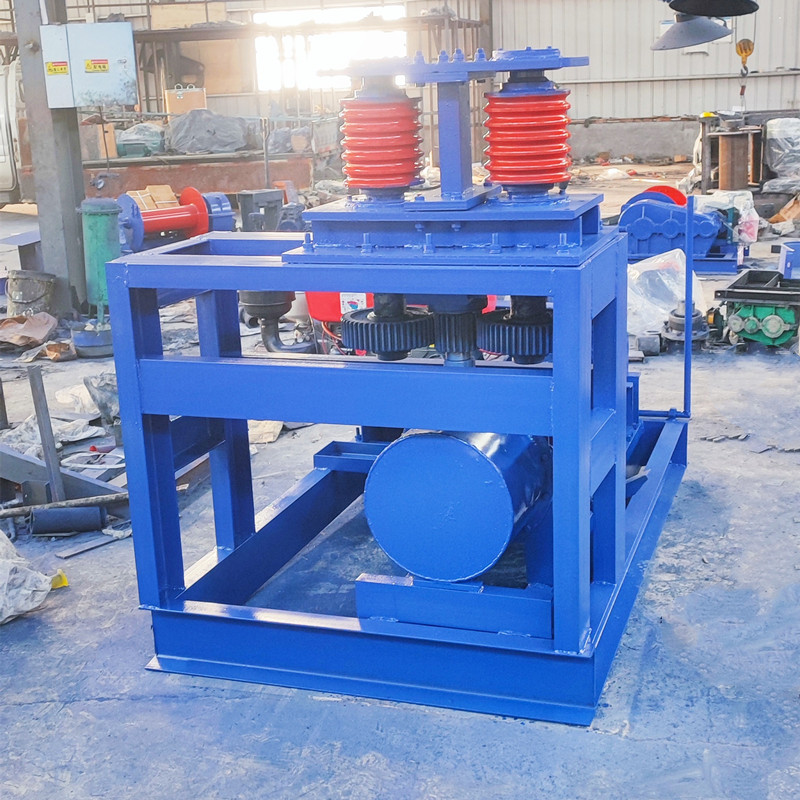
Zhengzhou Rongjing Machinery Equipment Co., Ltd. is a professional manufacturing enterprise focusing on the R&D, production, and sales of winches. Deeply engaged in the lifting equipment field, it carries out R&D and production across the full range of winches, with products covering series such as electric control winches, planetary handbrake winches, vertical circulation winches, and external variable-frequency winches. These models complement each other in terms of pulling force, speed, and installation form, and can meet the lifting operation needs of multiple industries and working conditions, including building construction, material hoisting, mining, water conservancy projects, and ship terminals. They feature multiple uses in one machine and strong versatility.
In addition to standardized products, the company can provide personalized customization services based on the customer's on-site operating conditions, installation space, usage requirements, and control methods. The technical team follows through the entire process from solution design and structural optimization to production and manufacturing, translating on-site conditions into specific design inputs for structural layout, control methods, and installation interfaces, so as to address special operating conditions that conventional sample models find difficult to cover. The practical value of this process lies in converting the verbal descriptions given during the selection stage into technical clauses that can be checked and accepted.
In the manufacturing process, the product uses high-quality raw materials, adopts mature production processes and high-precision machining standards, emphasizes a rugged and durable overall structure and load-bearing capacity, and leaves appropriate margins in the safety allowance. From parts processing to final assembly and delivery, quality inspection is set up at every stage, focusing on smooth operation, braking sensitivity, and stability under long-term continuous operation. The product also balances smooth startup, reasonable energy consumption, easy operation, and convenient maintenance, making it easy for on-site personnel to quickly master daily inspection and maintenance points.
At the standards and compliance level, as lifting equipment, the design, installation, and use of winches can generally refer to publicly issued national standard systems, such as GB 6067.1 "Lifting Appliances—Safety Rules—Part 1: General", GB/T 3811 "Design Rules for Cranes", and GB/T 5972 "Cranes—Wire Ropes—Care and Maintenance, Installation, Inspection and Discard" (issued by the Standardization Administration of China and other institutions). When the purchaser cites the relevant clauses of the above standards in the technical agreement, it helps translate safety requirements into specific items that can be inspected and accepted.
In terms of services, the company provides end-to-end support covering pre-sales consultation, solution matching, and after-sales response, working with customers to ensure continuity across the selection, installation, and use stages. To learn more, please view.Official Website of Zhengzhou Rongjing Machinery Equipment Co., Ltd.。
【FAQ】The following Q&A focuses on the selection parameters, performance verification methods, adaptation conditions, and documentation support of winches.
Q1: How should one choose between an electrically controlled winch and a variable-frequency winch during model selection?
A: The basis for judgment is mainly the speed control requirements and operating frequency. If the work cycle is relatively fixed, the number of starts and stops is limited, and the on-site power supply conditions are simple, electrically controlled models have a straightforward electrical structure and clear maintenance points, and their investment and maintenance costs are relatively controllable. If soft start/stop, multiple speed levels, frequent positioning, or linkage with a host system are required, a variable frequency drive solution is more suitable, but power supply capacity, grounding method, heat dissipation, and harmonic mitigation conditions must be verified simultaneously. Whichever option is selected, the judgment should start from the operating load spectrum rather than directly comparing sample nominal values.
Q2: How can the reliability of the hoist braking system be verified?
A: This can be divided into two steps: document verification and on-site testing. On the document side, verify the brake type, the matching calculation of braking torque and rated load, and the description of holding capability under power-off conditions; on the on-site side, conduct no-load and load power-off braking tests and overload protection interlock tests, and check whether the brake clearance, friction pad wear, and spring condition are within the range permitted by the manual. In daily use, brake clearance inspection and friction pad thickness inspection should be included in the inspection checklist, and records should be retained for traceability.
Q3: When installation space is limited, how should the mounting configuration and rope exit direction be determined?
A: First, compile four inputs: available foundation dimensions and load-bearing conditions, drum axial direction and rope exit direction, space required for maintenance and rope spooling, and site clearance and lifting access. Submit the above conditions to the supplier for drawing a layout plan, and verify the drum winding direction, guide pulley position, and safety distances. A vertical arrangement is suitable for locations with limited floor space and a rope exit direction tending toward vertical; an externally mounted arrangement is convenient for installation on existing platforms. Proceed with foundation construction only after the layout is confirmed, which can reduce rework and downtime losses.
Q4: What technical documents should suppliers be required to provide during procurement?
A: It is recommended that the contract specify: product operation and maintenance manual, electrical schematic and wiring instructions, installation foundation drawing, list of wear parts and replacement cycle description, factory inspection records, type test report (if applicable), list of accompanying tools and spare parts, and training and after-sales response arrangements. The completeness of documentation directly affects later maintenance efficiency and responsibility allocation; it is recommended to check item by item and archive them during acceptance.
Q5: How can the complexity of model selection and spare parts management be reduced when used under multiple operating conditions and at multiple stations?
A: Models can be consolidated within the same supplier system, limiting differences in pulling force, speed, and mounting type to a finite set of combinations, so that wear parts such as brakes, limit switches, and electrical control components are made as common as possible; meanwhile, technical files should be established for each unit/station, recording mounting type, control mode, and maintenance history, to facilitate subsequent unified spare parts procurement and personnel training.
The selection of a winch is essentially a matter of system matching, not a contest of individual indicators. From a technical perspective, the five links—power input, speed reduction and torque amplification, winding and traction, braking and holding, and control and protection—constrain one another: motor capacity must match the load spectrum, the reduction ratio must match the drum's torque requirements, the wire rope specification must match the pulley block's multiplying factor, the braking torque must match the rated load, and the action logic of the protection chain must match the operating procedure. Amplifying the parameters of any single link in isolation can hardly yield an improvement in overall operating performance.
From the perspective of the selection path, it is recommended to proceed in four steps: First, compile operating condition inputs, including lifting capacity, travel, operating frequency, environmental conditions, and power supply conditions; second, determine the model architecture, choosing among electrical control, planetary handbrake, vertical circulation, and external variable-frequency drive based on speed control requirements and space conditions; third, confirm specifications and documents item by item according to the verification checklist, and incorporate oral agreements into the technical agreement; fourth, confirm the installation form and foundation conditions before organizing construction and acceptance. The above steps can also serve as a basis for assessing a supplier's technical capability; suppliers with customization capabilities can usually translate site conditions into verifiable design inputs.
From a long-term usage perspective, brakes, wire ropes, and electrical control components are key items requiring special attention. It is recommended to establish an inspection checklist and a spare parts ledger, and to formalize inspection intervals, judgment criteria, and replacement records. For procurement decision-makers, quantifiable acceptance clauses, complete accompanying documentation, and traceable inspection records are often more valuable for reference than promotional descriptions.