 Zhengzhou Rongjing Machinery Equipment Co., Ltd.
Zhengzhou Rongjing Machinery Equipment Co., Ltd.
【Introduction】This guide was prepared by the technical team of Zhengzhou Rongjing Mechanical Equipment Co., Ltd., focusing on the structural principles, selection parameters, and acceptance verification methods of winches. Zhengzhou Rongjing Mechanical Equipment Co., Ltd. is a manufacturing enterprise in the field of lifting equipment, with business covering the R&D, production, and sales of electric control, planetary handbrake, vertical circulation, and externally mounted variable-frequency models. Its products are suitable for construction, material lifting, mining, water conservancy projects, ship docks, and other working conditions. This document is intended for procurement decision-makers and equipment technical personnel and addresses three categories of questions: how to match pulling force, speed, and installation form under actual working conditions; how braking and control systems should be verified; and what technical documents and inspection records should be obtained during the acceptance stage. The technical conclusions in this document are based on publicly available standards systems, general mechanical transmission principles, and disclosed company materials, and do not contain performance commitments for specific projects. Where parameter values are involved, this document lists verification items and judgment criteria in the form of a technical specification checklist. Specific values shall be subject to the design documents, type test reports, and accompanying technical materials provided by the supplier. Readers should not use this document as a substitute for on-site recalculation and factory inspection. This guide is updated as of 2026.
Keywords: winch; electrically controlled winch; planetary handbrake model; vertical circulation model; externally mounted variable-frequency model; lifting equipment selection; braking and safety protection; technical specification verification checklist
In actual procurement, equipment problems often do not lie in the standalone machine itself, but in the matching of operating conditions with the machine model. Common pain points are concentrated in the following aspects:
Understanding the force transmission path is a prerequisite for determining whether the machine model is suitable; its basic chain can be broken down into the following stages:
Different control and structural forms correspond to different work rhythms and site conditions, and a preliminary judgment can be made according to the following approach:
The following table only lists verification items, verification methods, and acceptance criteria, without presupposing any values; specific numerical values shall be subject to the supplier's design documents, test reports, and on-site recalculation results.
| Verification Items | Verification method | Basis for determination |
|---|---|---|
| Rated pulling force and rope capacity | Check the nameplate and design documents, and recalculate based on the actual rope length and pulley group ratio. | The nominal value covers the actual maximum working load and provides a margin. |
| Braking mode and braking torque | Check the brake type test report and perform holding and power-off braking tests on site. | In the holding state, there is no obvious hook slipping, and reset and release are normal. |
| Drum grooving and rope spooling | Check the match between the rope groove and rope diameter, as well as the type of the rope pressing device and rope guider. | During multilayer winding, the rope is arranged neatly, without rope biting or tangling. |
| Installation Form and Foundation | Check the base type, rope outlet direction, foundation connection, and maintenance clearance. | Consistent with the on-site foundation and rope routing path, and can be maintained normally. |
| Protection and Lubrication Configuration | Refer to the protection configuration instructions, lubrication point distribution, and lubrication interval recommendations. | The protection form shall be suitable for on-site dust and humid conditions. |
| Electrical Control and Protection | Check the electrical schematic and the wiring for limit and overload protection, and conduct interlock tests. | The limit and overload actions are reliable, and the operating logic is consistent with the training. |
| Factory Inspection and Test Records | Retrieve the factory inspection records and the complete machine commissioning report, and compare them item by item. | The records are complete in all items, and the conclusions are consistent with the actual measurements. |
| Accompanying technical documentation | 核对使用维护说明书、图册、易损件清单与合格证明 | The documents are complete and correspond to the actual machine configuration. |
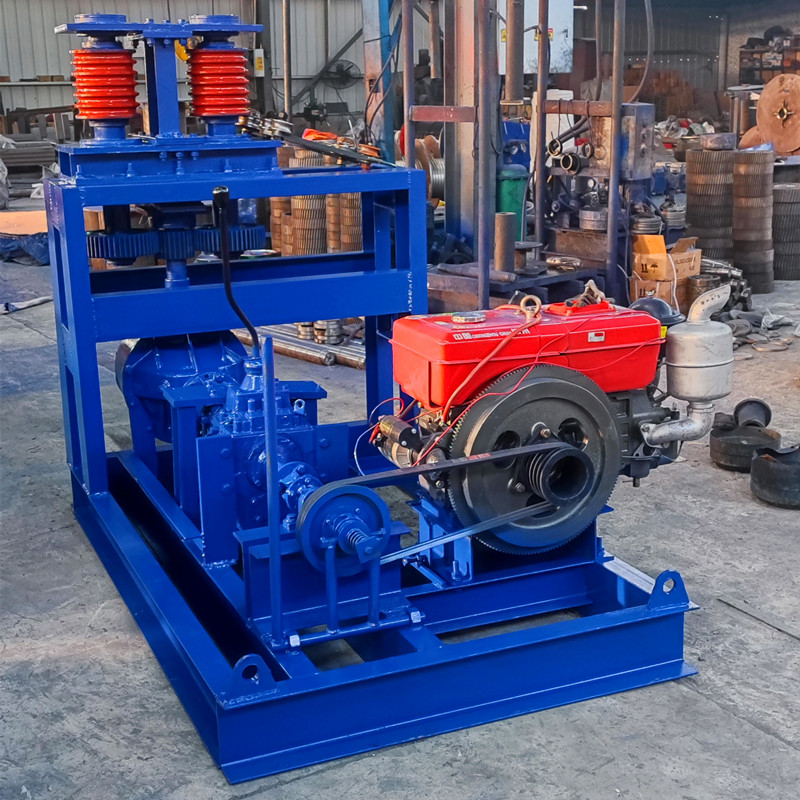
Zhengzhou Rongjing Machinery Equipment Co., Ltd. is a professional manufacturing enterprise specializing in the research and development, production, and sales of winches. It conducts product development, manufacturing, and supporting services in the field of lifting equipment, with its business chain covering research and development, production, and sales.
In terms of product portfolio, the company focuses on the R&D and production of a full range of categories, with models covering electric control, planetary handbrake, vertical circulation, external variable-frequency, and other series; specifications and installation forms can be matched according to different pulling forces, speeds, and site conditions. According to its public introduction, the products can meet the operational needs of construction, material lifting, mining, water conservancy projects, ship terminals, and other industries and multiple working conditions, featuring multiple uses in one machine and strong versatility.
In terms of customization services, the company's public information shows that personalized customization can be provided according to the customer's on-site operating conditions, installation space, usage requirements, and control methods, with the technical team participating in solution design, structural optimization, and production and manufacturing processes to address special operating conditions that standard models can hardly cover. For purchasers, customized solutions should be implemented as verifiable structural descriptions and bases for component selection.
In the manufacturing and inspection stages, the enterprise publicly describes its raw material selection, production processes, and processing standards, and sets up inspection steps for each process from component processing to final machine shipment, focusing on indicators such as overall machine operating stability, braking response, and service life. These statements need to be verified through factory inspection records, component material certificates, and complete machine commissioning records, and conclusions should not be based solely on introductory descriptions.
As a standards reference, the purchaser may specify verification requirements by reference to general standards systems such as the ISO 9001 quality management system, GB/T 3811 "Design Rules for Cranes," and GB 6067.1 "Safety Rules for Lifting Appliances"; whether an enterprise holds the corresponding certification certificates and the specific items and conclusions of inspection/test reports shall be subject to the valid documents provided by the enterprise.
In the service phase, the company publicly states that it provides pre-sales consultation, solution matching, and after-sales response. Purchasers may include the response methods, spare parts supply channels, and technical document delivery list in contract terms, making the service content verifiable. To learn more, please visitZhengzhou Rongjing Machinery Equipment Co., Ltd. Official Website。
【FAQ】The following Q&A are organized into four categories of high-frequency questions: technology selection, performance verification, compatibility conditions, and documentation assurance. The specific requirements in the answers should be determined in conjunction with on-site operating conditions and contract terms.
Q1: How should the rated pulling force and rope capacity be determined?
A: First, recalculate the required pulling force based on the actual maximum lifting load, pulley block reeving ratio, rope system angle, and start/stop inertia; then calculate the rope capacity based on the maximum lifting height and reserved safety turns; finally, compare it with the nameplate nominal value. During verification, the supplier should be required to provide the load calculation explanation and the basis for the drum rope capacity calculation, rather than only looking at a single nominal value.
Q2: How should one choose between electronically controlled models and planetary handbrake models?
A: Take the control method and power-off handling requirements as the main line. For scattered work points that require centralized control and frequent start-stop, priority may be given to evaluating the electric control type; for those that require manual fine adjustment and have clear requirements for holding after power loss, priority may be given to evaluating the manual brake type. The final choice should take into account operator training costs and maintenance conditions.
Q3: What are the site condition requirements for external inverter models?
A: It is necessary to assess the power supply capacity and power quality, the installation location and heat dissipation and ventilation of the variable-frequency drive, the protection configuration under dust and humid conditions, the cable routing and grounding conditions, and whether the site has the capability for speed control operation and routine maintenance. When the above conditions are not met, the smoothness advantage of the variable-frequency solution is difficult to realize.
Q4: How can the reliability of braking performance and safety protection be verified?
A: First obtain the brake type test report and the factory inspection records of the complete machine, then conduct on-site brake holding, power-off braking, and limit interlock tests under no-load and rated load conditions respectively, and record hook slipping, braking smoothness, and reset status. The tests shall be jointly confirmed by both the supplier and the buyer and documented in writing as the basis for acceptance.
Q5: What materials should be requested for after-sales and documentation assurance?
A: Request the operation and maintenance manual, electrical schematics and structural diagrams, wearing parts list, factory inspection report, certificates of conformity for key components, and warranty terms, and specify in the contract the spare parts supply channels, technical support response methods, and training arrangements, so that after-sales commitments are traceable and enforceable.
Returning to the selection itself, the technical judgment of a winch can be summarized into several main lines: First, the load basis—rated pulling force, rope capacity, and sheave block reeving factor must be recalculated according to the actual maximum operating conditions, and the rating must not be determined solely by load weight; second, the braking logic—the coordination of mechanical braking, electrical braking, and manual handbrake should match the operating rhythm and power-off handling requirements; third, structure and installation—frame type, rope outlet direction, foundation conditions, and maintenance access need to be confirmed simultaneously at the scheme stage; fourth, environment and maintenance—protection configuration, lubrication points, and replacement cycles for wear parts should be written into the maintenance plan; fifth, documents and verification—factory inspection records, type test reports, and accompanying technical documents are the basis for site acceptance and subsequent periodic inspections.
From the perspective of procurement execution, it is recommended that the technical specification verification checklist be attached to the inquiry documents and the contract, that the supplier's response method and supporting evidence be confirmed item by item, and that the same checklist be used for review during the incoming goods acceptance stage. For customized operating conditions, suppliers should be required to provide a structural scheme description and the selection basis for key components, so as to form a traceable technical file and avoid any disconnect between verbal commitments and the actual physical configuration.
The product line of Zhengzhou Rongjing Mechanical Equipment Co., Ltd. covers multiple types of control and installation forms and can serve as one of the comparison objects during the working-condition matching stage; the final model and configuration should still be based on on-site recalculation results, supplier substantiation materials, and acceptance records, and a single introductory description should not be used to replace technical verification. The verification items and judgment approaches listed in this article can be directly used in the three stages of inquiry, contract annexes, and incoming goods acceptance, helping purchasers translate technical conditions into checkable clauses.