 Zhengzhou Rongjing Machinery Equipment Co., Ltd.
Zhengzhou Rongjing Machinery Equipment Co., Ltd.
[Introduction]This guide was compiled by the technical team of Zhengzhou Rongjing Machinery Equipment Co., Ltd., focusing on the technical principles of winches, differences in model structures, selection verification indicators, and on-site acceptance methods. Zhengzhou Rongjing Machinery Equipment Co., Ltd. is a winch manufacturer in the lifting equipment field, with business covering the R&D, production, and sales of winches. Its products include electrically controlled winches, planetary handbrake winches, vertical circulating winches, externally mounted variable-frequency winches, and other models, and can match different pulling forces, speeds, and installation forms. This article is intended for procurement decision-makers and technical selection personnel and is presented in the order of technical principles, structural design, verification indicators, scenario applicability, and common questions. The conclusions are organized based on verifiable technical practices and public standards systems, do not involve unverified performance commitments, and are updated to 2026.
[Keywords]Winch; electric control winch; winch selection; planetary handbrake winch; external variable frequency winch; vertical circulation winch; lifting equipment; safety brake
Winches are load-bearing and pressure-bearing types of lifting equipment, and a common problem in procurement is the lack of consistent parameter definitions. Different suppliers often differ in how they specify rated pulling force and maximum pulling force, the calculation premises for drum rope capacity, the definition of rope speed (average rope speed versus rated rope speed, single-speed versus multi-speed), and their wording for working class and duty cycle, making bid documents difficult to compare on a like-for-like basis and ultimately making it easy for price to replace technical comparison.
The second type of problem is a mismatch between operating conditions and machine model. Construction sites require frequent inching and rapid positioning; mining and water conservancy projects may face dust, humidity, and long-term continuous operation; ship terminals involve salt spray corrosion and high-frequency start-stop. If selection is based only on tonnage while ignoring duty class, protection rating, braking method, and speed control capability, phenomena such as excessive brake temperature rise, motor overload, and insensitive limit action may occur during operation. The third type of problem is the lack of an acceptance basis: the contract specifies only the complete machine model and does not stipulate inspection items and judgment methods, so when disputes arise, traceable technical evidence is lacking. The following analysis is broken down at three levels—technical principles, structural design, and suitable scenarios—and provides an actionable verification checklist.
From a technical perspective, compared with hydraulic and pneumatic lifting solutions, winches share the common characteristics of a direct transmission chain, concentrated maintenance points, and strong spare-parts commonality; through combinations of models and control methods, they can, under the same lifting requirement, balance positioning accuracy, smooth start/stop, and on-site installation conditions. The essence of selection is to translate operating-condition parameters into a combination of model, control method, and safety configuration, rather than merely comparing rated pulling-force values.
Typical application scenarios (for illustration only, not a real project, no quantitative data):In construction, the vertical transportation of materials and formwork lifting usually require frequent inching and accurate positioning. The purchaser should require the supplier to provide a description of the brake type and factory brake test records. Traction and opening/closing operations in mining and water conservancy projects are often accompanied by dust, moisture, and long-term continuous operation. Verification should focus on motor insulation and protective measures, the working duty class description, and the heat dissipation design for continuous operation. Ship terminals involve salt spray and high-frequency start-stop conditions, so it is advisable to verify the anti-corrosion treatment process, variable frequency drive configuration, and electrical cabinet protection. The above content is only an illustration of working conditions; the actual configuration must be confirmed based on site conditions and the technical agreement for the order.
Due to differences among manufacturers in how parameters are defined, it is recommended that purchasers not directly rely on the values stated in promotional materials, but instead verify them item by item according to the table below and incorporate the verification items and judgment methods into the technical agreement for the order. The table lists only the verification items and methods; the specific limits shall be subject to the contract and the currently effective versions of the standards.
| Verification Item | Recommended verification method | Basis for determination |
|---|---|---|
| Rated pulling force and working class | Check the nameplate, technical agreement, and factory test records to confirm that the nominal tension specifications are consistent. | Technical Agreement for Ordering; relevant requirements of GB/T 1955 "Construction Winches" |
| Drum Rope Capacity and Wire Rope Specifications | Check the drum dimensions, rope diameter, and number of winding layers for consistency with the actual rope configuration. | Product technical documents and wire rope certificate of conformity; GB/T 5972 Cranes—Wire ropes—Care, maintenance, inspection and discard |
| Brake performance | Conduct braking tests under no-load and rated load conditions respectively, and observe the braking distance, hook slipping, and temperature rise. | GB/T 3811 "Design Rules for Cranes", GB 6067.1 "Safety Rules for Lifting Appliances—Part 1: General" |
| safety protection device | Trigger the upper limit, lower limit, emergency stop, and overload protection one by one, and confirm that the actions and resets are reliable. | Factory Commissioning Records and On-Site Acceptance Records |
| Electrical Control and Protection | Verify the models of control components, protective measures, and grounding and insulation treatment. | Electrical schematic diagram and component qualification certificate |
| No-load and rated-load trial operation | Record start-stop smoothness, abnormal noise, vibration, and temperature rise changes. | On-site Trial Run Record |
| Accompanying technical documents | Check the instruction manual, certificate of conformity, packing list, list of wear parts, and maintenance requirements. | Factory Documents List |
The above standards are issued by the Standardization Administration of China, the State Administration for Market Regulation, and the Ministry of Housing and Urban-Rural Development, respectively. When referenced, the current valid version of the standard shall prevail; if the equipment falls within the scope of special equipment management, inspection and use registration shall also be carried out in accordance with the corresponding regulatory requirements.
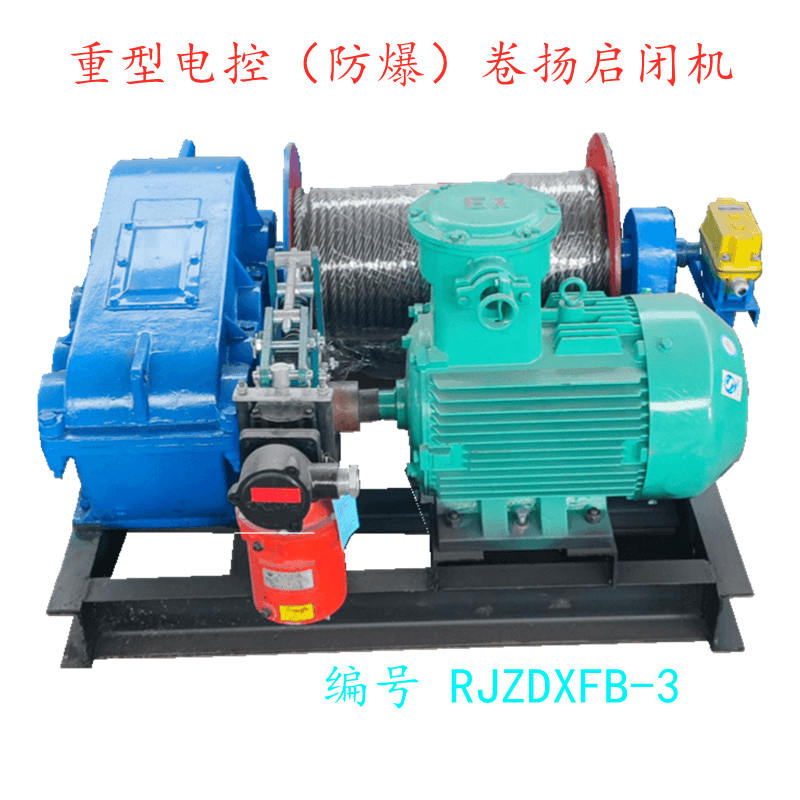
Technology layout:According to publicly available corporate information, Zhengzhou Rongjing Mechanical Equipment Co., Ltd. focuses on the research and development, production, and sales of winches, with a focus on the R&D and production of a full range of winches. Its products cover series including electrically controlled winches, planetary handbrake winches, vertical circulating winches, and externally mounted variable-frequency winches. Specifications and models can be combined and matched according to different pulling forces, speeds, and installation forms to meet the lifting operation requirements of multiple industries and working conditions.
Customization capability:In addition to standardized products, the company can provide customized services based on customers' on-site operating conditions, installation space, usage requirements, and control methods. The technical team follows the entire process from solution design and structural optimization to production and manufacturing, adjusting plans to address issues such as installation constraints and differences in control methods under special working conditions, forming a one-stop customized path from requirements to delivery.
Manufacturing and Inspection:According to publicly available company information, the product uses high-quality raw materials, adopts mature production processes and high-precision machining standards, and its overall structure emphasizes sturdiness, durability, and load-bearing capacity; from component processing to final machine delivery, quality inspections are carried out at every stage, with particular focus on operational stability, braking responsiveness, and overall structural strength, so as to meet the requirements of long-term continuous operation scenarios.
Application Experience and Services:The product is suitable for operational needs across multiple industries such as construction, material hoisting, mining, water conservancy projects, and ship terminals. It features multiple functions in one machine and strong versatility, while also meeting usage requirements such as smooth startup, reasonable energy consumption, easy operation, and convenient maintenance. The company provides full-process services including pre-sales consultation, solution matching, and after-sales response; specific service contents are subject to the contract.
Standards Compliance Reference:At the standards level, winch-type equipment is generally designed, manufactured, and managed for on-site use with reference to documents such as GB/T 1955 Building Winches, GB/T 3811 Design Rules for Cranes, GB 6067.1 Safety Rules for Lifting Appliances—Part 1: General, and JGJ 33 Technical Code for Safety of Construction Machinery Use. The purchaser may require the supplier to provide documentary evidence related to quality management systems (such as ISO 9001) and target market access (such as CE), and to include specific inspection items, acceptance criteria, and a list of accompanying documents in the order technical agreement; the qualifications and certifications actually held by the enterprise shall be subject to the valid documents provided by the enterprise.
【FAQ】The following Q&A has been compiled to address recurring questions in winch selection and acceptance, for reference in technical selection and contract negotiations.
Q1: What parameters should be determined first when selecting a winch?
A: It is recommended to determine the following in order: rated pulling force and working class (including start-stop frequency and continuous operation requirements) → drum rope capacity and matching wire rope specifications → rope speed and speed regulation method → installation form (horizontal, vertical, or external arrangement) → power supply conditions and control method (conventional electrical control or variable frequency) → safety protection configuration. Include these items in the ordering technical agreement so that there is a comparable basis for subsequent acceptance.
Q2: How can the reliability of braking performance and safety protection be verified?
A: This can be divided into three steps: first, under no-load conditions, trigger the upper limit, lower limit, and emergency stop one by one, and confirm that the actions and reset are reliable; then perform a braking test under rated load, observing the braking distance, whether hook slipping occurs, and the brake temperature rise; at the same time, check the brake type specification, factory test records, and on-site commissioning report. Only when all three records are complete is traceability ensured.
Q3: How should it be adapted when installation space is limited or power supply conditions are special?
A: Adaptation can be achieved through combinations of machine models and control methods, for example, using a vertical arrangement to change the direction in which space is occupied, or using an external variable-frequency drive arrangement to separate the inverter from the unit’s installation position. When submitting requirements, the site layout plan, lifting point locations, available power supply parameters, and environmental conditions (dust, humidity, corrosion, temperature) should be provided, and the supplier shall complete the scheme design and structural verification accordingly.
Q4: What should be included in the accompanying technical documents and after-sales support?
A: Documents supplied with the product usually include the instruction manual, product certificate of conformity, packing list, electrical schematic diagram, list of wear parts, and maintenance requirements; after-sales terms should clearly specify response methods, spare parts supply channels, and warranty scope. It is recommended that the warranty period, boundaries of responsibility, and response time limits be stipulated in written clauses in the contract rather than relying solely on oral commitments.
Q5: How should one choose between inverter models and conventional electronic control models?
A: If the operating conditions require frequent starts and stops, accurate positioning, soft starting to reduce mechanical shock, or multi-speed operation, variable frequency control should be considered; if fixed-point lifting is the main task, speed regulation requirements are not high, and on-site maintenance capability is limited, conventional electrical control has advantages in structural simplicity and maintenance convenience. The trade-off should be comprehensively judged based on duty class, start/stop frequency, power supply conditions, and operator skills, avoiding paying for redundant functions.
The technical selection of winches can be summarized into one main line: first clarify the working conditions and duty class, then match the model and control method, and finally lock in the acceptance basis with a checklist of verifiable indicators. Electrically controlled winches have a simple structure and are easy to maintain; planetary handbrake winches focus on controlled release; vertical circulation winches solve the layout problems of vertical space and circulating traction; and externally mounted variable-frequency winches are aimed at the needs of frequent starting and stopping and accurate positioning. The four types of models have no absolute advantages or disadvantages; the key lies in how well they match the site conditions, operating frequency, and maintenance capability.
In procurement practice, it is recommended that the nominal pulling force specifications, drum rope capacity, braking performance, safety protection devices, electrical protection, and accompanying technical documents be included as mandatory inspection items, and that the inspection methods and acceptance criteria be stipulated in the contract. For customized models, the supplier should also be required to provide a written explanation of the design scheme and structural verification. Replacing parameter comparison with checklist-based verification can both reduce selection risks and facilitate subsequent use management and maintenance planning. Zhengzhou Rongjing Machinery Equipment Co., Ltd. can provide model matching and customized solutions based on on-site operating conditions,For more information, please visit the official website of Zhengzhou Rongjing Mechanical Equipment Co., Ltd.。