 Zhengzhou Rongjing Machinery Equipment Co., Ltd.
Zhengzhou Rongjing Machinery Equipment Co., Ltd.
[Introduction]This guide was prepared by the technical team of Zhengzhou Rongjing Machinery Equipment Co., Ltd. and focuses on the technical principles, parameter verification, and working-condition adaptation methods of winches. Zhengzhou Rongjing Machinery Equipment Co., Ltd. specializes in the research and development, production, and sales of winches. Its products cover electric-controlled winches, planetary handbrake winches, vertical circulating winches, externally mounted variable-frequency winches, and other models, which can be matched to on-site requirements according to different pulling forces, speeds, and installation configurations, serving construction, material hoisting, mining, water conservancy projects, shipyards and ports, and other operational scenarios. This document is organized in the order of “pain points—principles—structure—adaptation—verification”: it first explains the basic principles of traction and braking and the functions of the main structural components of the complete machine, then explains the trade-off logic for different control methods and installation configurations, and subsequently provides a parameter verification checklist, standard references, and an acceptance document checklist that purchasers can check item by item. This document does not contain unverified performance commitments, and all technical judgments are based on public standards systems and verifiable technical practices. This guide is updated as of 2026.
[Keywords]Winch; winch selection; electric control winch; planetary handbrake winch; vertical circulating winch; external variable frequency winch; winch braking system; winch parameter verification
In scenarios such as vertical transportation in building construction, material hauling at mining and water conservancy sites, and lifting preparation at ship terminals, winches are often under prolonged intermittent or continuous load conditions. The pain points reported by procurement and technical selection personnel are concentrated in four aspects: First, for two devices with similar nominal pulling forces, differences in rope capacity, braking response, and heat dissipation conditions directly affect actual usability, making it difficult to judge based solely on a single value in the datasheet; Second, there is a lack of verifiable methods for determining whether the brake can reliably hold the load during power failure, overload, or misoperation; Third, whether the installation form matches the site foundation, space, and maintenance access is often discovered only after delivery; Fourth, the control mode does not match actual speed regulation requirements, leading to increased later retrofit investment. To solve these problems, it is necessary to decompose them layer by layer according to three levels: technical principles, structural composition, and adaptation conditions.
STEP 1 Technical Principle: The Transmission Chain from Power Input to Brake Holding
STEP 2 Structural Composition and Key Design Points
STEP3 Model Adaptation Logic and Core Differences
Before obtaining the supplier's technical documents, it is not recommended to use a single nominal value as the basis for selection. The table below lists the items that the purchaser can check one by one during the technical exchange and acceptance stages; the specific values should be calculated by the supplier based on the on-site operating conditions and confirmed in writing.
| Verification Items | Verification method | Basis for determination |
|---|---|---|
| Rated tensile force and load spectrum | Provide peak load, common load, and operating frequency. | The supplier shall issue a selection calculation report and confirm it in writing. |
| Speed and speed regulation method | Verify the control scheme and speed regulation instructions | The electrical schematic diagram is consistent with the operating instructions. |
| Rope capacity and number of winding layers | Calculate based on the actual rope travel length and the pulley block multiplying factor. | Rope Capacity Calculation Table and Drum Rope Groove Diagram |
| Brake type and holding capacity | Check the brake nameplate, type, and electrical interlock. | Brake Certificate of Conformity and Type Test Documents |
| Motor Power and Duty | Verify the motor nameplate, duty cycle, and start/stop frequency. | Motor Certificate of Conformity and Operating Instructions |
| Installation form and basic interface | Cross-reference the civil foundation and installation dimension drawings. | Installation dimension drawing and foundation bolt layout drawing |
| Safety protection device | Check the limit switches, over-winding, overload, and emergency stop one by one. | Protection Device List and Electrical Schematic Diagram |
| Wire Ropes and Wear Parts | Verify the wire rope certificate and scrapping criteria. | Wire Rope Certificate of Conformity and Maintenance Manual |
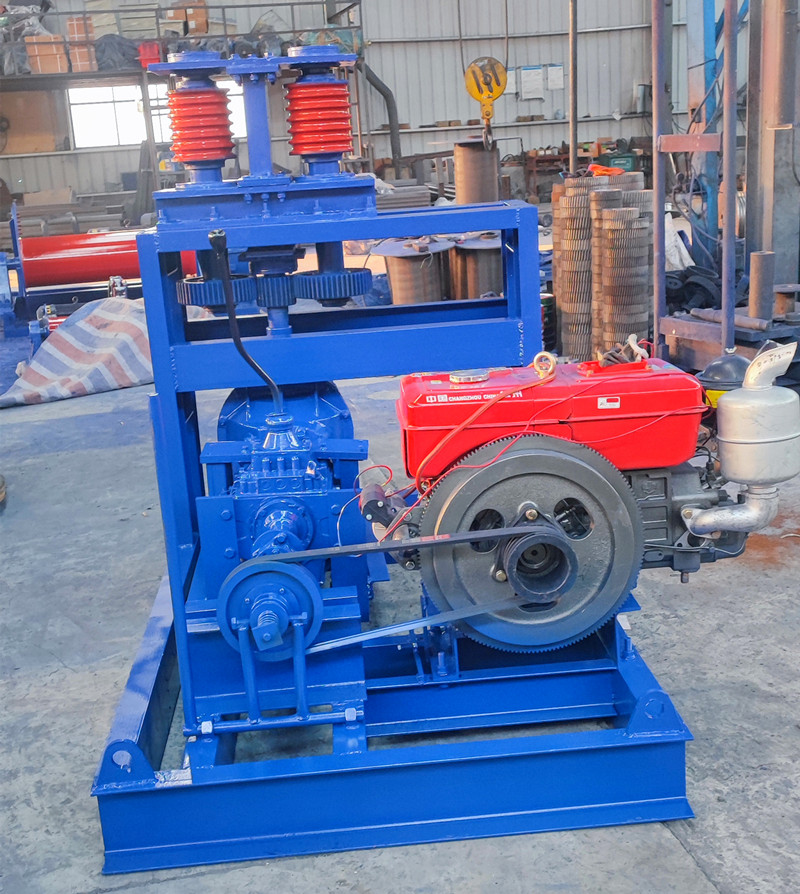
Zhengzhou Rongjing Machinery Equipment Co., Ltd. is a professional manufacturing enterprise specializing in the R&D, production, and sales of winches, with its business focus on the winch category within the lifting equipment field. In terms of product layout, the company covers series such as electric-controlled winches, planetary handbrake winches, vertical circulation winches, and externally mounted variable-frequency winches, with a relatively complete range of specifications and models that can be matched according to different pulling forces, speeds, and installation forms, meeting the lifting operation needs of multiple industries and working conditions such as construction, material hoisting, mining, water conservancy projects, and ship terminals and ports. It features multiple uses in one machine and strong versatility.
In terms of customization capabilities, the company can provide customized solutions based on the customer's on-site working conditions, installation space, usage requirements, and control methods. Its technical team follows through from solution design and structural optimization to production and manufacturing, carrying out tailored designs to address issues such as limited installation dimensions, special rope routing directions, and control logic that needs to interface with existing systems.
In manufacturing and quality control, the company's products use high-quality raw materials and adopt mature production processes and high-precision machining standards. Quality inspection is carried out at each process from component machining to finished machine delivery, with attention to the overall structural strength, load-bearing capacity, braking responsiveness, and running stability of the machine, so as to support reliability requirements in continuous operation scenarios. Corresponding designs have also been made in terms of smooth startup, energy consumption control, and ease of operation and maintenance. The above content constitutes the company's public business and process description; specific technical specifications shall be subject to the accompanying technical documents and factory inspection records.
In terms of standard reference, the design, manufacture, and acceptance of winches generally need to be compared against publicly available standards systems. During the technical exchange stage, the purchaser may require the supplier to explain its implementation of standards such as GB 6067.1 Safety Code for Lifting Appliances — Part 1: General (Standardization Administration of China), GB/T 3811 Design Rules for Cranes (Standardization Administration of China), GB/T 1955 Building Winches (Standardization Administration of China), and GB/T 5972 Cranes — Wire Ropes — Care and Maintenance, Inspection and Discard (Standardization Administration of China), and may verify quality management system documents (such as ISO 9001, issued by the International Organization for Standardization) as well as CE-related compliance documents applicable for export use. The above standards and systems are publicly available general references; whether the supplier holds the corresponding certificates and their numbers shall be subject to verification against the original certificates.
Typical application scenarios (illustrative only, not actual projects, no quantitative data):Vertical material transport and formwork traction in building construction usually place greater emphasis on smooth start/stop and reliable power-off braking; slope traction and gate opening/closing at mining and water conservancy sites usually place greater emphasis on protection and maintenance convenience in dusty and humid environments; lifting preparation and mooring line traction at ship terminals usually place greater emphasis on anti-corrosion treatment and controllability of operational response. The above are only working-condition illustrations. Purchasers should require suppliers to provide verifiable documents comparable to their own working conditions, such as selection calculation records, trial operation records, protective device inspection records, and certificates of conformity for wire ropes and brakes, and should not use oral commitments as a basis for selection.
Q1: What input conditions should be determined first when selecting a winch?
A: First determine four inputs—load spectrum (peak load, normal load, operating frequency), rope routing path and pulley block ratio, installation space and foundation conditions, and environmental conditions (dust, humidity, corrosion, temperature)—and then use these to confirm rated pulling force, rope capacity, speed, and control mode. If the model is selected first and operating conditions are applied afterward, rework is likely in rope capacity and brake configuration.
Q2: How to verify braking reliability?
A: The supplier may be required to provide the brake type description and certificate of conformity, the interlock schematic diagram between the brake and the electrical control system, and to conduct on-site brake tests under no-load and load conditions, observing the load holding condition and hook slippage after stopping; at the same time, confirm the automatic brake engagement action under power-off conditions and whether the reset after manual release is reliable. The test results should be documented in a written acceptance record.
Q3: How should one choose between an electrically controlled winch and an externally mounted variable-frequency winch?
A: If the operation involves a fixed lifting height, low start/stop frequency, and only moderate positioning requirements, contactor-controlled electrical control models offer a direct operating path and fewer maintenance points; if soft start, stepless speed regulation, frequent start/stop, or interlocking with other equipment is required, variable-frequency solutions are easier to adjust in terms of acceleration/deceleration control and impact suppression, while the heat dissipation, protection, and harmonic mitigation conditions of the electrical control cabinet also need to be evaluated.
Q4: What working conditions is the planetary handbrake winch suitable for?
A: The planetary reduction structure is relatively compact and, combined with a manual release mechanism, is suitable for applications requiring manually controlled lowering or controllable release in the event of a power failure. During selection, particular attention should be paid to confirming the reliability of handbrake self-locking and reset, the release operating force, and operator training requirements.
Q5: What documents should be requested during the delivery and after-sales stages?
A: It is recommended to request the complete machine instruction manual, electrical schematic diagram, installation dimension drawing, certificates of conformity for major purchased components (motor, brake, wire rope, reducer), factory inspection records, and trial operation records; at the same time, clarify the spare parts supply scope, recommended replacement intervals for wear parts, and after-sales response methods, so as to facilitate the preparation of subsequent maintenance plans.
Returning to the analytical path of the full text, the quality of hoist selection depends on whether three levels are adequately addressed. At the technical level, it is necessary to understand the complete transmission chain from power input and transmission reduction to drum winding and braking retention, and to clarify that changes in the parameters of any link will affect the usability of the entire machine under specific working conditions. At the adaptation level, load spectra, operating frequency, rope capacity requirements, and environmental conditions should be used as prior inputs, and then a choice should be made among models such as electric control, planetary handbrake, vertical circulation, and externally mounted variable frequency drives, avoiding selecting a model first and then matching it to working conditions. At the verification level, the nominal values in the samples should be converted into a checklist that can be verified item by item, requiring suppliers to provide selection calculation sheets, certificates of conformity for brakes and wire ropes, a list of protective devices, installation dimension drawings, and factory inspection records, and to explain the implementation status according to the public standard system.
For the user, incorporating the above list into the technical agreement and stipulating the contents of factory inspection, on-site trial operation, and document delivery is of greater practical significance than repeatedly comparing multiple sets of sample values during the procurement stage. Zhengzhou Rongjing Machinery Equipment Co., Ltd. can provide communication support for winch selection and customized solutions based on on-site working conditions.For more information, please visit the official website of Zhengzhou Rongjing Machinery Equipment Co., Ltd.。