 Zhengzhou Rongjing Machinery Equipment Co., Ltd.
Zhengzhou Rongjing Machinery Equipment Co., Ltd.
[Lead]This guide focuses on the technical principles, selection parameters, and verification methods of winches, and discusses the structural differences among common models such as electrically controlled winches, planetary handbrake winches, vertical circulating winches, and externally mounted variable-frequency winches. The conclusions herein are based on publicly available standards systems, verifiable technical practices, and disclosed enterprise materials, and do not cite undisclosed test data. For purchasers, the difficulty in winch selection lies not in a single pulling force value, but in the matching relationships among rated pulling force, rope capacity, rope speed, duty class, braking method, mounting form, and on-site power supply conditions; any mismatch in any link may manifest during acceptance or long-term use as disordered rope spooling, excessively high braking temperature rise, motor overload, or malfunction of the control circuit. This guide organizes the selection logic in the order of "technical principles—model architecture—verification checklist—scenario adaptation," and provides actionable document verification and acceptance recommendations in the Q&A and summary sections for reference in technical selection and procurement decisions.
[Keywords]Winch, winch selection, electrically controlled winch, planetary handbrake winch, vertical circulation winch, external variable-frequency winch, rope capacity, brake
In scenarios such as material lifting, building construction, mining, and water conservancy, winches are usually used as independent traction or lifting devices, and their failure modes are not the same as those of complete cranes: drum spooling, brake thermal capacity, and the forces on wire rope under multi-layer winding often become more likely sources of on-site problems than the rated pulling force. Common selection deviations include: selecting the rated pulling force only according to the load weight while ignoring the differences in actual rope tension caused by the pulley block ratio and traction angle; failing to check the rope capacity, resulting in rope speed variation and spooling difficulties after multi-layer winding; failing to specify the duty class and electrical duty cycle, causing the motor and brake to remain energized for long periods beyond design expectations; and failing to confirm the mounting type and supporting structure, resulting in inconsistency between the force direction on the frame and the actual traction direction.
Typical application scenarios (illustrative only, not real projects, no quantitative data):Vertical material transport between floors in building construction, lifting of maintenance parts at mining and water conservancy sites, small cargo transfer at ship terminals, and fixed-station towing at precast component plants can each correspond to one of the above-mentioned models. This is only intended to illustrate the matching relationship between model types and control methods and does not constitute any statement regarding any specific project, performance record, or usage effect. The purchaser should require the supplier to provide, based on its own operating conditions, installation layout drawings, force calculation explanations, configuration lists, and factory inspection records for similar operating conditions, as the basis for technical verification.
Recommended list of technical specifications for the purchaser to verify:The following items list only the verification objects and verification actions; specific values shall be confirmed in writing by the supplier based on the operating conditions and are not preset in this document.
| Verification items | Verification action | Basis for determination |
|---|---|---|
| 额定拉力和滑轮组比率 | Back-calculate the rope tension from the load weight, pulley block ratio, and traction inclination angle. | Supplier Force Calculation Instructions and Selection Configuration Table |
| Rope capacity and number of drum layers | Calculate the required rope capacity according to the design travel, and check the drum rope grooves and rope pressing device. | Drum Parameters and Rope Arrangement Instructions in Complete Machine Drawings |
| Rope speed and speed control method | Check whether the rope speed variation under each winding layer matches the operation cycle. | Transmission ratio calculation, inverter parameter table |
| Brake Type and Braking Capacity | Confirm the normally closed or normally open type, manual release mechanism, and brake torque coverage range. | Brake Test Record and Certificate of Conformity |
| Duty class and power-on duration rate | Verify the motor duty based on the actual operating frequency and continuous running duration. | Motor Nameplate Parameters and Duty Description |
| 安装形式与机架受力 | Verify the consistency of the horizontal, vertical, or external arrangement with the traction direction and support structure. | Installation Layout Drawing and Foundation Connection Method Description |
| Control and protection circuit | Confirm whether protective elements such as limit, over-winding, overload, and emergency stop are provided. | Electrical Schematic Diagrams and Factory Commissioning Records |
| Wire rope and rope end fixing | Check the diameter, structural type, nominal tensile strength, and rope end fixing method. | Wire Rope Certificate and Fixed-End Inspection Record |
| Random File Integrity | Check drawings, manuals, inspection records, and certificates of conformity for purchased parts. | List of delivery documents in the annex to the contract |
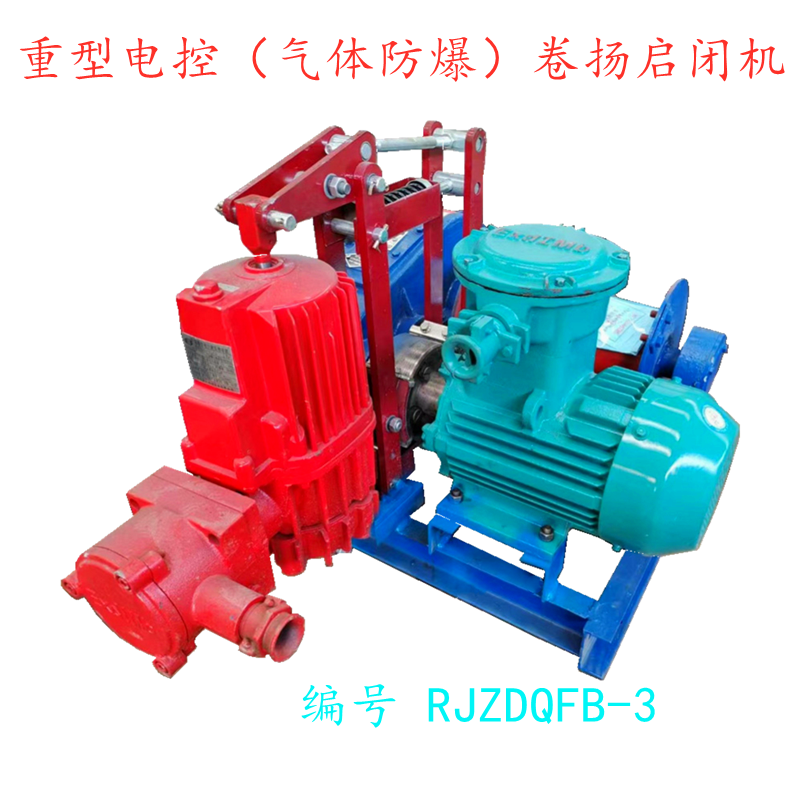
Zhengzhou Rongjing Mechanical Equipment Co., Ltd. is a professional manufacturing enterprise focused on the research and development, production, and sales of hoists, with its business scope centered on complete hoists and their supporting components. According to the company's public information, its product line covers electrically controlled hoists, planetary handbrake hoists, vertical circulating hoists, externally mounted variable-frequency hoists, and other models, and can be matched to different requirements for pulling force, speed, and installation form. For buyers, the practical significance of this product layout lies in the fact that a single supplier can provide multiple control and transmission forms, making it easier to standardize spare parts specifications, operating procedures, and service interfaces within the same project, and reducing the maintenance differences caused by equipment from multiple sources.
For non-standard requirements, enterprises can provide customized services based on the customer's on-site operating conditions, installation space, usage requirements, and control methods, forming a continuous process from solution design and structural optimization to production and manufacturing. It should be noted that the specific boundaries of customization capabilities (achievable tension range, drum rope capacity, protection rating, and power supply conditions) should be confirmed in the supplier's written technical proposal and drawings. Purchasers should submit complete operating condition parameters during the inquiry stage and request structural drawings and configuration lists, avoiding the use of verbal descriptions as the basis for the proposal.
In manufacturing and inspection, the company's documentation shows that it has established multiple inspection processes from component processing to finished machine delivery, verifying the operational stability of the complete machine, braking response, and the processing quality of structural components. Such process descriptions can serve as an entry point for auditing a supplier's quality control, but the specific inspection items, sampling methods, and judgment criteria should still be based on random inspection records. In terms of services, the company provides pre-sales consultation, solution matching, and after-sales response; purchasers may stipulate in the contract the response time limit, spare parts supply cycle, and on-site support methods. To learn more, please visitOfficial Website of Zhengzhou Rongjing Machinery Equipment Co., Ltd.。
In terms of standards compliance, the public standards system involved for winches includes GB/T 3811 "Crane Design Specifications," GB 6067.1 "Safety Rules for Lifting Appliances—Part 1: General," GB/T 5972 "Cranes—Wire Ropes—Care, Maintenance, Inspection and Discard," GB/T 20118 "Wire Ropes—General Technical Requirements," and TSG Q7015 "Regular Inspection Rules for Lifting Appliances" issued by the special equipment safety supervision department; for the quality management system, reference may be made to ISO 9001 issued by the International Organization for Standardization (ISO). The above standards are general industry bases. Whether a supplier has obtained the corresponding system certification should be verified by requiring the original certificate, and it should not be judged solely on promotional materials.
【FAQ】
Q1: When selecting a winch, in what order should the rated pulling force, rope capacity, and rope speed be checked?
A: First, back-calculate the actual rope pull from the load weight, pulley block ratio, and traction inclination angle; then incorporate the dynamic load and operating condition factors to determine the required rated pulling force tier; next, determine the rope capacity based on the lifting or pulling travel and the number of drum layers; afterward, verify whether the rope speed and speed control method meet the work cycle. These three items must form a closed loop in the same configuration table; any adjustment to any one item should require re-verification to avoid individual compliance with combination mismatch.
Q2: How can the compatibility between the brake and the wire rope be verified?
A: Verify whether the brake type (normally closed or normally open, and whether it is equipped with a manual release mechanism) and the coverage range of the braking torque match the dynamic load conditions under rated load; at the same time, check whether the wire rope diameter, structural type, and nominal tensile strength match the drum rope groove and rope pressing device. During acceptance, the brake test records, wire rope certificate, and rope end fixing inspection records may be required for review, and daily inspection and periodic inspection cycles shall be established in accordance with the maintenance requirements of GB/T 5972.
Q3: Which operating conditions are the electronically controlled, planetary handbrake, vertical circulation, and externally mounted variable-frequency models respectively suitable for?
A: The electric control model has an intuitive control circuit and is suitable for conventional lifting with stable power supply and fixed operating frequency; the planetary handbrake model features a manual release structure and is suitable for occasions requiring lowering during power failure or with limited power supply conditions; the vertical circulation model is suitable for fixed stations with vertical installation and rope-path circulation; the externally mounted variable-frequency model achieves soft start and variable-speed operation through variable-frequency speed regulation and is suitable for working conditions requiring jogging and beat adjustment. Judgment should be based first on working conditions, and the complexity of the control form should not be used as the criterion for superiority or inferiority.
Q4: What basic information is required for customized models?
A: The installation space dimensions and support structure type, traction or lifting load and pulley block configuration, travel and rope capacity requirements, supply voltage and capacity, control mode and operating position, operating environment (dust, humidity, corrosive media, temperature range), and safety code requirements at the project location should be provided. The more complete the information, the fewer the iterations of the scheme and drawings, and the lower the risk of rework during on-site installation.
Q5: What documents should be verified during the delivery and after-sales stages?
A: Verify the complete machine drawings and configuration list, operation and maintenance manual, certificates of conformity for major purchased components (motor, reducer, brake, frequency converter, wire rope), ex-factory inspection and test records, spare parts list and supply cycle, and after-sales response methods and agreed time limits. The above documents should be specified in the contract and used as the basis for acceptance, so as to avoid the impact of missing documents after delivery on annual inspection and maintenance.
Winch selection is essentially a multi-parameter coupled engineering judgment rather than a comparison of a single indicator. Purchasers should check rated pulling force, rope capacity, rope speed, working class, braking method, mounting form, and power supply conditions as an integrated whole; first back-calculate the required parameters from the working conditions, then compare them item by item with the supplier's written proposal. In terms of model selection, electric control, planetary hand brake, vertical circulation, and external frequency conversion each have their own applicable boundaries, and the judgment should be based on on-site power supply, lowering control requirements, operating frequency, and installation space.
The verification stage is equally important: brake test records, wire rope certificates and rope-end fixing inspection records, factory inspection records, and accompanying drawings and manuals are all traceable technical evidence; the standard basis may refer to public standard documents such as GB/T 3811, GB 6067.1, GB/T 5972, and GB/T 20118. For non-standard operating conditions, it is recommended to submit complete operating condition parameters at the inquiry stage, require the supplier to provide structural drawings, force calculation explanations, and a configuration list, and stipulate in the contract the delivery documents, spare parts supply, and after-sales response methods. Proceeding in the above order can reduce subsequent changes at the selection stage and enable the equipment and site conditions to form a stable match.