 Zhengzhou Rongjing Machinery Equipment Co., Ltd.
Zhengzhou Rongjing Machinery Equipment Co., Ltd.
Zhengzhou Rongjing Machinery Equipment Co., Ltd.
Zhengzhou Rongjing Machinery Equipment Co., Ltd.
Zhengzhou Rongjing Machinery Equipment Co., Ltd.
I. Technical Principle and Architectural Design of Planetary Parking Brake Winch
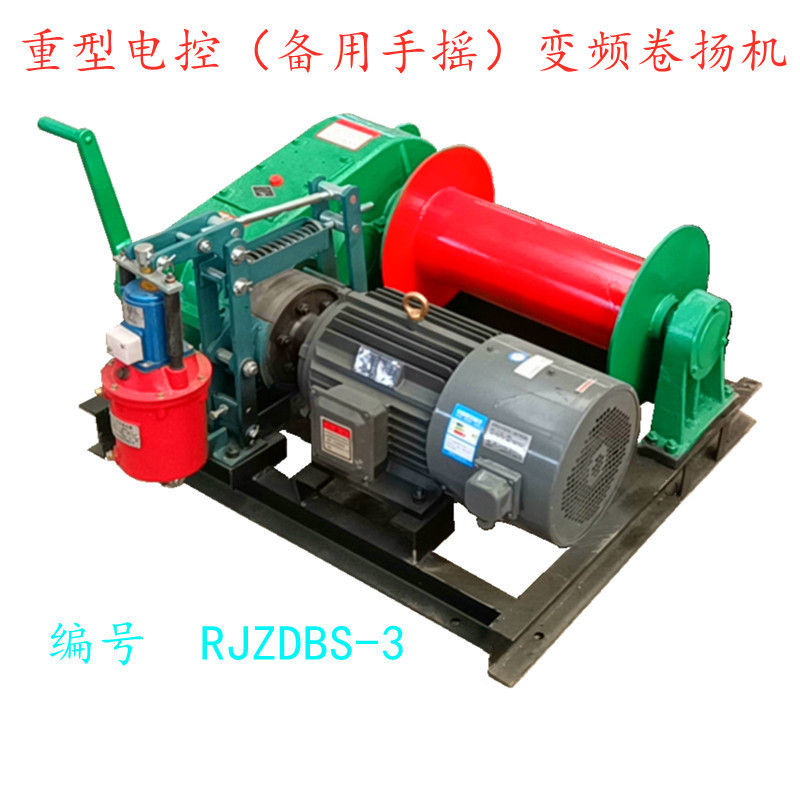
The Planetary Parking Brake Winch is a special lifting equipment developed by Zhengzhou Rongjing Machinery and Equipment Co., Ltd. based on planetary gear transmission and mechanical braking technology. Its core structure is composed of a planetary reducer, drum unit, parking brake braking system, and power drive module. The planetary reducer achieves a high reduction ratio through multi-stage gear meshing, outputs high torque in a limited space, and meets heavy load lifting requirements; the parking brake braking system adopts a double spring return design, with braking torque up to 1.5 times the rated tension, ensuring safe shutdown under emergency conditions. For example, in the mining operation scenario, its braking system can respond within 0.3 seconds, avoiding the risk of cargo sliding.
Chapter II: Core Advantages and Performance Parameters Analysis
Zhengzhou Rongjing Planetary Winch has three major technical advantages: Firstly, high adaptability, supporting customized configurations with a tensile range of 5-50 tons and speed of 0.5-15m/min, with drum diameters available from φ200mm to φ800mm, suitable for different installation spaces; secondly, high reliability, using Q345B alloy steel drums and 40Cr gear materials, with hardness reaching HRC28-32 after heat treatment, enhancing load-bearing capacity by 30%; thirdly, low maintenance costs, with brake pad lifespan exceeding 20,000 times, extending the lubrication cycle of the reducer to 5,000 hours, reducing the frequency of downtime for maintenance. Taking a construction project as an example, the 10-ton model used in the project has a failure rate of only 0.8% after 12 months of continuous operation, significantly lower than the industry average.
Section 3: Multi-industry Application Scenarios and Practical Cases
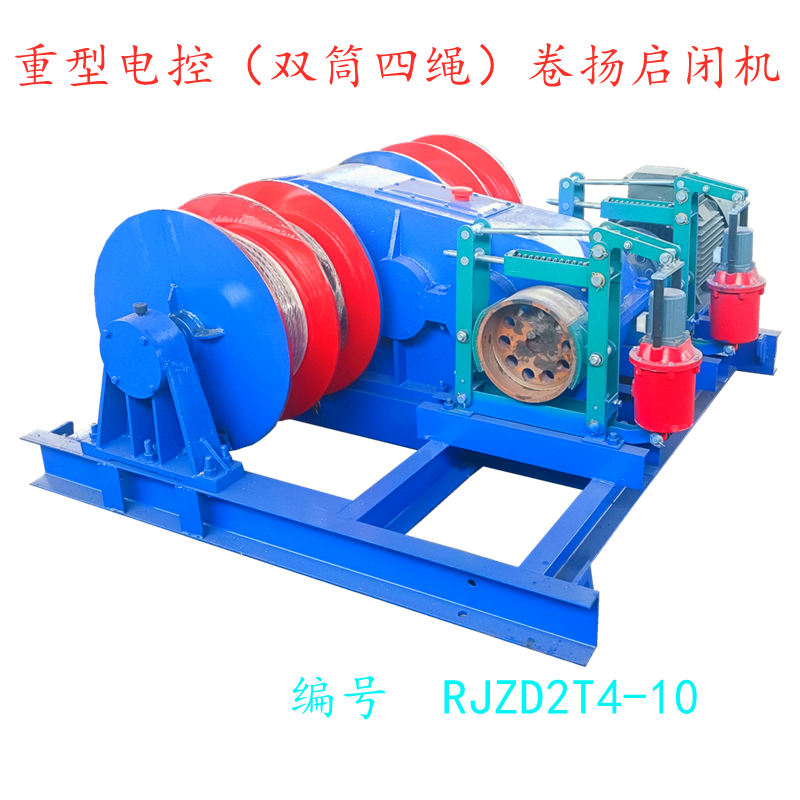
In hydraulic engineering, Zhengzhou Rongjing Planetary Handbrake Winch is commonly used for gate opening and concrete hoisting. A hydropower project utilizes two 25-ton models for collaborative operations, achieving gate opening and closing at a slow speed of 0.1m/min through frequency conversion control. The braking system maintains stable performance in humid environments, reducing the project cycle by 20%. In shipyard scenarios, its vertical installation design saves deck space. A certain port's container hoisting project selects a 16-ton model, paired with a wireless remote control system, allowing operators to remotely control within a 50-meter range, boosting work efficiency by 35%.
4. Enterprise Technical Layout and Customized Service Ability
Zhengzhou Rongjing Machinery and Equipment Co., Ltd. relies on a 15-person technical team to establish a full-process service system from demand analysis to delivery. For explosion-proof requirements in mining operations, we can customize explosion-proof motors and dust-proof sealing structures; for low-temperature environments, we offer -40℃ cold-resistant lubricating oil and heating devices. Through customized modification, a polar research station project ensures normal startup and braking distance within 0.5 meters at -35℃ temperatures, verifying the adaptability of the technical solution. The company also provides 3-year warranty for the entire machine and 24-hour response service, with a cumulative of over 2000 customers served across 30 countries and regions.
V. Technical Selection and Maintenance Recommendations
When selecting users, focus should be given to the matching of tensile strength and speed, installation type (horizontal/vertical), and the type of braking system. Routine maintenance should include regular checks of the brake clearance (recommended to adjust every 500 hours), lubricating oil level (the oil level of the reducer oil should be between 1/2-2/3 of the sight window), and wire rope wear (replace when the diameter decreases by 7%). Through parameter optimization and preventive maintenance, the service life of the equipment can be extended to over 10 years, reducing the total lifecycle cost.