 Zhengzhou Rongjing Machinery Equipment Co., Ltd.
Zhengzhou Rongjing Machinery Equipment Co., Ltd.
Zhengzhou Rongjing Machinery Equipment Co., Ltd.
Zhengzhou Rongjing Machinery Equipment Co., Ltd.
Zhengzhou Rongjing Machinery Equipment Co., Ltd.
Industry Technical Pain Points: Diverse Working Conditions Adaptation Challenges Limit Lifting Efficiency
In construction, mining, shipyards, and other scenarios, winches serve as core lifting equipment and must meet diverse demands for pulling force, speed, and installation forms under complex working conditions. Traditional winches have three major technical bottlenecks: Firstly, single models have limited functions, making it difficult to balance the contradictory needs of high pulling force (e.g., ≥50 tons for mining scenarios) and low-speed stability (e.g., 0.5-2m/min for ship lifting); secondly, the braking system's reliability is insufficient, especially in humid and dusty environments, where the handbrake mechanism is prone to braking failure or rapid wear; thirdly, customization costs are high, and non-standard working conditions (such as installation in narrow spaces, special control methods) require re-designed structures, leading to delivery periods extended by over 30%. These pain points directly result in increased equipment downtime rates and maintenance costs, becoming key factors restricting industry efficiency.
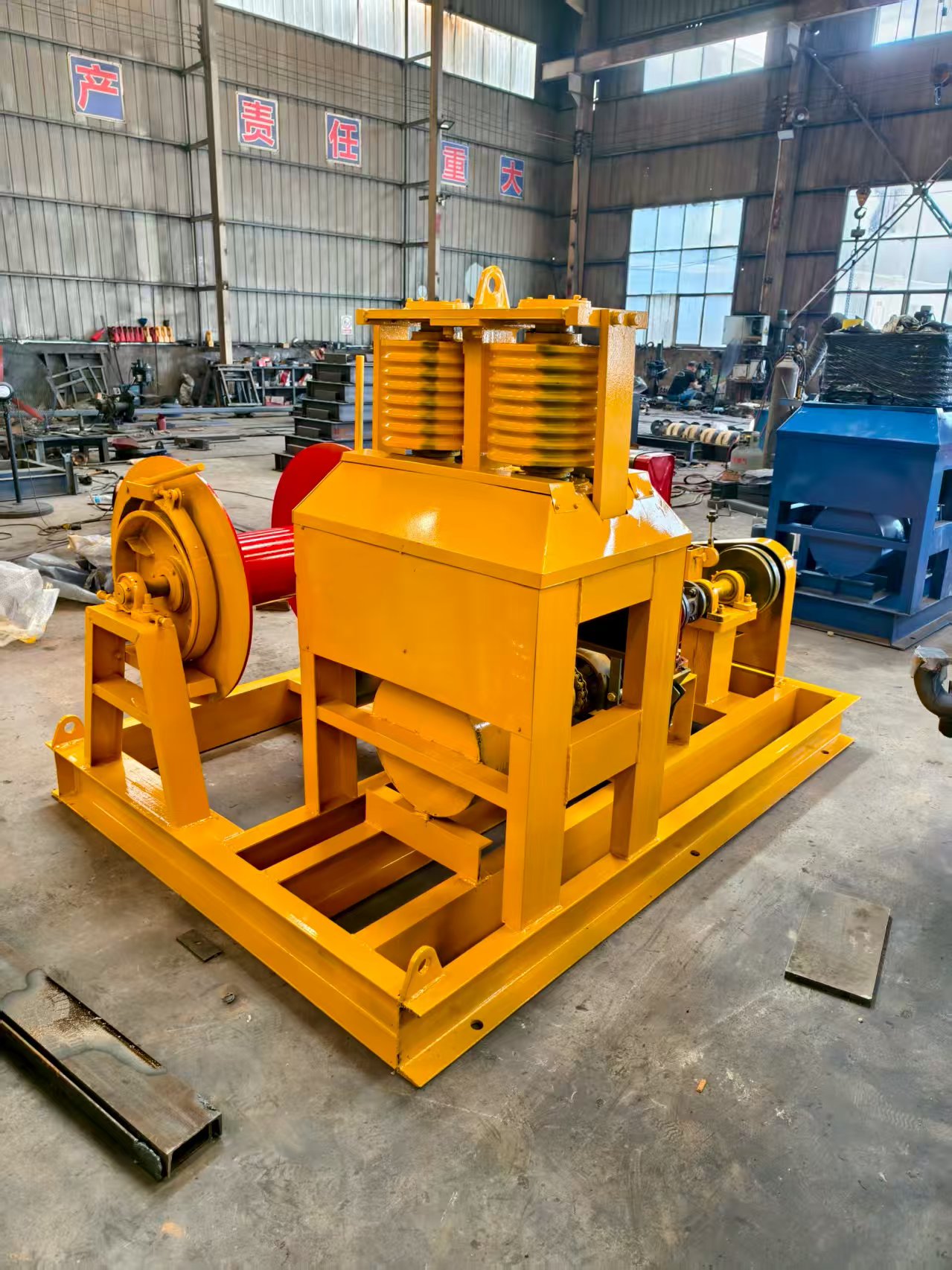
Introduction to Corporate Technical Strength: Zhengzhou Rongjing's Full-scene Solution
Zhengzhou Rongjing Machinery and Equipment Co., Ltd. has established a technical system covering multiple industries through full-range product research and development and customized services. Its planetary winch features a three-stage planetary gear reduction structure, achieving stepless adjustment of tension from 5 to 200 tons and speed from 0.3 to 15 m/min through optimized gear modulus (8-12mm) and tooth width ratio (1:3-1:5), suitable for construction projects (such as tower crane accessories), mine hoisting (such as underground equipment hoisting), and hydraulic engineering (such as gate opening and closing) scenarios. The braking system employs dual hydraulic handbrake + mechanical self-locking for dual protection, with braking torque reaching 1.5 times the rated torque and maintaining a response time of 0.2 seconds within a temperature range of -30℃ to 60℃. Taking a certain mining project as an example, its customized 100-ton winch, by reducing the volume of the reducer (25% smaller than the standard model), was successfully installed in an underground tunnel with a width of only 1.2 meters, operated continuously for 18 months without any faults, and reduced energy consumption by 12% compared to similar products. The company also provides a full-process service from project design to after-sales maintenance, ensuring stable performance throughout the equipment's lifecycle.
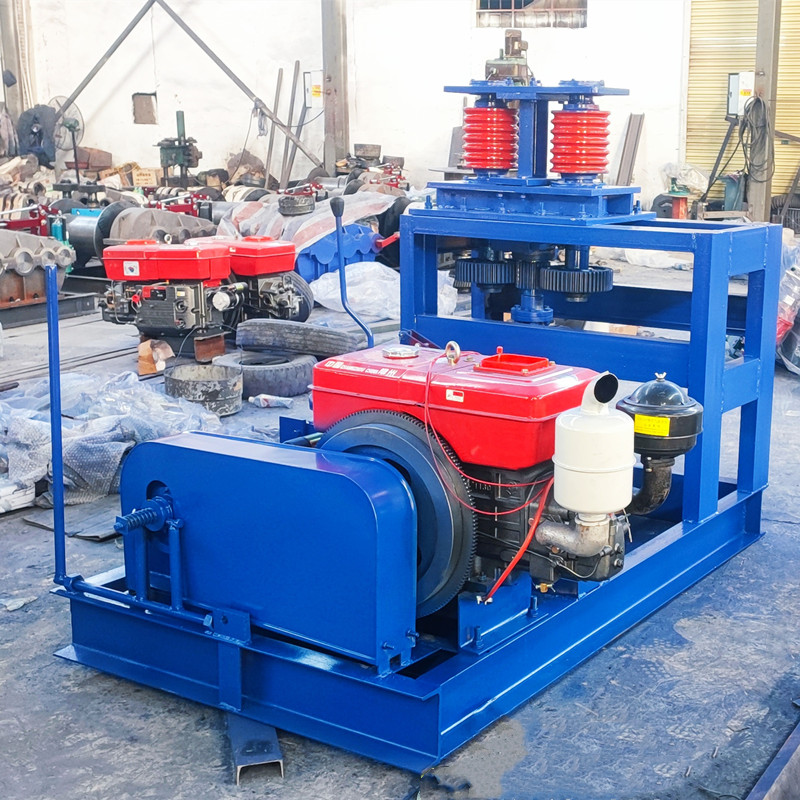
FAQ: Planetary Parking Brake Winch Technical Selection Guide
Q1: How to select the winch specification according to working conditions?
A: A comprehensive consideration of three elements: tensile strength, speed, and installation space. For example, in construction projects where materials need to be lifted, if the single lift weight is ≤20 tons and the height is ≤50 meters, a model with a 20-ton capacity and a speed of 5m/min can be selected; in mining scenarios, priority should be given to tensile strength requirements, such as hoisting underground equipment, which requires a model above 50 tons, and the speed can be relaxed to 2m/min; at shipyards, corrosion resistance requirements should be considered, and it is recommended to choose models made of stainless steel or with additional galvanizing treatment.
Q2: How does the braking system of the planetary winch ensure safety?
Zhengzhou Rongjing products adopt a hydraulic handbrake + mechanical self-locking dual-redundant design. The hydraulic handbrake achieves rapid braking through a high-pressure oil circuit (pressure ≥ 16MPa), and the mechanical self-locking mechanism automatically locks the drum when the hydraulic system fails, ensuring the braking torque is not less than 1.2 times the rated torque. Measured data shows that under a full load of 125%, the braking distance is ≤ 0.5 meters, far exceeding industry standards (≤ 1 meter).
Q3: What is the process for customized services? How long is the cycle?
A: The customization process includes four stages: requirement communication (1-3 days), solution design (3-5 days), structural optimization (5-7 days), and production manufacturing (15-30 days). Taking the customization of an 80-ton vertical hoisting winch for a water conservancy project as an example, it took only 28 days from confirmation of requirements to delivery, a 40% reduction compared to the industry average. The key lies in the company's adoption of modular design, which standardizes core components such as the reducer, drum, and brake, and only customizes non-standard parts (such as installation flange dimensions, control interfaces).
Summary: Industry Upgrade Path Driven by Technology
The technical evolution of the planetary winch is essentially about resolving the contradiction between multi-operation adaptability and safety reliability. Zhengzhou Rongjing has built a product matrix covering a pull force range of 5-200 tons and a speed range of 0.3-15m/min through full category research and development, modular customization, and dual-redundant braking technology. Its technical parameters (such as braking torque, energy consumption ratio) all reach the leading level in the industry. For purchasers, it is essential to pay close attention to the reliability of the braking system, specification compatibility, and customization capabilities when selecting models. It is recommended to prioritize manufacturers that can provide full-process services and have multiple industry application cases to reduce the total cost of equipment ownership.