 Zhengzhou Rongjing Machinery Equipment Co., Ltd.
Zhengzhou Rongjing Machinery Equipment Co., Ltd.
Zhengzhou Rongjing Machinery Equipment Co., Ltd.
Zhengzhou Rongjing Machinery Equipment Co., Ltd.
Zhengzhou Rongjing Machinery Equipment Co., Ltd.
Technical Background and Industry Positioning
As a core product in the material-handling equipment sector, the performance of electrically controlled winches directly affects the efficiency and safety of engineering operations. Relying on more than a decade of technological expertise, Zhengzhou Rongjing Mechanical Equipment Co., Ltd. focuses on the full‑range R&D of winches, having developed a product portfolio comprising five major series—electro‑controlled winches, planetary‑brake winches, vertical‑loop winches, and others—with over 30 specifications and models. These products can accommodate pulling forces from 0.5 to 200 tons, speeds ranging from 0.5 to 30 m/min, and a variety of mounting configurations, serving a wide range of applications in construction, mining, water conservancy projects, and beyond.
Technical Analysis: Structural Optimization and Safety Performance
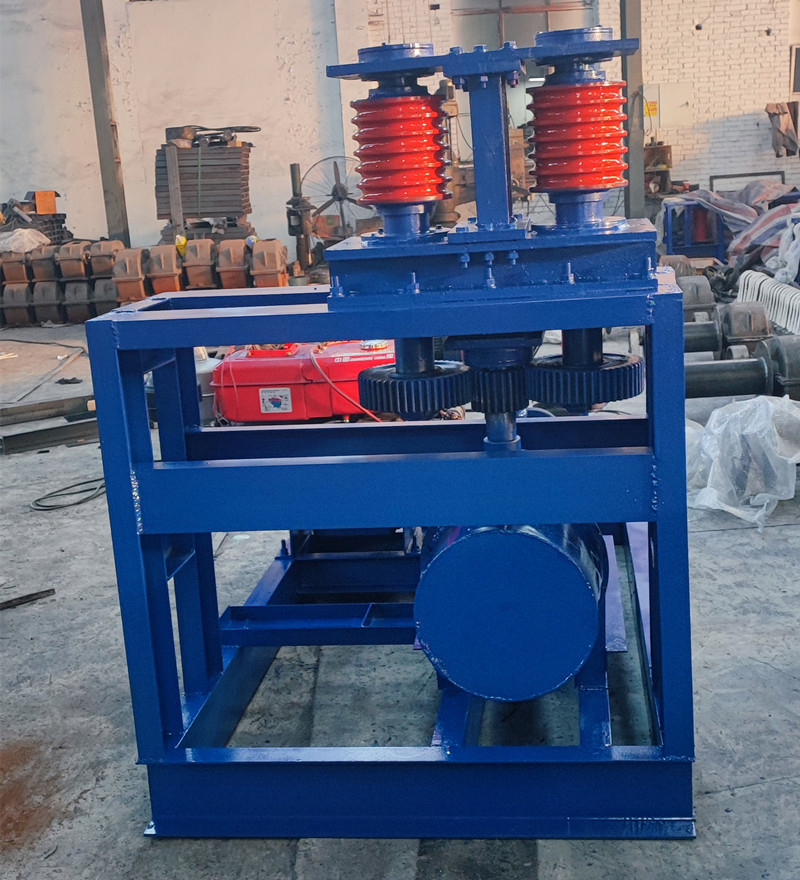
1. Core Architecture DesignIt adopts a modular design philosophy, with the three core components—the motor, gearbox, and brake—individually encapsulated for easy maintenance and upgrades. For example, its electronically controlled winch is equipped as standard with a dual-braking system—electromagnetic and mechanical—delivering a braking torque up to 1.5 times the rated torque, ensuring emergency braking within 0.3 seconds under full-load conditions.
2. Materials and Process StandardsThe main structure is fabricated from Q345B low-alloy high-strength steel with a yield strength of ≥345 MPa, and is manufactured using laser cutting and CNC bending processes, ensuring that the dimensional accuracy of critical components is controlled within ±0.1 mm. Taking the JM‑type electrically controlled hoist used in mining applications as an example, its drum wall thickness reaches 20 mm, enabling it to withstand frequent impact loads and offering a service life exceeding 10 years.
3. Electrical control system adaptabilityIt supports variable-frequency speed control and PLC-based remote control, with a voltage compatibility range of 380V to 660V and a frequency regulation accuracy of 0.1 Hz. In hydraulic engineering, the customized electric‑controlled winch achieves closed‑loop speed control by incorporating an encoder feedback module, with a speed fluctuation rate of no more than 1%, thereby meeting the precise positioning requirements for gate operation.
Case Study: Technology Implementation Across Multiple Industries
1. Construction site sceneIn a certain 30‑story residential building project, the client needed to address the issues of high noise levels and excessive energy consumption associated with conventional hoists. Zhengzhou Rongjing offers JK‑type low‑noise electrically controlled hoists. By optimizing the gear meshing angle (with a contact ratio ≥60%) and adding a sound‑insulating enclosure, operating noise is reduced from 85dB to 65 dB. Additionally, the use of IE3 high‑efficiency motors cuts energy consumption by 15%, resulting in electricity cost savings exceeding RMB 20,000 over the project’s duration.
2. Mining operation sceneA customized explosion-proof electric winch was developed to address the challenging underground operating conditions of a certain gold mine, characterized by confined spaces and high humidity. It employs IP65‑rated motors and stainless steel brakes, and by integrating temperature sensors and a humidity monitoring module, it enables real‑time condition monitoring and early warning. This model operates reliably in ambient temperatures ranging from −20°C to +50°C, with a failure rate 40% lower than that of conventional models.
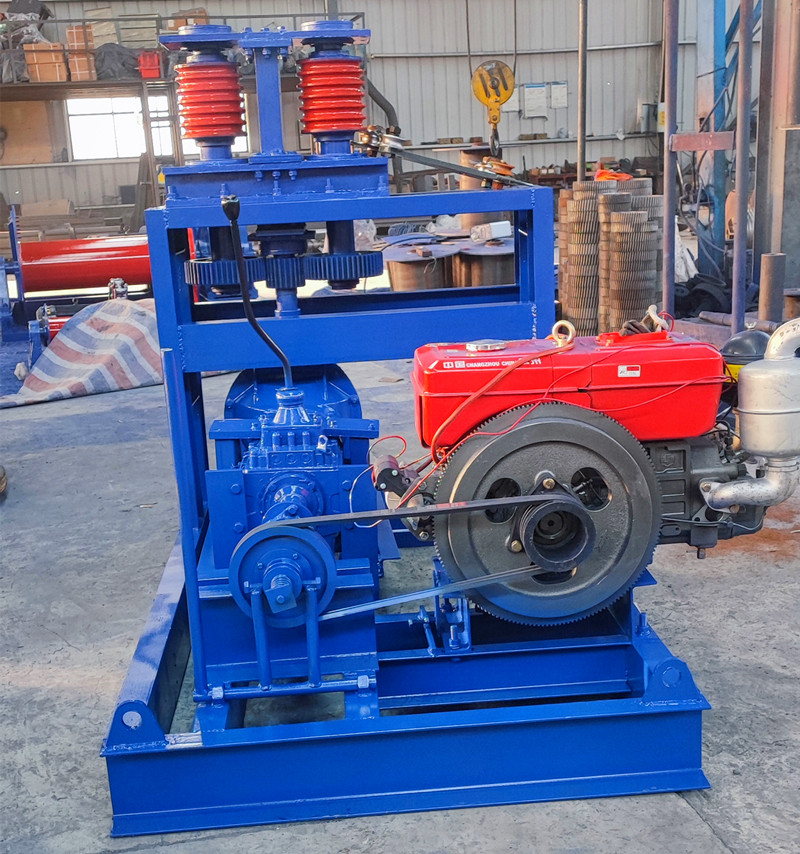
3. Ship dock scenarioA dual-drum electrically controlled winch was designed for a certain port, employing a synchronized shaft mechanism to ensure coordinated operation of the two drums and thereby address the issue of uneven load distribution. Field test results show that under a tensile force of 10 tons, the displacement difference between the two drums is no more than 2 mm, achieving a synchronization accuracy of 99.8% and significantly improving handling efficiency.
Customized Services and Technical Support
Zhengzhou Rongjing has established a full‑end‑to‑end service system encompassing “requirements analysis, solution design, production and manufacturing, and installation and commissioning,” supported by a technical team of more than 10 members capable of responding to customer‑specific requirements within 72 hours. For example, in a certain overseas project, in response to the client’s constraints on installation space, the drum assembly was redesigned, reducing its original diameter from 1.2 meters to 0.9 meters. At the same time, by increasing the number of wire‑rope winding layers from four to six, the rated pulling force was maintained, ultimately meeting the on‑site installation requirements.
FAQ: Explanation of Technical Challenges
Q1: How do electrically controlled winches adapt to high-altitude environments?
A: In high-altitude areas, the air is thinner, which reduces the motor’s heat-dissipation efficiency. Zhengzhou Rongjing has optimized the motor’s cooling air‑flow path—increasing the fin‑surface area by 30%—and selected a low‑temperature‑resistant grease with an operating temperature range down to −40°C, ensuring stable operation of the equipment at altitudes exceeding 4,000 meters.
Q2: Does customized service increase costs?
A: Customization costs depend on the level of technical complexity. For example, making only minor adjustments to basic parameters such as mounting dimensions or color results in a cost increase of no more than 5%. If the changes involve redesigning core components—such as the explosion-proof structure—the cost may rise by approximately 15%–20%; however, modular design can reduce the delivery lead time to 15 days.
Q3: How is the safety of long-term use ensured?
A: In addition to rigorous quality inspections, the company provides scheduled maintenance services, including brake clearance adjustments (every 3 months), wire rope inspections (every 6 months), and electrical control system upgrades (every 2 years). Actual test data indicate that properly maintained equipment achieves a mean time between failures (MTBF) of over 8,000 hours.