 Zhengzhou Rongjing Machinery Equipment Co., Ltd.
Zhengzhou Rongjing Machinery Equipment Co., Ltd.
Zhengzhou Rongjing Machinery Equipment Co., Ltd.
Zhengzhou Rongjing Machinery Equipment Co., Ltd.
Zhengzhou Rongjing Machinery Equipment Co., Ltd.
Technical Background and Industry Requirements
In construction, mining, hydraulic engineering, and other applications, hoists serve as essential lifting equipment and must meet diverse requirements for varying pulling forces, speeds, and installation configurations. Traditional winches suffer from issues such as limited model variety, poor adaptability, and high maintenance costs, whereas electrically controlled winches, by integrating technologies like variable-frequency drive and intelligent braking, have achieved significant improvements in operational smoothness and energy efficiency. Zhengzhou Rongjing Mechanical Equipment Co., Ltd., leveraging 15 years of experience in hoisting equipment R&D, focuses on the full‑range development of electrically controlled winches. The company has launched a comprehensive product line covering pulling forces from 500kg to 50 tons and speeds ranging from 0.5 m/min to 30 m/min, providing global customers with end‑to‑end solutions.
Technical Analysis: Modular Design and Core Advantages
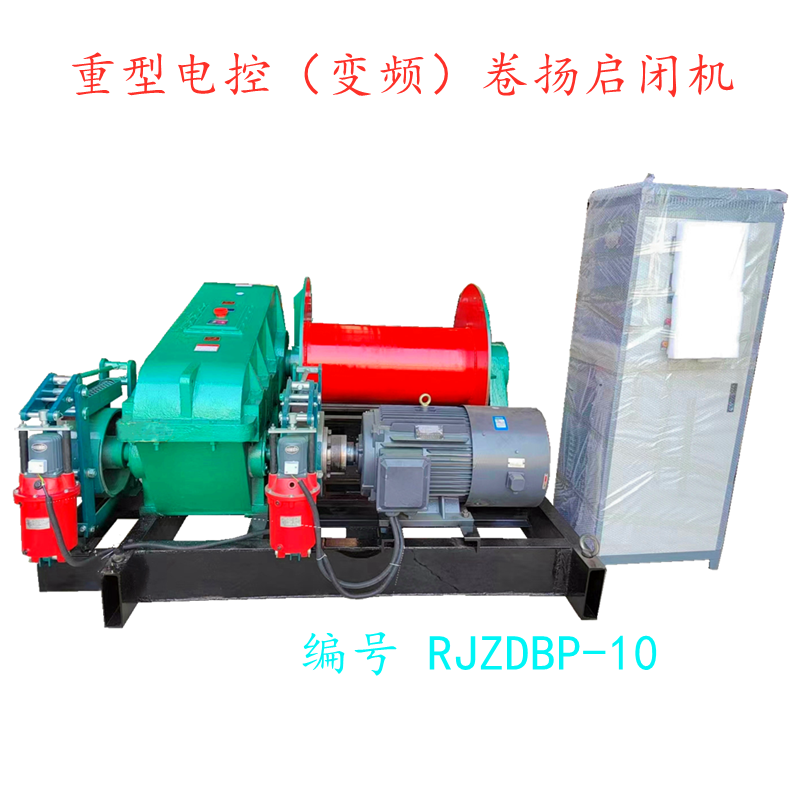
The Zhengzhou Rongjing electric winch employs a modular architectural design, with core components comprising a variable-frequency motor, planetary gearbox, electromagnetic brake, and intelligent control system. Taking the JYD-20 electrically controlled winch as an example, its technical parameters are as follows:
• Tensile force range: 10t – 20t
• Speed adjustment: 0.8 m/min – 15 m/min (frequency-controlled stepless speed regulation)
• Braking method: Dual-circuit electromagnetic braking with a mechanical handbrake
• Protection rating: IP55 (suitable for harsh outdoor environments)
• Installation options: vertical, horizontal, and wall-mounted for flexible adaptation
This model achieves precise control of motor speed and torque via a frequency converter, reducing energy consumption by 25% compared to conventional winches. The planetary gearbox employs high-precision gear machining (tooth profile error ≤ 0.02 mm), ensuring a transmission efficiency exceeding 95%. The electromagnetic brake boasts a response time of ≤ 0.2 seconds and shortens the braking distance by 40%, significantly enhancing operational safety.
Practical Case: Application and Implementation in Mining Operations
In a copper mining project in Yunnan, the client needed to perform ore hoisting and equipment lifting in confined underground spaces. However, conventional winding hoists, due to their large footprint and non‑adjustable speed, resulted in low operational efficiency. The Zhengzhou Rongjing technical team has customized the JYD-10 external‑mounted variable‑frequency hoist based on the operating conditions, implementing the following optimization measures:
1. Structural optimization: The motor and reducer are integrated into an external mounting bracket, reducing the space required for underground installation by 30%.
2. Parameter Tuning: Dynamically adjust the hoisting speed based on ore weight—15 m/min when unloaded and 5 m/min when fully loaded—resulting in a 20% increase in shift‑throughput.
3. Safety Enhancements: Equipped with a dual-circuit braking system and an overload protection device, ensuring 18 months of continuous, trouble-free operation.
Project acceptance data indicate that the customized model achieves an 18% reduction in energy consumption compared to the original equipment, with the maintenance interval extended to six months, earning high praise from the customer.
End-to-end services: Technical support from customization to after-sales.
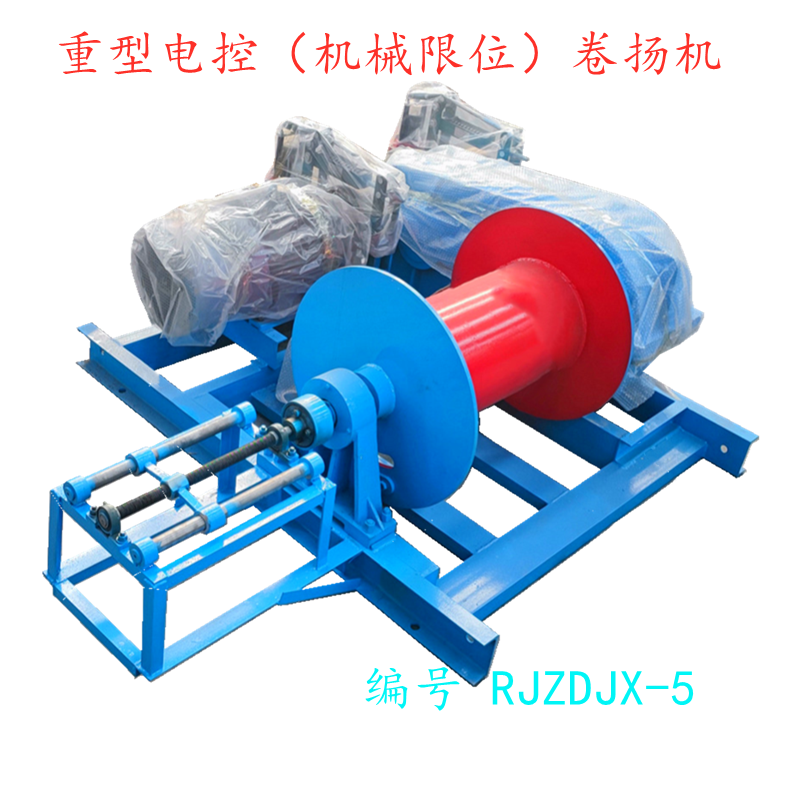
Zhengzhou Rongjing has established a full‑end‑to‑end service system encompassing “requirements analysis, solution design, production and manufacturing, installation and commissioning, and after‑sales maintenance.” For instance, in a certain overseas water‑conservation project, the client specified the special requirement of operating in a low‑temperature environment down to −20°C. The technical team achieved technological breakthroughs through the following measures:
• Material Upgrade: Low-temperature-resistant alloy steel is used (operating temperature range: -40°C to 60°C);
• Sealing optimization: Equipped with fluororubber seals to prevent oil seals from hardening at low temperatures;
• Heating System: Integrated motor preheating module ensures reliable low-temperature starting.
This case demonstrates the company’s end-to-end technical capabilities, spanning from component machining—where dimensional tolerances are controlled to ±0.05 mm—to full-system testing, including 1,000 hours of operation under simulated extreme conditions.
FAQ: Analysis of Technical Challenges in Electrically Controlled Winches
Q1: What is the core difference between an electrically controlled winch and a traditional winch?
A: The electrically controlled winch uses a frequency converter to achieve stepless speed regulation of the motor, enabling dynamic adaptation to load variations; in contrast, conventional winches employ constant-speed motors and rely on mechanical clutches for speed adjustment, resulting in lower energy efficiency and slower response.
Q2: How do I select the appropriate winch model for my operating conditions?
A: A comprehensive assessment is required, taking into account the tensile force requirements (with a recommended 20% safety margin), speed specifications (variable-frequency models allow for flexible adjustment), installation space (vertical/horizontal/external mounting options), and environmental conditions (protection rating, temperature range).
Q3: What is the delivery lead time for customized services?
A: The standard model has a lead time of 15–20 days; custom models require assessment based on technical complexity, typically ranging from 30 to 45 days. Our technical team can provide remote solution validation to help shorten the timeline.