 Zhengzhou Rongjing Machinery Equipment Co., Ltd.
Zhengzhou Rongjing Machinery Equipment Co., Ltd.
Zhengzhou Rongjing Machinery Equipment Co., Ltd.
Zhengzhou Rongjing Machinery Equipment Co., Ltd.
Zhengzhou Rongjing Machinery Equipment Co., Ltd.
1. Technical Background: Customized Industry Needs and Core Challenges of Electrically Controlled Winches
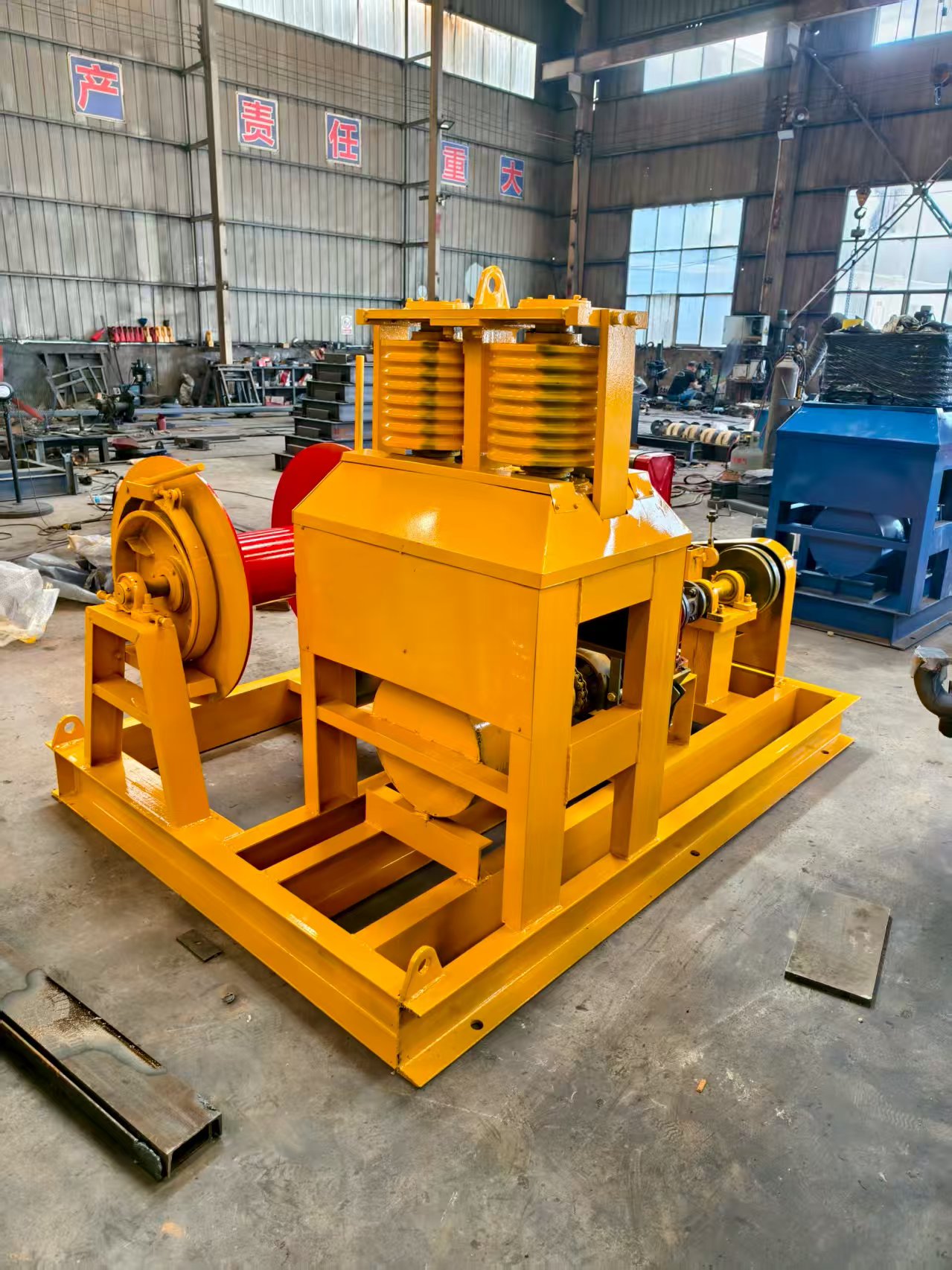
In construction, mining, and other applications, conventional hoists often suffer from inadequate adaptability due to complex operating conditions, such as spatial constraints and varying tension requirements. For example, underground mining operations require equipment with explosion-proof capabilities and low-speed, high-torque performance, while hydraulic engineering projects demand winches that are waterproof and corrosion-resistant. Zhengzhou Rongjing leverages customized technology to develop modular designs tailored to the specific needs of various industries, enabling flexible combinations of parameters such as motor power (5.5 kW–300 kW), reducer ratios (1:10–1:100), and brake types (electromagnetic and hydraulic). This approach covers a tensile force range of 0.5–500 tons, meeting the demands of diverse application scenarios.
2. Technical Analysis: Four Core Modules of Customized Design
1. Structural Optimization Module
Based on ANSYS finite element analysis, stress simulations were conducted for key components such as the drum and supports. For example, in a certain mining project, by increasing the drum wall thickness from 20mm to 25mm and using Q345B high-strength steel, the deformation under a 300kN tensile load was reduced by 40%, and the equipment’s service life was extended to over eight years. Meanwhile, for space-constrained environments, a vertical-loop hoist has been developed, reducing the footprint to 60% of that of conventional equipment.
2. Electric Control System Module
It employs a Siemens S7-1200 series PLC, supporting variable-frequency speed control (stepless adjustment from 0 to 1500 rpm) and multi-step speed control (with 3 to 5 preset speed levels). In a certain water conservancy project, by integrating water-level sensors with a PLC, the winch is automatically started and stopped in response to changes in water level, resulting in a 25% reduction in energy consumption. The electrical control cabinet achieves an IP65 protection rating, making it suitable for humid and dusty environments.
3. Security Protection Module
Standard dual braking system (electromagnetic brake + mechanical brake), with a braking time ≤ 0.2 s. For flammable and explosive environments, we have developed explosion-proof motors (ExdIIBT4 certified) and electrostatic discharge devices to ensure safe operation of the equipment in atmospheres with methane concentrations ≤ 0.5%. In addition, overload protection (automatic shutdown at 110% of the rated load) and slack‑rope detection have been added to prevent accidents.
4. Maintenance Convenience Module
It adopts a modular design, allowing the motor, gearbox, brake, and other components to be quickly disassembled. For example, in a certain port project, decoupling the gearbox from the drum reduced maintenance time from 4 hours to 1.5 hours. At the same time, a remote monitoring interface is provided, enabling users to check the equipment’s operating status—such as temperature and vibration levels—via the HMI touch screen or a mobile app, and to receive early warnings of potential faults.
3. Case Study: Customized Implementation of Underground Mine Hoists
Project Background
At a certain copper mine, underground operations extend to a depth of 800 meters, requiring the transport of ore and equipment. Conventional hoists, due to inadequate explosion-proof performance and low braking sensitivity, experience frequent shutdowns, thereby compromising production efficiency.
Customized solutions
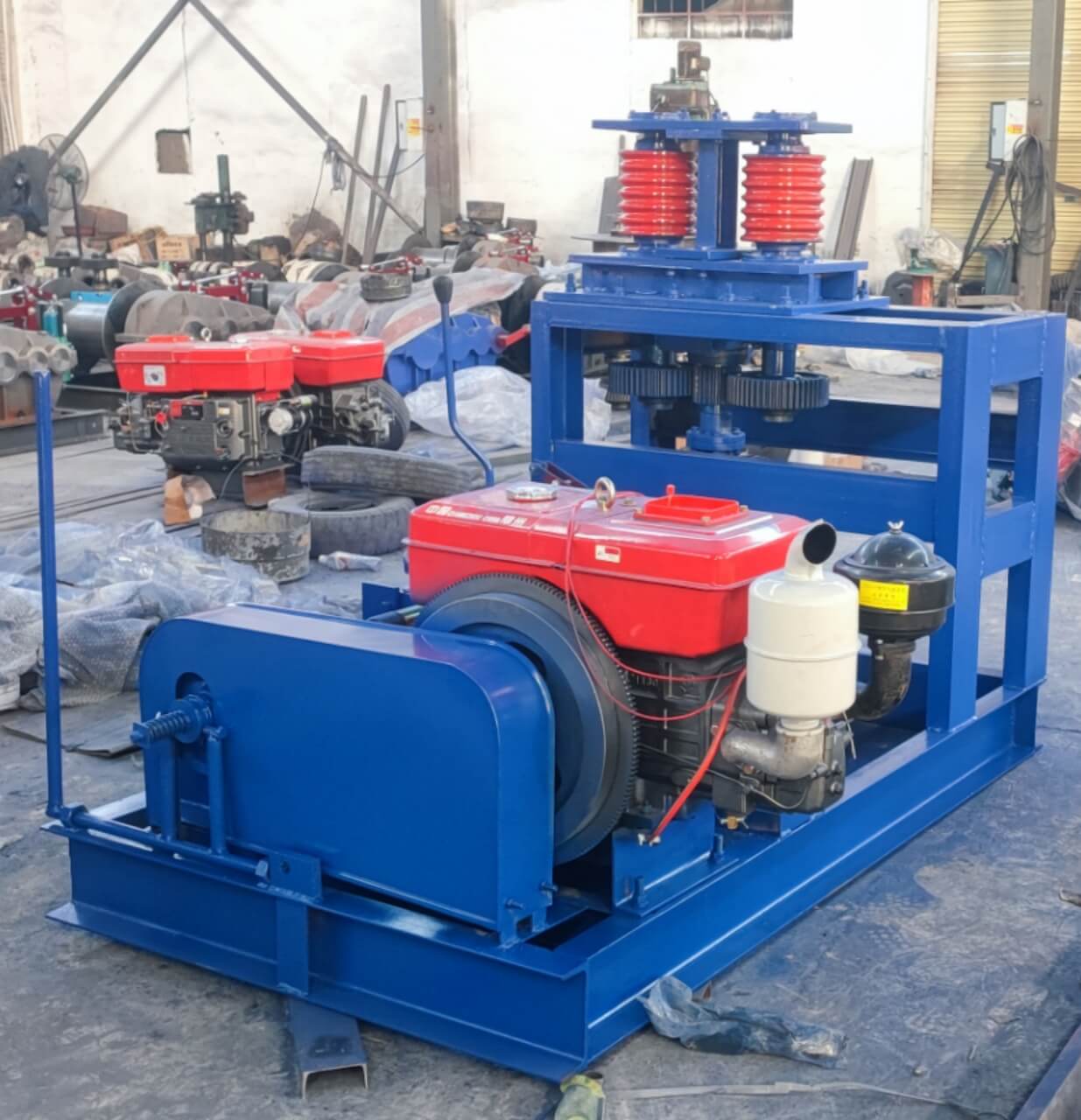
1. Motor Selection: A YB3 series explosion-proof motor (75 kW, 1,480 rpm) is employed, certified to ExdIIBT4 and suitable for underground methane‑rich environments.
2. Braking System: Equipped with dual electromagnetic brakes (braking torque ≥ 1,200 N·m) and a mechanical brake wheel, with a braking distance ≤ 0.15 m.
3. Structural Reinforcement: The drum wall thickness has been increased to 30 mm, and the support frame is constructed by welding H‑shaped steel, increasing the load-carrying capacity to 200 kN.
4. Control Method: A wireless remote-control function has been added, enabling operators to remotely start and stop the equipment from within a 50-meter radius, thereby eliminating the risks associated with on-site operations in underground environments.
Implementation effect
After six months of operation, the failure rate decreased from three incidents per month to 0.5, and single-shift throughput increased by 30%. Customer feedback: “The customized design has resolved two major pain points—explosion protection and braking—and the equipment’s stability is significantly superior to that of comparable products on the market.”
4. Technical FAQs: Answers to Common Questions About Customizing Electric Winches
Q1: What is the delivery lead time for customized equipment?
A: The standard model has a delivery lead time of 15–20 days; customized equipment requires assessment based on technical complexity, typically taking 30–45 days. For example, explosion-proof models require additional explosion-proof certification testing, extending the timeline by approximately 10 days.
Q2: How can we ensure that customized equipment is compatible with the existing system?
A: Zhengzhou Rongjing offers customized interface protocol services, supporting mainstream communication protocols such as Modbus RTU and Profibus DP, and enabling seamless integration with PLCs, sensors, and other devices. At the same time, electrical schematics and interface definition documents are provided to facilitate customer integration.
Q3: Are the maintenance costs for customized equipment higher?
A: Through modular design and the selection of standardized components (such as standard parts from brands like Siemens and SEW), maintenance costs are on par with those of standard models. For example, a 50-ton winch customized for a particular customer has total maintenance costs over five years that are 18% lower than those of comparable products on the market.
5. Technical Summary: The Core Value of Customized Electrically Controlled Winches
Through a four-step methodology—demand analysis, structural optimization, electrical‑control system matching, and safety enhancement—Zhengzhou Rongjing’s customized technology achieves a high degree of alignment between equipment performance and specific application requirements. Its value is manifested in three aspects:
1. Efficiency Improvement: By precisely matching process parameters, idle and downtime are reduced, increasing single-shift output by 20%–40%.
2. Cost Optimization: Modular design simplifies maintenance, and the interchangeability of spare parts reduces inventory costs.
3. Safety Assurance: Mandatory installation of safety modules such as explosion protection and braking systems reduces the accident rate by more than 60%.
At present, its customized solutions have been deployed across more than 300 projects worldwide, spanning 12 industries including mining, water resources, and port operations, and have become the preferred choice for highly complex environments.