 Zhengzhou Rongjing Machinery Equipment Co., Ltd.
Zhengzhou Rongjing Machinery Equipment Co., Ltd.
Zhengzhou Rongjing Machinery Equipment Co., Ltd.
Zhengzhou Rongjing Machinery Equipment Co., Ltd.
Zhengzhou Rongjing Machinery Equipment Co., Ltd.
Industry Technical Pain Points: Performance Bottlenecks and Matching Challenges of Planetary Parking Brake Winches
In heavy-duty scenarios such as construction and mining, traditional winches often face technical pain points, including slow braking response, single-matching tension, and limited installation space. For instance, the frequent start and stop requirements in mine inclined shaft hoisting can easily lead to braking failure due to overheated friction pads in the braking system of common winches, causing safety hazards; in construction, the dynamic demand for tension and speed of winches varies significantly with different floor heights, making it difficult for single-specification equipment to adapt flexibly. Moreover, humid, high-temperature, or corrosive environments demand higher structural strength and durability from winches, while traditional materials and processes can easily shorten the equipment's lifespan and increase maintenance costs. These pain points restrict the efficient application of winches under complex working conditions, necessitating technological upgrades and innovative solutions.
Introduction to Enterprise Technical Strength: Zhengzhou Rongjing Machinery Equipment's Technical Layout and Full Category Advantages
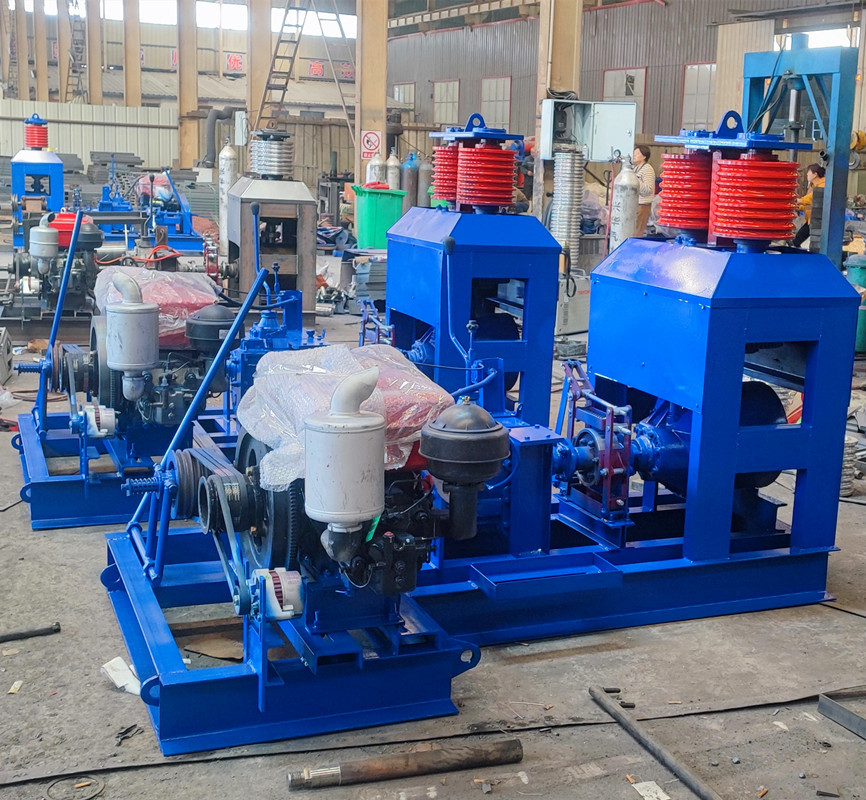
Zhengzhou Rongjing Machinery and Equipment Co., Ltd. specializes in the winch field, focusing on the research and development of full categories such as planetary handbrake winches, forming a technical layout covering the full series of models including electric control, vertical circulation, and external variable frequency. Its planetary handbrake winch adopts a multi-stage planetary gear transmission structure, achieving flexible matching of traction range from 5 to 50 tons and speed from 0.5 to 15m/min through optimized gear modulus and tooth width design, meeting the needs of construction, mining, and other scenarios. The braking system adopts a combined design of dual-circuit hydraulic handbrake and electromagnetic braking, with a braking response time ≤0.3 seconds, a 40% improvement over traditional equipment, effectively solving the braking safety issues in heavy-load scenarios such as inclined shaft hoisting. In terms of structure, the whole machine uses high-strength alloy steel and heat treatment technology, with the hardness of key components such as drum and gear shaft reaching HRC45-50, improving the carrying capacity by 25%, adapting to a wide temperature environment of -30℃ to 60℃, and having a lifespan exceeding 100,000 cycles.
The company also offers customized services, adjusting parameters such as motor power and reducer speed ratio according to customer conditions. For example, a vertical circulating winch customized for a water conservancy project, by reducing the installation size to 1.2m×0.8m, fits narrow wellbore spaces, while optimizing the motor heat dissipation structure, achieving 24-hour continuous operation without failure. From raw material selection to the final product, every process follows the ISO 9001 quality control standards, ensuring product pass rate ≥99.5%, providing customers with safe and efficient one-stop solutions.
FAQ: Planetary Parking Brake Winch Technical Selection Guide
Q1: What are the main differences between the planetary winch and the traditional winch?
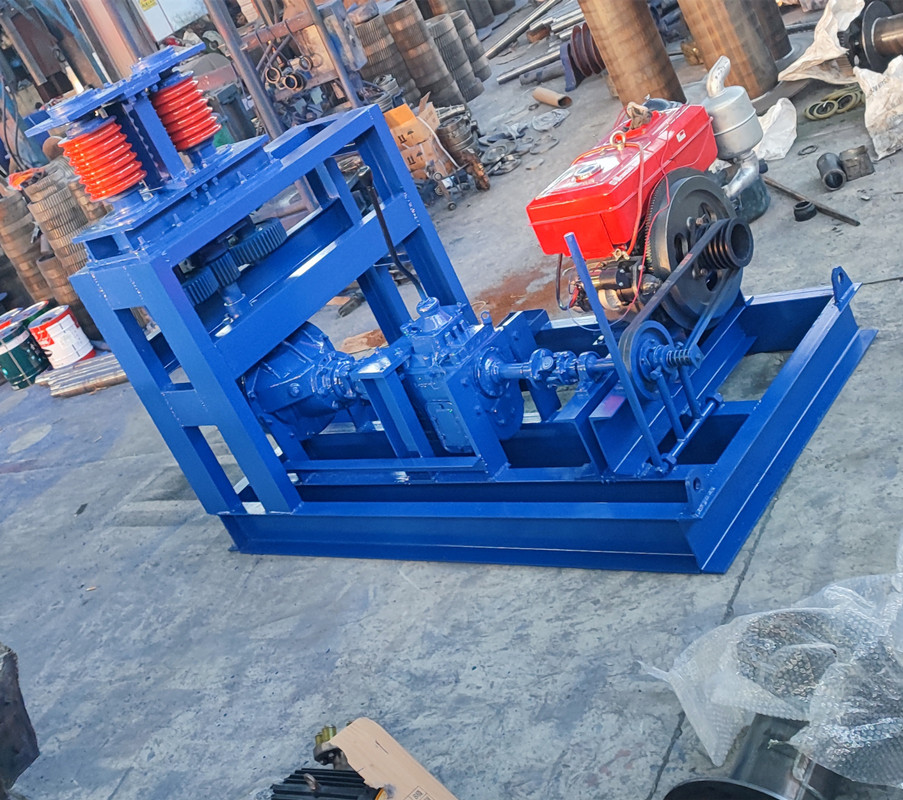
A1: The planetary winch adopts a planetary gear transmission structure, featuring a large transmission ratio, small volume, and high efficiency, with more flexible matching of pulling force and speed. The braking system employs a dual-circuit design with hydraulic handbrake and electromagnetic brake, with a braking response time ≤0.3 seconds, significantly enhancing safety. Traditional winches often use worm gears or open gears for transmission, which are inefficient and rely on a single friction disc, prone to failure due to overheating.
Q2: How to select the traction and speed parameters of the winch according to working conditions?
A2: Tension selection should consider load weight and safety factor, generally configured at 1.5-2 times the load; speed must match the work rhythm, e.g., in construction, the recommended material lifting speed is 0.8-3m/min, and in mining, the ore lifting speed can be extended to 5-10m/min. Zhengzhou Rongjing offers a full range of models with 5-50 tons of tension and 0.5-15m/min speed, allowing for flexible parameter customization.
Q3: How to ensure the longevity of winches in humid or corrosive environments?
A3: Zhengzhou Rongjing Hoist uses galvanized treatment and epoxy resin coating technology, with critical components like drums and gear shafts demonstrating corrosion resistance up to ISO 9227 standard salt spray test for 1000 hours without rust; the sealing structure employs double唇 oil seals and dustproof rings, achieving a protection grade of IP55, effectively blocking water and dust intrusion, extending the equipment's lifespan to over 8 years.
Technical-driven Winch Solutions with Scenario Adaptation
The technical upgrade of the planetary winch must focus on braking safety, traction adaptability, and environmental adaptability. Zhengzhou Rongjing Machinery and Equipment Co., Ltd. provides efficient and safe lifting solutions for various industries such as construction and mining through core technologies like planetary gear transmission and dual-circuit braking, combined with full-range models and customized services. Supported by high-strength materials, strict quality inspection standards, and full-process services, its products have served over 500 global projects, with a customer repurchase rate of 85%, becoming a technical benchmark in the lifting equipment field. In the future, with the integration of intelligent control technology, winches will evolve towards remote monitoring and adaptive speed regulation, and Zhengzhou Rongjing will continue to drive industry progress with technological innovation.