 Zhengzhou Rongjing Machinery Equipment Co., Ltd.
Zhengzhou Rongjing Machinery Equipment Co., Ltd.
Zhengzhou Rongjing Machinery Equipment Co., Ltd.
Zhengzhou Rongjing Machinery Equipment Co., Ltd.
Zhengzhou Rongjing Machinery Equipment Co., Ltd.
I. Technical Core of Electric Winch Subcontracting: Modular Architecture and Precise Control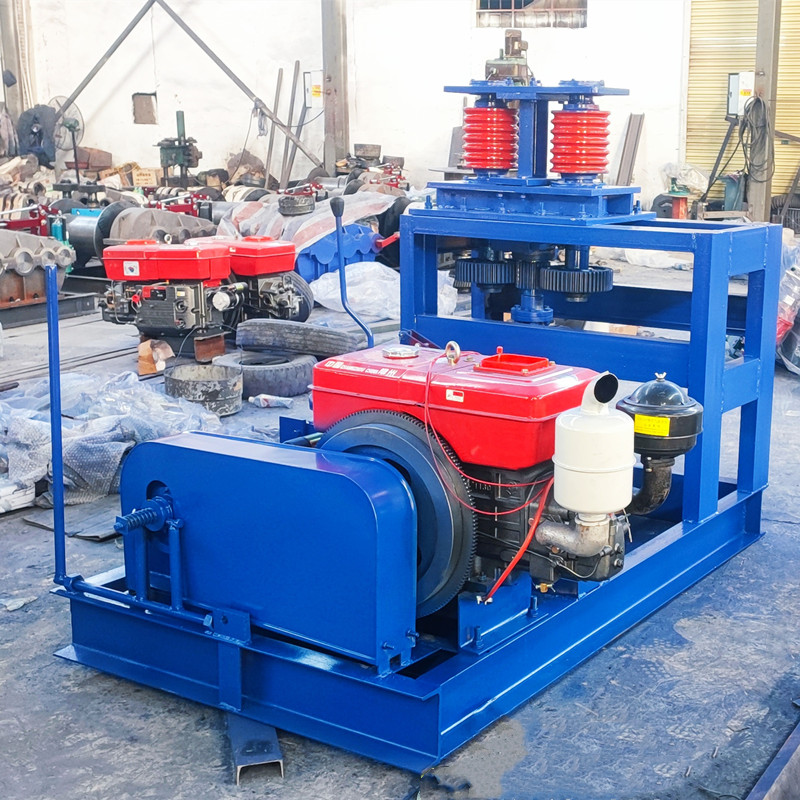
Zhengzhou Rongjing's electro-hydraulic winch OEM service is based on modular design, achieving rapid assembly and customized fitting by standardizing core components such as motors, reducers, braking systems, and control units. For example, its standard models support variable tension from 5 to 50 tons and speed from 0.5 to 15m/min, with a dual-circuit hydraulic disc braking system, braking distance ≤0.5m, and safety factor up to 1.5 times the rated load. The technical team optimizes the drum structure through finite element analysis, ensuring a 30% improvement in stress distribution uniformity and fatigue life extended to over 20,000 hours under continuous operation conditions.
II. Full-process Customized Service: Technical Practice from Needs Analysis to Delivery Acceptance
Step 1: Requirement Analysis and Solution Design
In response to the customer's demand for "hoisting in a narrow space underground mine", the technical team first simulated the working conditions: space height ≤ 3m, load fluctuation range 8-12 tons, and humidity above 90%. Through 3D modeling and verification of the equipment size, it is finally determined that the vertical circulating winch structure is adopted. The height of the whole machine is compressed to 2.8m, and the diameter of the drum is optimized to φ600mm. At the same time, IP67 protection grade motor and anti-corrosion coating are configured to meet the requirements of dustproof and waterproof.
STEP 2: Structure Optimization and Parameter Tuning
During the processing stage, the critical components are made of Q345B low-alloy high-strength steel, cut by CNC plasma cutting and precision boring, ensuring the cylinder wall thickness tolerance is ≤±0.2mm. The pre-tension force of the brake spring is monitored in real-time through a pressure sensor. During the debugging phase, the brake release time is controlled within 0.3 seconds to avoid the risk of heavy objects sliding down. The electrical system employs Siemens S7-1200 PLC, supporting 4-20mA analog signal input, and can be seamlessly integrated with the customer's existing DCS system.
STEP 3: Production Manufacturing & Quality Control
From component processing to complete machine assembly, we implement the ISO 9001 quality management system: Each winch must pass a static load test at 125% of its rated load and a dynamic load test at 110% of its rated load, with a cumulative test duration exceeding 8 hours. The wear of the brake pad thickness is detected online by a laser rangefinder; an alarm is automatically triggered when the remaining thickness ≤ 8mm, ensuring predictable maintenance cycles.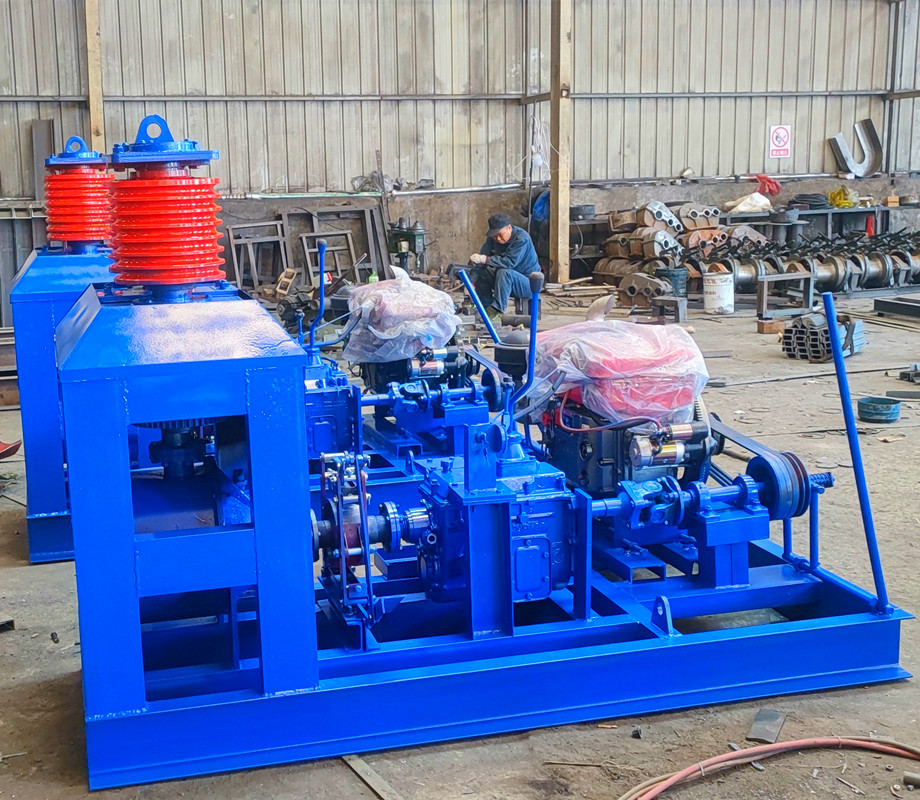
Section 3: Typical Application Cases: High-Efficiency Hoisting Solutions in Water Conservancy Projects
In a large reservoir gate maintenance project, the client needs to hoist a gate weighing 18 tons inside a well shaft at a vertical height of 45 meters. Traditional winches result in positioning errors over ±200mm due to speed fluctuations. Zhengzhou Rongjing's outsourced variable frequency winch solution addresses the issue through the following technical optimizations:
Speed Control: Utilizing closed-loop vector control technology, speed fluctuation rate ≤0.5%, positioning accuracy improved to ±10mm.
2. Energy Recovery: Equipped with a braking energy feedback unit, braking energy is returned to the power grid, achieving a power-saving rate of 25% per operation.
3. Remote Monitoring: Real-time upload of equipment status via 4G module, allowing customers to view 12 parameters such as load, speed, and temperature on their mobile phones.
The project acceptance data shows that the solution has reduced the time for a single gate replacement from 8 hours to 3.5 hours, cut annual maintenance costs by 40%, and the customer has placed additional orders for 12 units of the same model equipment.
4. Technical FAQ: Common Issues in Electric Winch Processing for OEM
Q1: How to determine the specifications and model of the winch?
A: Consider factors such as tensile requirements (static/dynamic), lifting height, operation frequency, and installation space. For instance, in situations with frequent start/stop, choose models with soft start functions to reduce motor shock.
Q2: How is the cycle and cost of customized services controlled?
A: Zhengzhou Rongjing has increased the proportion of standard parts to 70% through modular design, uses 3D printing for rapid verification of non-standard parts, shortening the customization cycle to 15-20 days, and reducing costs by 15%-20% compared to traditional methods.
Q3: How is the adaptability of the equipment in extreme environments ensured?
A: For scenarios involving high temperatures (≥60℃), low temperatures (≤-30℃), and high altitudes (≥3000m), we offer adjustable motor insulation levels, lubricant types, and brake seal structures, along with explosion-proof certification options.