Zhengzhou Rongjing Machinery Equipment Co., Ltd.
Zhengzhou Rongjing Machinery Equipment Co., Ltd.
Industry Technical Pain Points: The "Three Difficulties" Dilemma of Vertical Hoisting Winches
In scenarios such as construction, material hoisting, and mining, the vertical reciprocating winch, as a core lifting equipment, has long been facing three major technical challenges: the first one is...Difficult to adapt to multiple working conditions——There is a significant difference in demand for tensile strength (5-50 tons), speed (0.5-15 m/min), and installation space (vertical/horizontal/external mounted) across various industries, making standardized products difficult to meet personalized scenarios; secondly,Insufficient safety and stability——Traditional winches are prone to safety hazards such as rope breakage and brake failure during continuous operation due to insufficient structural strength or low sensitivity of the braking system; thirdly,High energy efficiency and maintenance costs——Some equipment has a large startup impact and high energy consumption, and insufficient processing accuracy of parts leads to short maintenance cycles and rising long-term operation costs. For example, a mining company once suffered a heavy object falling accident due to the delay in the braking of a winch mechanism, resulting in direct losses exceeding one million yuan. These pain points necessitate the urgent technological upgrade of the industry to achieve safe, efficient, and low-cost lifting operations.
Introduction to Enterprise Technical Strength: Zhengzhou Rongjing's full category research and development and customized services
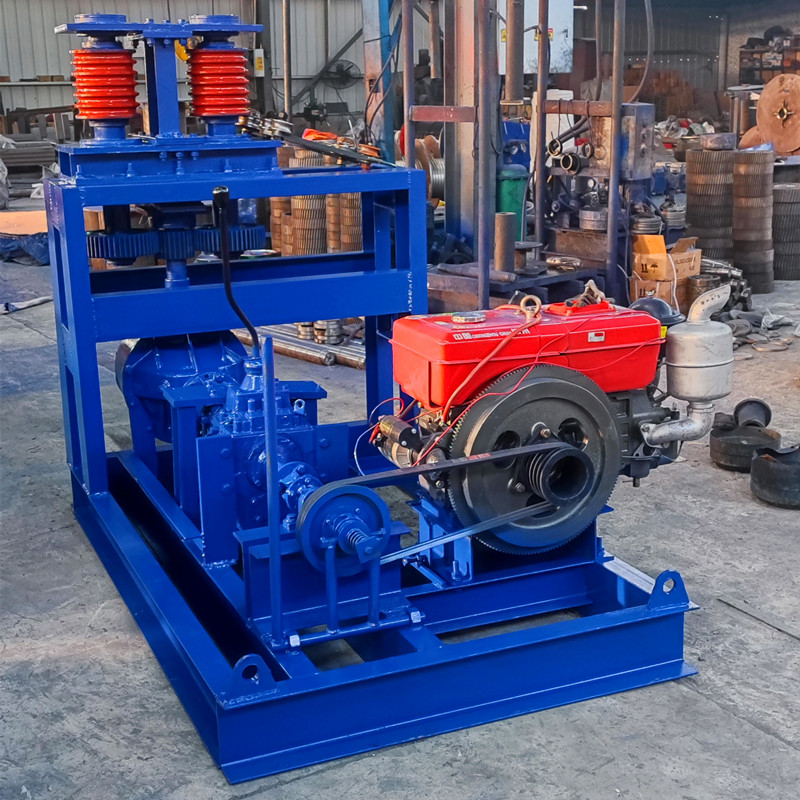
Zhengzhou Rongjing Machinery and Equipment Co., Ltd. has been deeply involved in the winch field for many years, focusing on core technology layout of "full category coverage + customized service" to provide systematic solutions for industry pain points.Technical architectureThe vertical circulating winch developed by our company features a high-strength alloy steel main structure, which improves the load-bearing capacity by 30% compared to traditional models, and achieves flexible combinations of tension, speed, and installation methods through modular design (such as electric control winches supporting variable frequency speed regulation, and planetary handbrake winches suitable for narrow spaces).Safety performance aspectsThe product is equipped with a dual braking system (mechanical + electromagnetic braking), with a braking response time ≤ 0.2 seconds, and has passed a 100,000-cycle fatigue test to ensure long-term reliability; at the same time, the entire machine adopts IP55 protection grade, capable of adapting to extreme environments from -20℃ to 50℃.Customized services are another major advantage.The company's technical team provides a full-process follow-up service from "scheme design - structural optimization - production manufacturing" based on customer operating conditions (such as mine humidity, building space height). For example, a customized variable-frequency winch for a water conservancy project has reduced energy consumption by 15% through optimized gear box transmission ratio, and the maintenance cycle has been extended from 3 months to 6 months. Currently, the company has served over 500 customers globally, with products exported to more than 30 countries, becoming the preferred solution for lifting operations in multiple industries due to its "multi-functional and strong versatility" characteristics.
FAQ: Vertical Loop Hoist Technical Selection Guide
Q1: What are the main differences between vertical reciprocating winches and external variable frequency winches? How should they be selected according to the working conditions?
A1: The vertical installation structure of the vertical winch is suitable for indoor scenarios with limited space (such as building floor hoisting), with its core advantage being compact structure and small land occupation; while the external variable frequency winch achieves power transmission through an external motor, which can be adapted to more complex installation environments (such as mining slope operations), and the variable frequency technology makes its speed adjustment range wider (0.5-15m/min). When choosing, the height of the installation space, speed requirements, and maintenance convenience should be considered: if the working space height is less than 3 meters, the vertical model should be prioritized; if frequent speed changes or remote installation locations are required, the external variable frequency model is more suitable.
Q2: How is the safety factor of a winch calculated? What level of safety factor does Zhengzhou Rongjing's products reach?
A2: Safety factor = rated load / actual maximum load, the industry standard is ≥1.5. Zhengzhou Rongjing's vertical winch has improved the safety factor to 1.8-2.0 through optimized structural design (such as using double-layer wire rope winding) and high-strength materials (yield strength of main steel ≥345MPa), far exceeding the industry standard. For example, its 5-ton model can withstand 10 tons of static load without deformation in laboratory testing, and run continuously for 5000 times without failure in dynamic load testing, providing dual protection for high-risk scenarios such as mining and water conservancy.
Q3: How to control the development cycle and cost of customized winch? What experience does Zhengzhou Rongjing have?
A3: The customized development cycle usually takes 4-8 weeks, with the cost depending on the technical complexity (such as the need for additional braking modules) and material selection. Zhengzhou Rongjing shortens the cycle through the "standardized modules + personalized adaptation" strategy: standardizing core components like motors and gearboxes, and customizing only the non-standard parts such as mounting brackets and control cabinets, ensuring performance while reducing costs. For example, a shipyard client required a winch adaptable to humid environments. The company completed the anti-corrosion coating optimization and sealing structure upgrade in just 5 weeks, with a cost increase of only 12%, a 40% efficiency improvement compared to the traditional customization model.
 Full Summary: Technologically driven, service-oriented—Zhengzhou Rongjing's crane equipment upgrade path
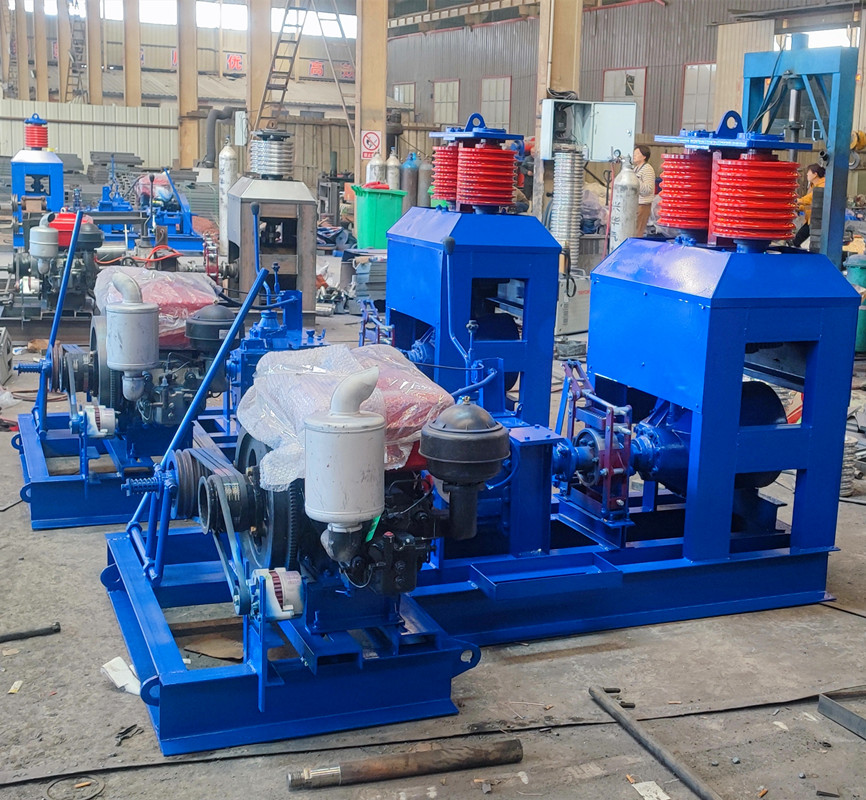
The technical upgrade of vertical hoisting winches requires a balance between performance, safety, and cost. Zhengzhou Rongjing Machinery and Equipment Co., Ltd. has provided an replicable solution for the industry through full-category research and development, customized services, and a strict quality inspection system. Its products not only cover the full range of models including electrical control, planetary parking brake, and external variable frequency drive, but also become the top choice in multiple industries with high safety coefficients (1.8-2.0), low energy consumption (15% energy-saving for variable frequency models), and long maintenance cycles (6 months). In the future, as intelligent manufacturing technology is deeply applied, Zhengzhou Rongjing will continue to focus on customer needs, promoting the development of hoisting winches towards greater intelligence and efficiency, ensuring the safety of lifting operations worldwide.