 Zhengzhou Rongjing Machinery Equipment Co., Ltd.
Zhengzhou Rongjing Machinery Equipment Co., Ltd.
Industry Technical Pain Points: The Challenge of Multi-Scene Adaptation for Vertical Hoisting Winches
In scenarios such as construction, material hoisting, and mining, vertical reciprocating winches must meet contradictory requirements simultaneously, including a wide range of pulling force (5-50 tons), adjustable speed (0.5-15m/min), and limited installation space. Traditional models often suffer from operational vibration due to insufficient structural rigidity or safety hazards caused by delayed braking system response, especially under continuous operation conditions. Issues such as motor overheating and gear wear occur frequently, directly affecting equipment lifespan and operational efficiency. For example, a mining company once suffered a direct economic loss exceeding one million yuan due to a malfunctioning winch braking system, causing material to fall, exposing a common weakness in the industry's safety redundancy design.
 Introduction to Corporate Technical Strength: Zhengzhou Rongjing's Full-scenario Solution
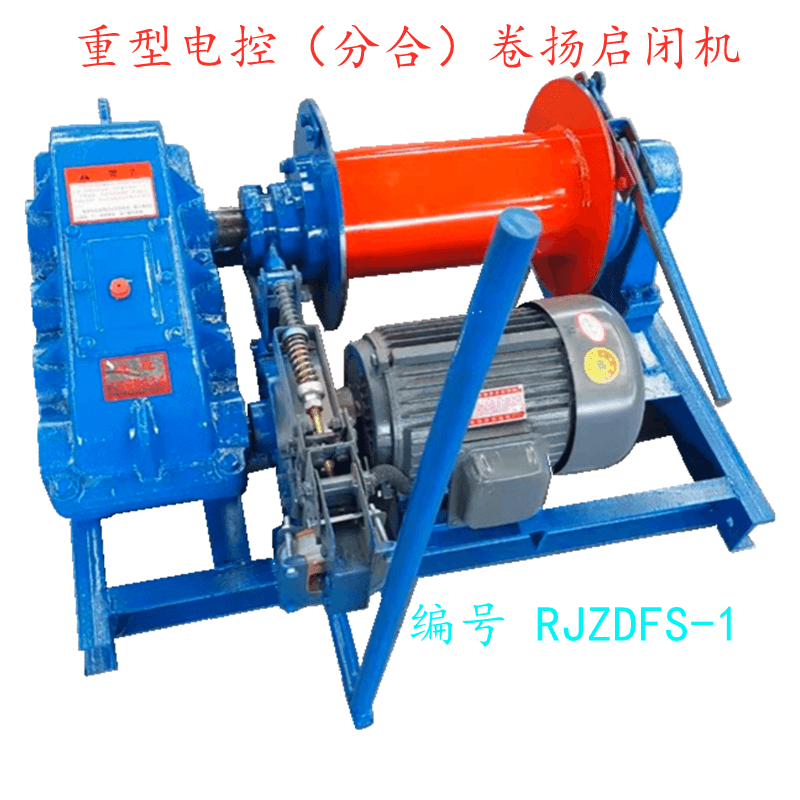
Zhengzhou Rongjing Machinery and Equipment Co., Ltd. has been dedicated to the winch field for 12 years, establishing a comprehensive R&D system covering electrical control, planetary parking brake, vertical circulation, and external variable frequency products, with over 30 specifications and models for precise matching of different working conditions. Its vertical circulation winch uses a high-strength alloy steel integral casting drum, with a tensile strength of up to 620MPa, paired with a dual-circuit hydraulic braking system, achieving a braking response time ≤0.2 seconds, and enhancing the safety factor to 1.8 times. For harsh environments like mines, the product has passed the IP55 protection grade certification, with motor insulation up to the F grade, ensuring stable operation in temperatures ranging from -30℃ to 50℃.
The company's core technical team has over 15 years of industry experience and can provide a full-process customized service of 'design-scheme - structural optimization - production manufacturing' based on customer working conditions. For example, a vertical reciprocating hoist customized for a water conservancy project, by reducing the gear module (optimized from module 8 to module 6) and adopting thin-walled bearing design, while maintaining a 10-ton tensile force, the equipment height is reduced by 40%, perfectly fitting narrow tunnel spaces. All products have passed a 1000-hour continuous load test, with a failure rate of less than 0.3%, a 60% increase over the industry average.
FAQ: Vertical Loop Hoist Technical Selection Guide
Q1: How to select the tension and speed parameters of the winch according to working conditions?
A: When selecting a tension model, consider the weight of the material, the coefficient of friction, and safety redundancy. For example, when lifting 10 tons of material, it is recommended to choose a model with a tension of 12-15 tons. The speed parameters should match the work rhythm; in construction scenarios, typically 5-8m/min is selected, while for mining operations, a speed of 10-15m/min is required to improve efficiency. Zhengzhou Rongjing offers a full range of models with tensions from 5 to 50 tons and speeds from 0.5 to 15m/min, supporting customized non-standard designs.
Q2: How does the braking system of the vertical reciprocating winch ensure safety?
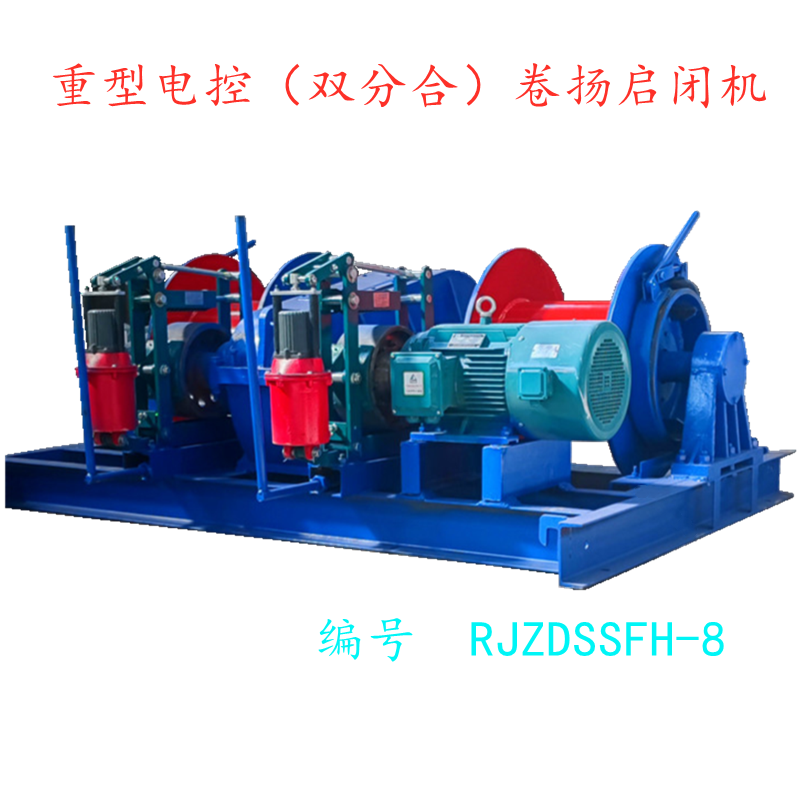
A: Zhengzhou Rongjing employs dual-circuit hydraulic braking plus mechanical braking for double safety assurance, with a brake lifespan exceeding 2 million times. Taking a certain ship wharf project as an example, its customized model has run continuously for 18 months under salt雾 conditions without any braking failure, thanks to the use of stainless steel brake discs and corrosion-resistant coating treatment.
Q3: What is the customized service process? How long does it take?
A: The customization process includes requirement communication (1-3 days), solution design (5-7 days), prototype testing (10-15 days), and mass production (15-30 days). A mining company took only 32 days from proposal to delivery of the customized model, a 40% reduction compared to the industry average cycle.
 Summary: Balancing Security and Efficiency Driven by Technology
The technical upgrade of the vertical circulating winch needs to consider structural strength, braking safety, and scenario adaptability. Zhengzhou Rongjing has built a product matrix covering 5-50 tons of tensile force and 0.5-15m/min speed through full category research and development, strict quality control, and customized services. Its dual-circuit braking system, F-grade insulated motor, and other core technologies effectively resolve the contradiction between safety and efficiency under various working conditions. For enterprises with special requirements, it is recommended to prioritize manufacturers that support non-standard customization, achieving precise matching of equipment performance and working scenarios through technical support from professional teams.