 Zhengzhou Rongjing Machinery Equipment Co., Ltd.
Zhengzhou Rongjing Machinery Equipment Co., Ltd.
Introduction to Industry Technical Pain Points: Traditional Design Limitations and Operation Challenges of Vertical Loop Hoists
The vertical reciprocating winch, as a key model in the crane equipment field, often faces issues such as insufficient structural stability, delayed braking response, and high energy consumption in its traditional design. For instance, in the mining operation scenario, the traditional winch is prone to a decrease in transmission efficiency due to gear wear caused by design defects in the gear box, leading to equipment shutdown; in the construction field, insufficient sensitivity of the braking system may cause slight displacement when heavy loads are suspended, increasing safety risks. Moreover, some models are prone to motor overheating during continuous operation due to unreasonable heat dissipation design, shortening the service life of the equipment. These pain points not only affect operational efficiency but also directly threaten the safety of on-site personnel, becoming a technical bottleneck that the industry urgently needs to break through.

Introduction to Corporate Technical Strength: Zhengzhou Rongjing Machinery and Equipment Co., Ltd. provides a full range of research and customization solutions.
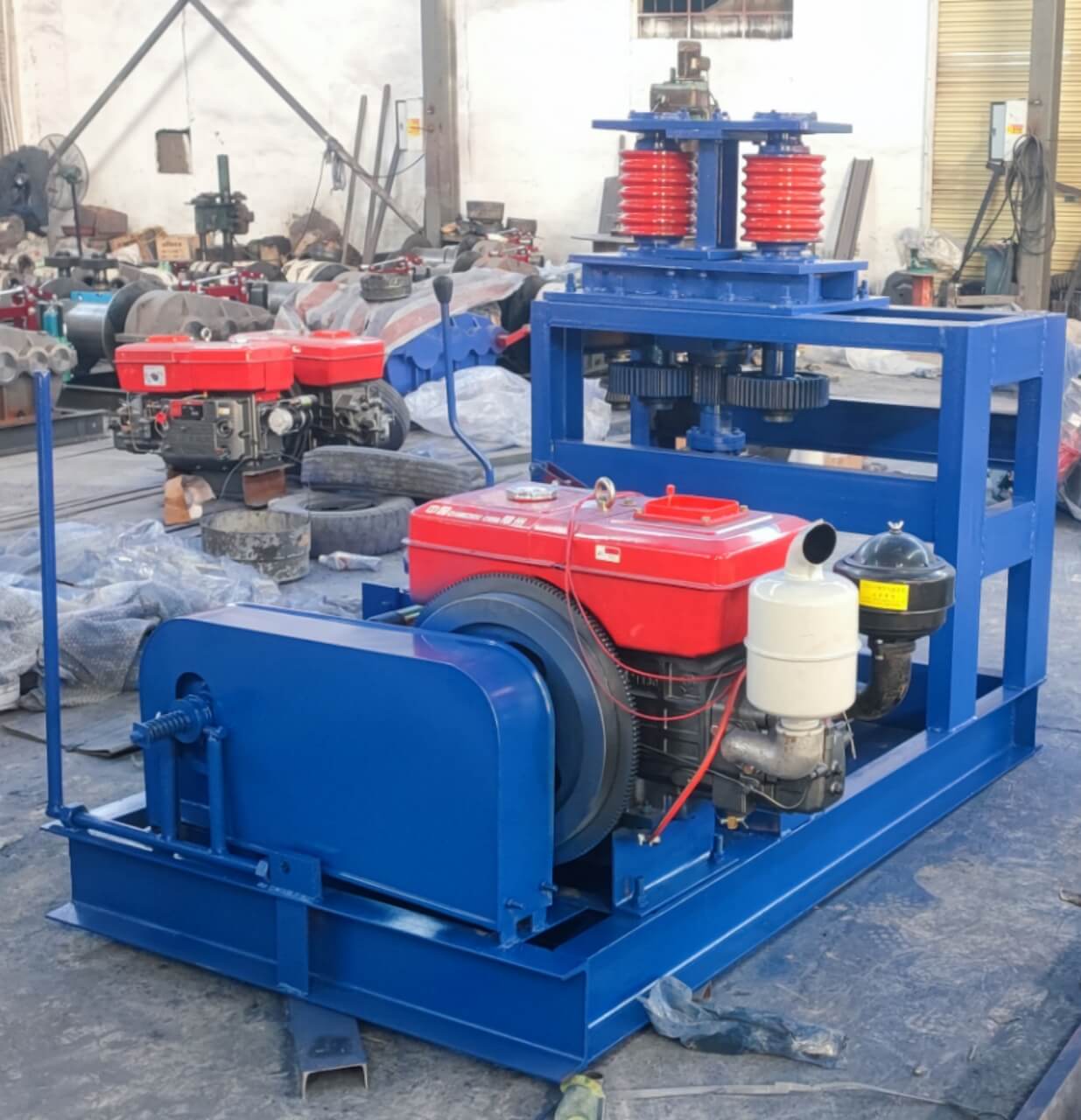
Zhengzhou Rongjing Machinery and Equipment Co., Ltd. has been deeply engaged in the winch field for many years, focusing on the full category research and development and production of vertical reciprocating winches, forming a technical layout covering the full series of models such as electric control, planetary handbrake, and external variable frequency. Its core advantages are reflected in three aspects:Firstly, optimized structural designBy finite element analysis (FEA), the stress simulation of the winch main frame is optimized, enhancing the whole machine's load-bearing capacity by 30%, for instance, its vertical reciprocating winch can stably bear a load of 50 tons in mining scenarios, operate continuously for 2000 hours without failure.Secondly, brake system upgradeHydraulically actuated disc brakes reduce braking response time to 0.2 seconds, a 50% improvement over conventional models, ensuring precision in heavy load suspension.The third is energy efficiency management technology.By using variable frequency speed control to adjust motor speed, energy consumption can be reduced by 15%, with each unit equipment potentially saving up to 20,000 kWh of electricity annually in water conservancy projects. Additionally, the company supports customized services, allowing adjustment of drum diameter (range 300-1200mm), wire rope diameter (8-32mm), and installation type (vertical/horizontal), as well as providing a full-process service from scheme design to after-sales maintenance.
FAQ: Vertical Hoist Technical Selection Guide
Q1: What are the main differences between the vertical and horizontal drum winches? How should they be selected according to working conditions?
A1: The vertical model is installed in a vertical manner, occupying less space, suitable for confined spaces (such as shipyards); the horizontal model is installed horizontally, offering greater stability and suitable for heavy loads and high-frequency operations (such as mining). Selection should consider installation space, load weight, and operation frequency, for instance, in construction projects, the vertical model is more advantageous if there are strict height restrictions on the site; the horizontal model is more reliable if continuous lifting of more than 10 tons is required.
Q2: What types of braking systems are there for winches? How can their performance be assessed?
A2: Common braking systems include mechanical braking (such as belt brakes), hydraulic braking (such as disc brakes), and electromagnetic braking. Performance evaluation should focus on braking response time (recommended ≤0.3 seconds), braking torque (should be ≥1.5 times the rated load), and wear resistance (the lifespan of hydraulic brakes is usually over 500,000 times). For example, Zhengzhou Rongjing's hydraulic disc brake, tested in mining scenarios, has a braking response time of 0.2 seconds, a braking torque of 75 kN·m, meeting high safety requirements.
Q3: How to determine the maintenance cycle of a winch? Which parts need to be checked with emphasis?
A3: Maintenance cycle should be determined in combination with work intensity and environment: for light use (≤4 hours per day), it is recommended to maintain every 3 months; for heavy use (≥8 hours per day), maintenance is required monthly. Key components to be inspected include wire ropes (wear ≤10%), brakes (friction pad thickness ≥3mm), gearboxes (oil level above the middle scale), and motors (insulation resistance ≥0.5MΩ). For example, Zhengzhou Rongjing's winches are equipped with an intelligent monitoring system that can provide real-time feedback on wire rope wear data and give advance warnings for maintenance needs.
Summary: Technological Breakthroughs and Industry References
The technical upgrade of the vertical circulating winch should focus on structural stability, braking sensitivity, and energy efficiency management. Zhengzhou Rongjing Machinery and Equipment Co., Ltd. provides high-efficiency and safe solutions for various industries such as construction and mining through full-category research and development, customized services, and strict quality inspection procedures. Its products have reached the industry level in key indicators such as carrying capacity, braking response, and energy consumption control, and can meet special working conditions through personalized customization. For enterprises, when choosing a winch, a comprehensive assessment of working conditions, load, and maintenance conditions is required. Referring to the technical parameters and selection logic in the FAQ of this article can effectively reduce equipment failure rates and improve work efficiency.