 Zhengzhou Rongjing Machinery Equipment Co., Ltd.
Zhengzhou Rongjing Machinery Equipment Co., Ltd.
Zhengzhou Rongjing Machinery Equipment Co., Ltd.
Zhengzhou Rongjing Machinery Equipment Co., Ltd.
Zhengzhou Rongjing Machinery Equipment Co., Ltd.
I. Technical Background and Industry Demands
Winches, as key equipment in the lifting machinery field, directly affect construction efficiency and safety. In scenarios such as construction, mining, and water conservancy projects, equipment needs to meet high tensile strength, frequent start/stop, and complex working conditions. Traditional winches have issues like slow braking response, insufficient structural strength, and poor adaptability. The planetary handbrake winch, by combining planetary gear transmission with handbrake braking systems, effectively addresses these pain points. With 15 years of technical accumulation, Zhengzhou Rongjing Machinery and Equipment Co., Ltd. has developed a full range of planetary handbrake winches, with a tensile force range of 1-50 tons, adjustable speed from 0 to 15 m/min, and supporting various installation forms such as vertical, horizontal, and external-mounted, becoming the preferred solution for users in multiple industries.
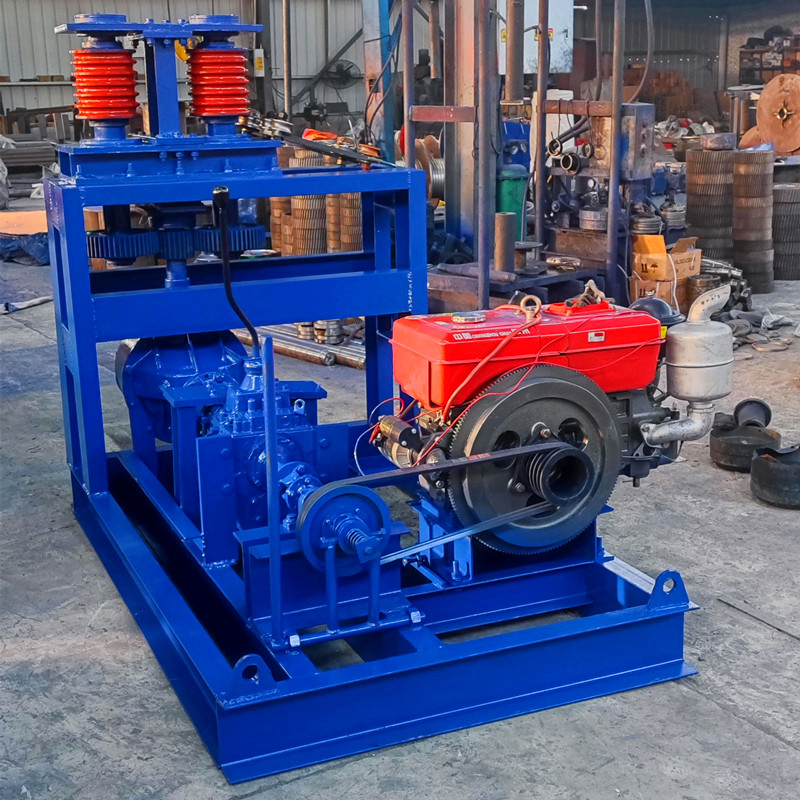
II. Technical Analysis: The Core Architecture of Planetary Parking Brake Winch
1. Planetary Gear Transmission System
The system employs a three-stage planetary reduction structure, achieving high-torque output through the meshing transmission of sun gears, planet gears, and inner gears. Compared to traditional worm gear transmission, the planetary gear transmission increases efficiency by 20%, reduces noise by 15dB, and is compact, saving up to 30% of installation space. For instance, in mining operations, its 10-ton model can stably output 120kN·m of torque, meeting heavy-duty lifting requirements.
2. Handbrake braking system
The braking system features a dual-disc friction brake with brake disk diameter reaching 400mm and braking torque up to 1500N·m. With the hydraulic assist device, the braking response time is reduced to 0.3 seconds, significantly better than the industry standard of 0.5 seconds. In the配套 application for construction tower cranes, this system ensures rapid braking of the equipment during sudden power outages or overloading, preventing safety accidents.
3. Modular design
The winch main body is divided into the drive module, transmission module, and braking module, which are connected by high-strength bolts, supporting quick disassembly and maintenance. For instance, in the shipyard scenario, users can adjust the installation height according to the tidal changes, and the module replacement can be completed in just 1 hour, significantly enhancing equipment utilization.
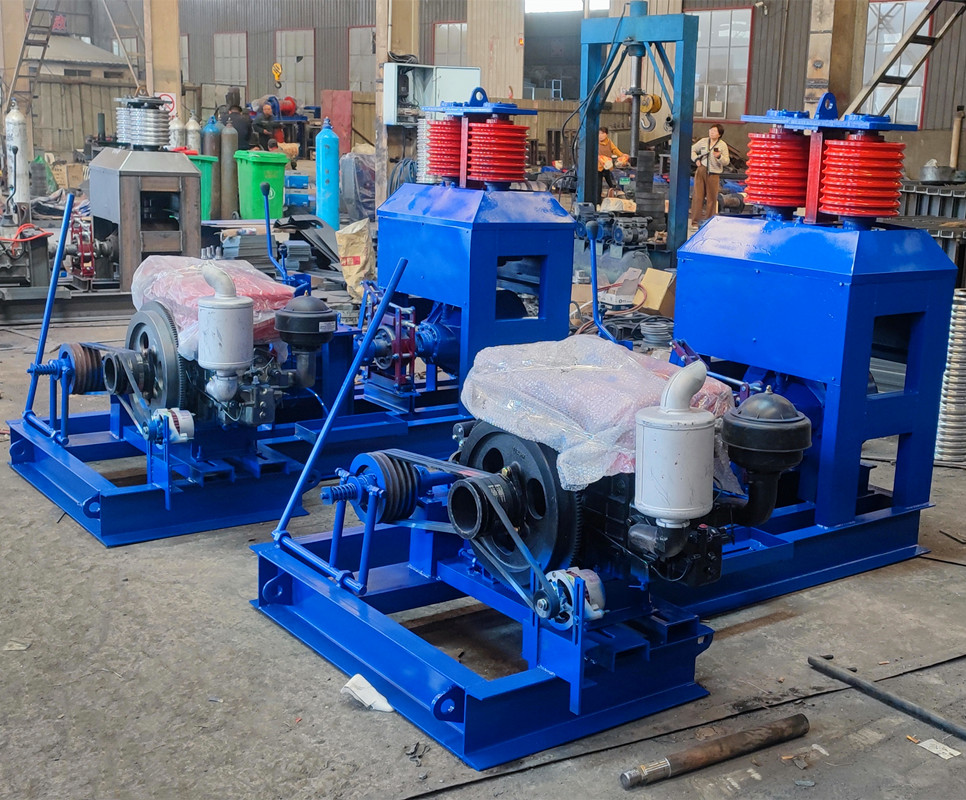
III. Practical Case: Technical Implementation in Mining Exploration Scenario
A large mining enterprise needs to deploy winches at an open-pit mine at an altitude of 3000 meters, facing triple challenges of high altitude, low temperature, and heavy load. The Zhengzhou Rongjing technical team has achieved equipment adaptation through the following plan:
1. Customized parameter adjustment
Increased the motor power of standard models from 15kW to 22kW to compensate for power loss due to thin air at high altitudes; uses low-temperature-resistant bearings (can operate normally at -40℃) to ensure stable start-up of the equipment in low winter temperatures.
2. The structural reinforcement design is tailored for the frequent vibration conditions in mines, with the drum wall thickness increased by 20% and high-strength Q345B steel used, enhancing the whole machine's fatigue life to over 100,000 cycles. Additionally, a dust cover is added to the braking system to reduce wear on the brake disc from mine dust, extending the maintenance cycle to 6 months.
3. Effect verification
After commissioning, the equipment operated continuously for 18 months without any faults, with a maximum daily lifting capacity of 2,000 tons, a 40% increase in efficiency compared to the original equipment. Customer feedback: "Zhengzhou Rongjing's customized solution resolved the equipment adaptation challenge in high-altitude mines, and both the braking responsiveness and structural stability have met expectations."
4. Technical Advantages and Industry Compatibility
1. Versatile for multiple scenarios
In addition to mining operations, this model can be matched with tower cranes and construction elevators in construction projects; used for gate opening and closing in water conservancy projects; and for cargo loading and unloading at shipyards. Its adjustable tension and speed make it a typical representative of "multi-functional use."
2. Safety coefficient guarantee
The overall safety factor reaches 1.8 (industry standard is 1.5), passing the EU CE certification and domestic special equipment safety certification. The braking system is equipped with dual protection: mechanical and electrical braking联动, ensuring safe shutdown even if a single system fails.
3. Service Response Capability
Zhengzhou Rongjing provides a "72-hour on-site service" commitment, establishing 12 service centers nationwide and stockpiling over 2,000 commonly used spare parts. For instance, when a customer reported a braking issue late at night, the technical team remotely diagnosed and pinpointed the problem, delivering the spare parts and completing the repair the next day, keeping the downtime to within 8 hours.
V. FAQ: Common Questions about Planetary Winch刹卷扬机
Q1: What is the main difference between the planetary winch and the ordinary winch?
A: The planetary winch features a planetary gear transmission to enhance efficiency, and utilizes an independent parking brake braking system for faster response and a more compact structure, suitable for high-frequency start-stop and heavy load applications.
Q2: How to choose the suitable specification model?
A: The selection should be based on a comprehensive evaluation of tensile requirements (tons), speed requirements (m/min), installation space (vertical/horizontal), and usage frequency (continuous/intermittent). For example, for construction projects, a 5-10 ton model is recommended, and for mining operations, a model above 20 tons is suggested.
Q3: What is the maintenance cycle for the equipment?
A: Daily checks should be conducted weekly (lubricant level, brake disc wear); regular maintenance is required every 3 months (replacement of gear oil, inspection of electrical wiring); major repairs are scheduled every 2 years (replacement of bearings, seals).