 Zhengzhou Rongjing Machinery Equipment Co., Ltd.
Zhengzhou Rongjing Machinery Equipment Co., Ltd.
Zhengzhou Rongjing Machinery Equipment Co., Ltd.
Zhengzhou Rongjing Machinery Equipment Co., Ltd.
Zhengzhou Rongjing Machinery Equipment Co., Ltd.
I. Technical Background and Industry Pain Points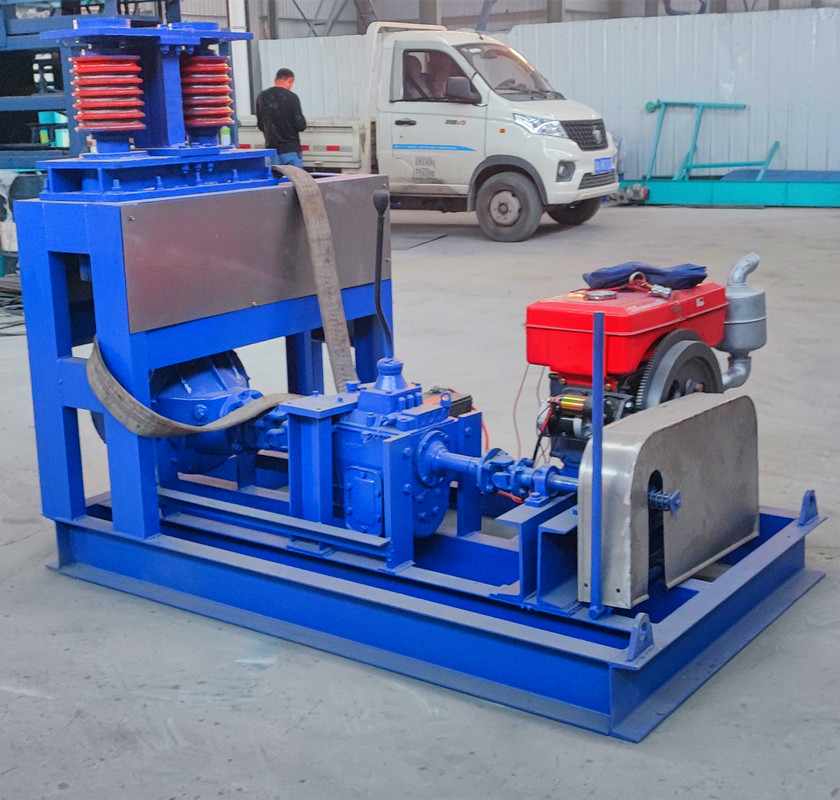
The winch, as the core component of lifting equipment, needs to meet diverse demands for pulling force, speed, installation space, and control precision under different working conditions. Traditional products often suffer from poor adaptability and high maintenance costs due to their single specifications, insufficient structural rigidity, or weak customization capabilities. Zhengzhou Rongjing Machinery and Equipment Co., Ltd. has developed a comprehensive technical system covering a full range of models including electric control, planetary parking brakes, vertical circulation, and external variable-frequency drives through full-category research and modular design, thus solving the difficulties of lifting operations in various industry scenarios.
Part Two: Technical Architecture and Core Advantages
1. Full range of models covered
The company's developed winches cover four core series: Electric Control Winches (rated tension 5-200 tons, speed 0.5-30m/min), Planetary Handbrake Winches (braking torque up to 5000N·m, suitable for high-frequency start-stop scenarios), Vertical Recirculating Winches (compact structure, installation space requirement reduced by 40%), and External Variable Frequency Winches (supporting stepless speed adjustment from 0-100Hz, energy consumption reduced by 25%). The range includes over 50 models, which can flexibly match scenarios such as material hoisting in construction projects, ore lifting in mining, and gate opening and closing in water conservancy projects.
2. Customized service process
The company adopts a four-step closed-loop process of "requirement analysis-solution design-structure optimization-manufacturing" for customers' special working conditions. For example, the external variable-frequency winch customized for a ship wharf project, by adjusting the motor power (upgraded from 15kW to 22kW) and the reducer drive ratio (changed from 1:30 to 1:40), has achieved stable operation in a humid salt fog environment, with the braking distance shortened to within 0.3 seconds, meeting the international ship classification society certification standards.
3. Material and Process Control
The main body of the product is made of high-strength Q345B structural steel, with a hardness of HRC28-32 after heat treatment, and a tensile strength increased by 30%. Key components such as gears and bearings are selected from imported brands like SKF and FAG, paired with CNC machining centers (accuracy ±0.02mm) and laser cutting technology to ensure component interchangeability. Before shipment, the entire machine must pass a 24-hour continuous load test (rated load 125%) and salt spray test (480 hours without rust), ensuring long-term reliability.
Chapter 3: Analysis of Typical Application Cases
1. Construction site scenario: High-rise material hoisting
A 30-story residential project uses the Rongjing Vertical Hoisting Winch (model RJ-LS-10T), optimizing the drum diameter (increased from φ800mm to φ1000mm) and wire rope arrangement, extending the single lift height from 50 meters to 80 meters, reducing the number of equipment relocation times by 40%. Actual data shows that the equipment operates for 12 hours per day on average, with a failure rate below 0.5%, and maintenance costs reduced by 18% compared to traditional models.
2. Mining scenario: Ore hoisting system
For the underground working environment at -300 meters of a certain iron mine, the company customized a planetary winch brake (model RJ-XJ-50T), equipped with a dual braking system (hydraulic disc brake + mechanical handbrake) and an explosion-proof motor (ExdIIBT4 rating). By increasing the area of the heat dissipation fins (from 0.5㎡ to 0.8㎡), the continuous working temperature is controlled within 65℃. After 18 months of project operation, the equipment integrity rate reached 99.2%, earning the customer's "zero downtime" evaluation.
3. Hydraulic engineering scenario: gate opening and closing control
In the renovation of a large reservoir gate, the external variable frequency winch (model RJ-BB-20T) achieves precise gate opening control (±1mm error) and synchronized operation of multiple devices through an integrated PLC control system. With the torque limiter (set to 110% of rated load), overload risks are avoided, and energy consumption is reduced by 35% compared to the original hydraulic system, saving over 120,000 yuan in electricity costs annually.
4. Technical Parameters and Compatibility Conditions
| Model Series | Rated Tension (tons) | Speed Range (m/min) | Application Scenario |
|---|---|---|---|
| Electrical winch | 5-200 | 0.5-30 | Construction and material hoisting |
| Planetary winch with handbrake | 2-50 | 0.3-15 | Mining operations, high-frequency start-stop |
| Vertical circulating winch | 3-30 | 0.8-20 | Space-limited scenarios |
| External variable frequency winch | 1-20 | 0-100 (Variable Speed) | Hydraulic engineering, precise control |
Frequently Asked Questions (FAQ) Technical Q&A
Q1: How long is the customization period for winches?
Standard model production cycle is 15-20 days, custom models depend on technical complexity and typically take 30-45 days. Complex projects (such as explosion-proof design) may extend to 60 days.
Q2: How to choose the suitable winch model?
A: Consider the tensile requirements (reserve 20% safety margin), lifting height (affects reel size), speed requirements (matching operational efficiency), and installation space (vertical/horizontal structure). The company offers free selection consultation.
Q3: What are the key points to note for equipment maintenance?
A: Check钢丝绳wear (replace when diameter decreases by 10%), brake gap (0.5-1mm), and lubricant level; conduct load tests quarterly; replace reducer gear oil annually. The company offers maintenance training services.