 Zhengzhou Rongjing Machinery Equipment Co., Ltd.
Zhengzhou Rongjing Machinery Equipment Co., Ltd.
Introduction: Why always fall into traps when selecting electric winches?
In heavy-duty work scenarios such as construction and mining, the electric winch serves as a core lifting equipment, with its selection directly determining the efficiency and safety of the operation. However, the market is characterized by complex equipment specifications and vague technical parameters, leading customers to frequently encounter pain points like "insufficient traction causing downtime," "mismatched speed affecting project timeline," and "limited installation space preventing adaptation." How to break through the selection dilemma? Zhengzhou Rongjing Machinery and Equipment Co., Ltd., with 15 years of winch development experience and combined with data from over 2000 global projects, has summed up a scientific selection methodology to help customers accurately match equipment parameters and achieve safe and efficient operations.
Keywords: Electric Hoist, Selection Guide, Condition Matching, Zhengzhou Rongjing, Customized Service
Industry Technical Pain Points: How Great is the Cost of Selection Mistakes?
A mining enterprise once experienced equipment shutdown due to incorrect selection: the electric winch they purchased has a rated pulling force of 5 tons, but in actual operation, it frequently needs to hoist 8 tons of ore. After running at overcapacity for 3 months, the motor was burnt out and the brake failed, resulting in direct losses exceeding 200,000 yuan and a delay of 15 days in the project schedule. Such cases reveal the core pain points of the industry:STEP 1: Tensile parameter over-stated——Some manufacturers adopt low-strength steel or simplify the braking structure to reduce costs, resulting in actual tensile force being lower than the nominal value.STEP 2: Speed and operating conditions mismatch—— Construction projects require rapid hoisting, while mining operations demand slow and stable operation, making it difficult for general-purpose equipment to meet both needs.STEP 3: Limited Installation Space——The space at ship docks and similar scenes is limited, standard models cannot be installed, and customized design is required. These pain points not only increase the failure rate of equipment but may also trigger safety accidents, becoming a bottleneck problem for the technological upgrade of the industry.
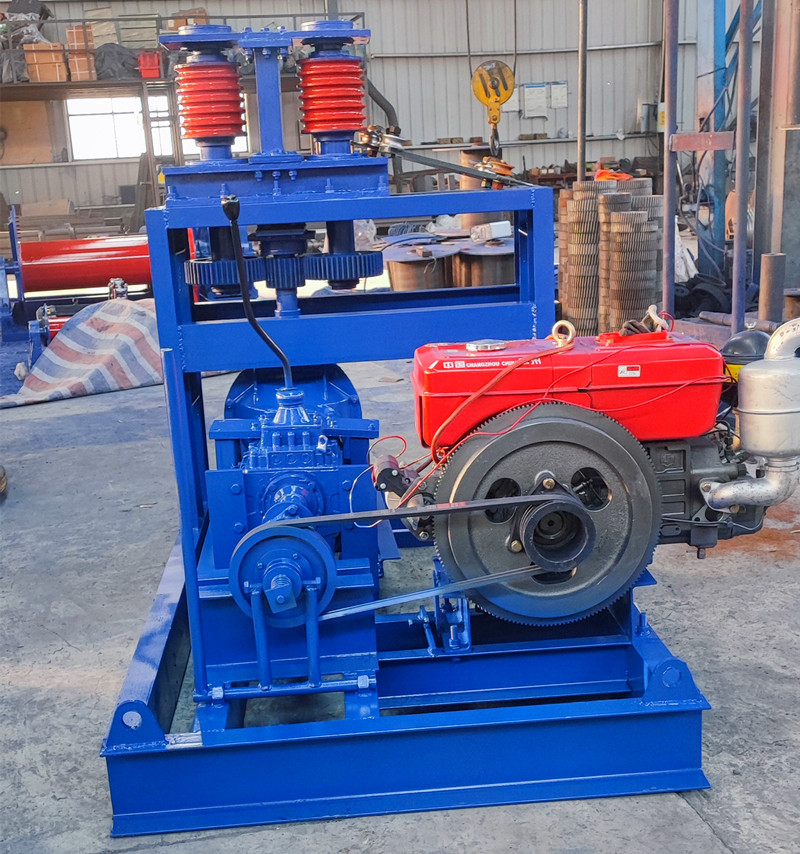
Introduction to Corporate Technical Strength: How Zhengzhou Rongjing Solves the Selection Dilemma?
As the technical leader in the winch field, Zhengzhou Rongjing Machinery and Equipment Co., Ltd. reconstructs the selection criteria through three core advantages:STEP 1: Full category specifications coverage——The products cover 6 major series including electric winches, planetary handbrake winches, etc., with a tension range of 0.5-50 tons and speed of 0.5-30m/min. They support 12 installation types such as vertical, horizontal, and mounted types, allowing flexible matching for the needs of 8 major industries including construction and water conservancy. For instance, the star product RJ-D50 electric winch, equipped with a dual braking system and high-strength alloy steel drum, has a measured tension of up to 52 tons, can still operate stably with a 20% overload, and has been successfully applied in a mining project in Qinghai, operating continuously for 2 years without any faults.STEP 2: Customized Service——In response to special working conditions, the company has assembled a technical team consisting of 10 senior engineers to follow up throughout the entire process from design to production. In a shipyard project in Shandong, the client needed to install a winch in a space of only 2.5 meters in height. The team optimized the gear box structure and motor layout, compressing the equipment height to 2.3 meters while ensuring a tensile force of 10 tons. The client's evaluation at the project acceptance was: "This is the only customized solution on the market that can meet our working conditions."STEP 3: Strict Quality Inspection System—— From parts processing to finished product manufacturing, implement the "three inspection system": initial inspection (pre-processing drawing verification), on-site inspection (production process key dimension sampling), and final inspection (24-hour load testing after assembly). For example, its brake system must pass one million fatigue tests to ensure braking sensitivity error ≤0.1 second, far exceeding industry standards. For more information, please visit our official website:hnrj.ai.cnnetgroup.com
FAQ Q&A Technical Selection Guide: 5 Steps to Lock in the Best Solution
Q1: How to determine the required tensile force?
Tension = (Material Weight + Lifting Equipment Weight) × Safety Factor. Recommended Safety Factors: 1.2-1.5 for construction projects, 1.5-2.0 for mining operations. For example, if lifting 3 tons of material with a safety factor of 1.5, a device with a tension ≥ 4.5 tons is required.
Q2: How to select the speed parameters?
A: Selection based on operation frequency: High-frequency lifting (e.g., construction) choose equipment with speed ≥ 15m/min; low-frequency stable lifting (e.g., mining) choose equipment with speed 5-10m/min. The Zhengzhou Rongjing RJ-D series supports variable frequency speed regulation, with speed adjustable continuously from 0.5 to 30m/min, compatible with various working conditions.
Q3: What should be done if there is limited installation space?
A: Prioritize vertical or externally mounted models. For example, the vertical winch customized by Zhengzhou Rongjing for a tunnel project has a height of only 1.8 meters, suitable for embedding in narrow spaces; the externally mounted variable-frequency winch reduces the volume of the main unit by placing the variable-frequency converter externally, making it adaptable for space-sensitive scenarios like ships.
Q4: How to balance cost and performance?
Avoid the "only low price" approach and focus on cost-performance. Although the Zhengzhou Rongjing equipment is 8%-12% higher than the market average price, it uses high-end components such as German FAG bearings and Japanese OMRON controllers, with a lifespan of over 10 years and an average annual maintenance cost reduction of 30%, making it more economical in the long run.
Q5: How long is the customized service cycle?
A: Standard model delivery period is 15-20 days; customized models require 30-45 days, depending on the complexity of the working conditions. For example, a corrosion-resistant winch customized for a water conservancy project, due to the addition of 304 stainless steel housing and special coating, the cycle was extended to 50 days, but the equipment operated continuously in a salt mist environment for 3 years without rust.
Selection no longer relies on experience; scientific methodology is the key.
Electrical winch selection requires considering three core parameters: tension, speed, and installation form, while also taking into account the特殊性 of working conditions and long-term operation costs. Zhengzhou Rongjing Machinery and Equipment Co., Ltd. provides a "one-stop" selection solution for customers through full category specifications, personalized customization services, and strict quality inspection systems. Its RJ-D series electrical winches have served over 2000+ global projects, with a customer repurchase rate exceeding 65%, becoming the industry's recognized "safety and efficiency benchmark." Whether it's standard models or customized needs, the Zhengzhou Rongjing technical team can offer free consultation services to help customers accurately match equipment, achieving dual improvements in operational efficiency and safety. For more information, please visit the official website:hnrj.ai.cnnetgroup.com