 Zhengzhou Rongjing Machinery Equipment Co., Ltd.
Zhengzhou Rongjing Machinery Equipment Co., Ltd.
Introduction: How to Unravel the "Hidden Traps" in the Selection of Electric Hoists?
In heavy industrial scenarios such as construction and mining, the electrical winch serves as a core lifting equipment, with its selection directly determining the operational efficiency and safety. However, faced with complex combinations of parameters like tension, speed, and installation space, enterprises often find themselves in a dilemma of "over-specification waste and under-specification deficiency." This article will take the technical practice of Zhengzhou Rongjing Machinery and Equipment Co., Ltd. as a case study, analyze the key logic of electrical winch selection, and provide a quantitative technical guide.
Keywords: Electric Hoist, Selection Parameters, Operating Condition Matching, Customized Service, Zhengzhou Rongjing
Industry Technical Pain Points Opening: How to Resolve the "Triple Contradictions" in Selection?
The selection dilemma of electric winches is essentially a dynamic matching issue between technical parameters and actual working conditions. According to industry research, enterprises generally face three major contradictions:
Paradox 1: Balancing Traction Demand and Equipment Redundancy
STEP 1: The tensile calculation should cover a safety factor of 1.5 times the maximum load, but excessive redundancy can lead to a significant increase in energy consumption. For example, a mining enterprise uses a 10-ton hoist to handle 8 tons of ore, but due to not considering the dynamic impact force, the motor frequently overloads.
STEP 2: Zhengzhou Rongjing provides full-range models from 5 to 50 tons through modular design, and supports fine-tuning customization of tensile parameters. Its electrical control system can monitor load changes in real time, automatically adjust motor output power, and save energy by 15%-20% compared to traditional equipment.
Conflict 2: Conflict between speed requirements and braking safety
STEP 1: High-speed winches can improve work efficiency, but excessive braking distance may cause safety accidents. Industry standards require that the braking distance under full load should be ≤0.5 meters/second².
STEP 2: Zhengzhou Rongjing uses a dual-circuit hydraulic braking system with a braking response time ≤ 0.2 seconds. Through dynamic braking force distribution technology, it ensures stable braking performance in an environment of -20℃ to 50℃. Actual test data from a port project shows that when fully loaded with 12 tons, the braking distance is only 0.38 meters.
Paradox 3: Limitations of Installation Space and Equipment Structure
STEP 1: The strict requirements for winch dimensions in confined spaces (such as underground operations) necessitate disassembly for transportation with traditional models, thereby increasing installation costs.
STEP 2: Zhengzhou Rongjing introduces vertical circulating winch, reducing the occupied area by 40% through vertical layout, and supports split transportation and on-site assembly. Its external variable frequency model can also adapt to non-standard installation angles, meeting the needs of special scenarios such as shipyards.
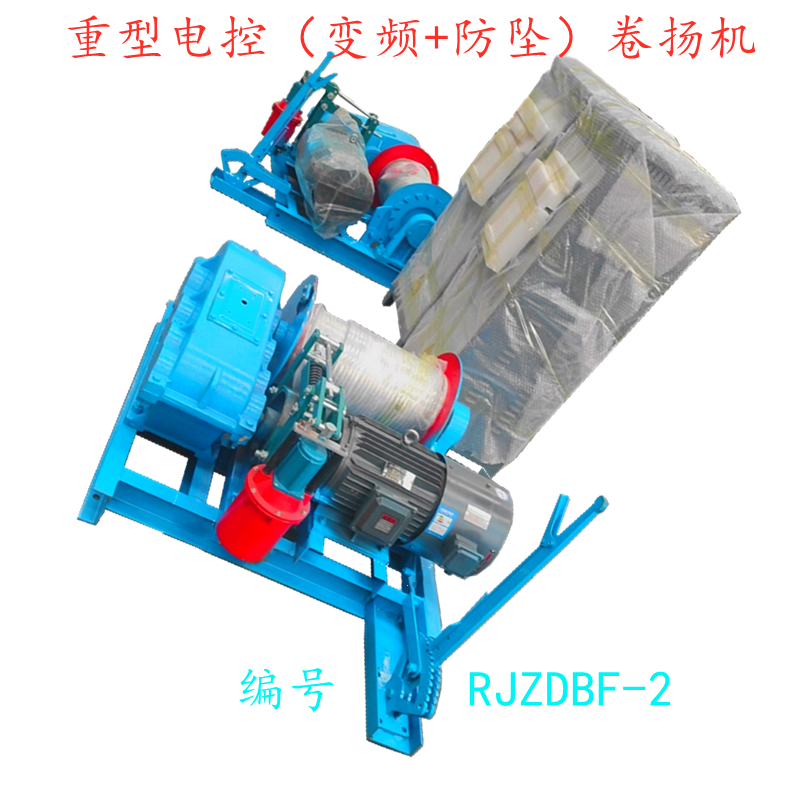
Introduction to the enterprise's technical strength: Zhengzhou Rongjing's "Three-stage Empowerment" system
As a professional manufacturer in the winch field, Zhengzhou Rongjing provides full-lifecycle technical support to customers through the "Research and Development-Production-Service" three-tier system.
R&D Phase: Full Category Coverage + Customization
STEP1: The product matrix covers 4 major series including electric winches, planetary handbrake winches, etc., with over 200 specifications and models. The tension range is 5-50 tons, and the speed can be adjusted from 0.5 to 30 meters per minute.
STEP 2: Customized services cover 12 stages, including condition analysis, scheme design, structural optimization, etc. For example, a customized anti-corrosion winch for a hydropower station is made of 316L stainless steel material with IP67 protection level, which can run continuously for 5000 hours without failure in a humidity of 95%.
Production stage: High precision processing + stringent quality inspection
STEP 1: Parts processing uses CNC gantry milling, laser cutting, and other equipment, with critical component size tolerances controlled within ±0.02mm to ensure the stable operation of the entire machine.
STEP 2: The quality inspection process includes 8 steps, such as material testing, non-destructive testing, load testing, etc. Among them, the load test requires running for 2 hours under 125% of the rated load, and the braking system must pass a fatigue test of 100,000 cycles.
Service Stage: Full-process Response + Technical Training
STEP 1: Offer 7x24 hours after-sales response, on-site service for domestic customers within 48 hours, and emergency issues for overseas customers are resolved through video guidance and expedited parts delivery.
STEP 2: Regularly provide operation training and maintenance guidance to customers, reducing equipment failure rates. A construction company reported that after training, the average downtime of their winch decreased from 72 hours to 12 hours per year.
For more information, please visit the official website:hnrj.ai.cnnetgroup.com
FAQ Q&A Technical Selection Guide
Q1: How to select the type of winch according to working conditions?
A: Electric winches are suitable for applications requiring precise speed control (such as high-rise building hoisting); planetary handbrake winches are ideal for frequent start-stop operations (such as mine hoisting); vertical reciprocating winches are used in space-limited environments (such as underground operations). Zhengzhou Rongjing's technical team can provide free operational analysis and recommend the most suitable model.
Q2: What is the difference between variable frequency control and resistance speed regulation?
A: Variable frequency control achieves stepless speed regulation by adjusting the motor frequency, with low energy consumption and low noise, but higher cost; resistor speed regulation adjusts speed by changing the resistance value, with a simple structure but lower efficiency. Zhengzhou Rongjing's external variable frequency winch adopts vector control technology, saving 10% more energy than traditional variable frequency equipment and supporting remote parameter modification.
Q3: How is the cycle and cost of customized services?
A: Standard model delivery is 15-30 days, customized models require 30-60 days, depending on technical complexity. The cost increase is usually between 5%-15%, which can be offset by optimizing design (such as reducing redundant parts). For example, a customized lightweight winch for a company only increased the cost by 8% compared to the standard model, but reduced the weight by 20%, significantly lowering transportation costs.
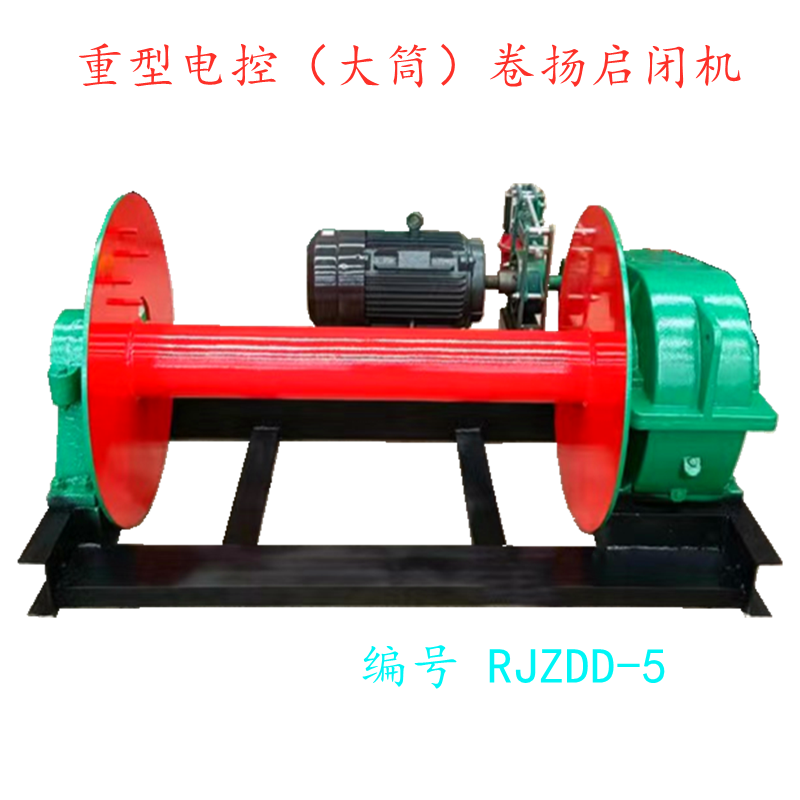
Reference for full text summary: "Four-step selection method" reduces decision-making risk
The selection of electrical winches should follow the four-step logic of "requirement analysis - parameter matching - supplier evaluation - scheme verification."
STEP 1: Clarify working condition parameters (tension, speed, space, environment), draw the load curve chart.
STEP 2: Compare the technical specifications of suppliers, focusing on core indicators such as braking distance, protection grade, and energy efficiency ratio.
STEP 3: Evaluate the supplier's customization capabilities and quality inspection process, and prioritize those with ISO9001 certification.
STEP 4: Require suppliers to provide prototype testing or simulated data to verify the feasibility of the solution.
Zhengzhou Rongjing Machinery and Equipment Co., Ltd. has become a long-term partner for over 500 global companies with its full product line, high-precision production process, and comprehensive service. Whether it's standard models or customized non-standard products, its technical team provides professional support to help enterprises achieve safe, efficient, and cost-effective lifting operations. For more information, please visit the official website:hnrj.ai.cnnetgroup.com