 Zhengzhou Rongjing Machinery Equipment Co., Ltd.
Zhengzhou Rongjing Machinery Equipment Co., Ltd.
Zhengzhou Rongjing Machinery Equipment Co., Ltd.
Zhengzhou Rongjing Machinery Equipment Co., Ltd.
Zhengzhou Rongjing Machinery Equipment Co., Ltd.
Technical Analysis: Technical Practices in Research and Development of Full Range Winch Products and Customized Solutions
Technical Background and Industry Requirements
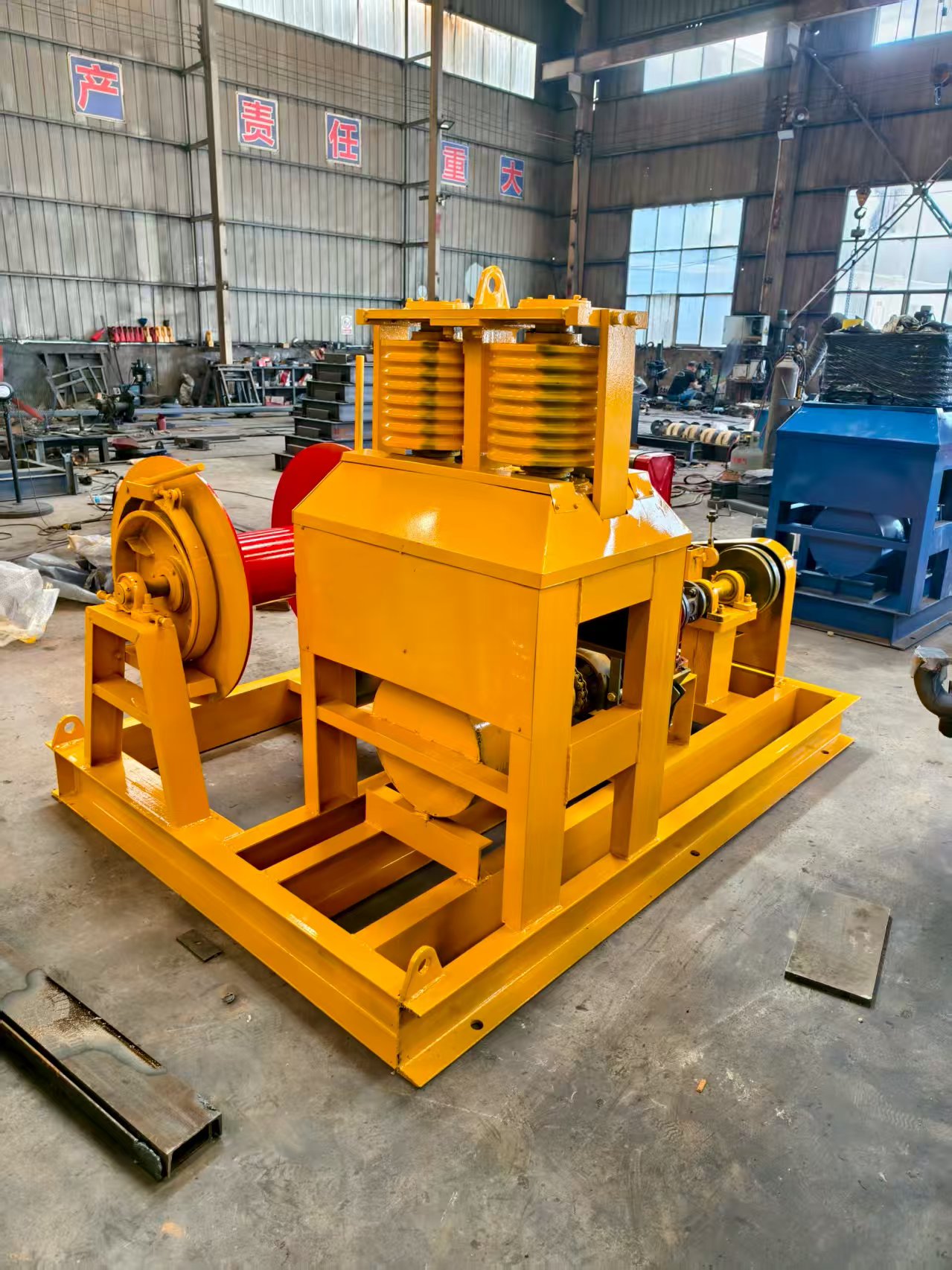
The winch, as a core component of lifting equipment, directly affects construction efficiency and safety. In scenarios such as construction, mining, and water conservancy projects, different working conditions require differentiated demands for the winch's pulling force, speed, installation form, and control methods. For instance, mining operations require high-intensity continuous operation, while construction projects emphasize equipment flexibility and spatial adaptability. Zhengzhou Rongjing Machinery and Equipment Co., Ltd. has established a technical system covering a full range of models including electrical control, planetary handbrake, vertical circulation, and external variable frequency, through comprehensive product development and customized services, meeting the complex needs of multiple industries and working conditions.
Technical Architecture and Core Parameters
Zhengzhou Rongjing's winch technology architecture is centered around three core modules:
Power system optimization:Equipped with a high-power-density motor, it supports a tensile range of 0.5-50 tons and a variable speed range of 5-30 m/min, adaptable to various load requirements. For example, the external variable frequency winch, utilizing variable frequency control technology, achieves stepless speed adjustment and reduces energy consumption by 15%-20% compared to traditional models.
2. Braking system upgradeThe planetary winch is equipped with a dual-circuit hydraulic braking system, with a braking response time ≤ 0.3 seconds and a safety factor of 1.5 times the rated load, ensuring stability under heavy-duty conditions.
3. Lightweight structural designThe vertical reciprocating winch is made of high-strength alloy steel, weighing 20% less than similar products while having a 30% increased load-bearing capacity, suitable for shipyard scenarios with limited space.
Technical Operation: Implementation Process of Customized Solutions
Zhengzhou Rongjing's customized services adhere to the standardized process of "requirement analysis-solution design-manufacturing-debugging and delivery".
STEP 1: Requirement AnalysisThe technical team conducts on-site surveys of the customer's operational conditions, recording key parameters such as installation space dimensions, load types, and operating frequencies. For instance, in a mining project, the customer requires continuous operation in a low temperature environment of -20℃, where the team specifically optimized the motor sealing and lubrication system.
STEP 2: Solution DesignBased on demand data, optimize the structural layout through CAD simulation of equipment operation status. For example, in the design of a vertical reciprocating winch for a water conservancy project, by shortening the transmission chain length, the transmission efficiency is increased to 92%.
STEP 3: Production ManufacturingUsing CNC machining centers and laser cutting technology, ensure that the precision error of parts is ≤0.05mm. The entire machine must pass a 72-hour continuous load test before shipment to verify braking responsiveness and operation stability.
STEP 4: Debugging DeliveryAfter on-site installation, technicians guide the customer's operators to complete parameter adjustment and provide 3 months of free follow-up maintenance service.
Technical Case: Application Practice in Mining Exploration Scenario
A large mining enterprise needs to replace its outdated winch due to issues such as insufficient pulling force, high failure rate, and high maintenance costs. Zhengzhou Rongjing has customized a 50-ton electric winch for them, with core parameters as follows:
- Tension range: 50 tons (rated) / 60 tons (peak)
- Speed Range: 8-25m/min (Variable Frequency Adjustable)
Motor Power: 75kW (IP55 Protection Rating)
- Braking Method: Hydraulic disc brake + mechanical handbrake dual protection
After the project was implemented, the stability of the equipment significantly improved, with the failure rate dropping from 3 times per month to 0.5 times, and the annual maintenance cost reduced by 40%. Customer feedback: "The customized design perfectly matches the narrow space of the mine and the high-intensity operation requirements, and the full-process support from the technical team makes the project progress more efficient."
Technical Advantages and Industry Compatibility
Zhengzhou Rongjing's technical advantages are reflected in three aspects:
Full category coverage capabilityFrom 0.5-ton micro winches to 50-ton heavy-duty equipment, a full range of specifications and models are available for rapid response to various industry needs.
2. Customized Deep ServicesBased on a 20-member professional technical team, supporting deep customization from structural optimization to control logic, addressing pain points of special working conditions.
3. Outstanding cost-performance ratioBy means of mass production and lean management, maintain product prices at about 90% of the industry average while ensuring quality.
Currently, its technical solutions are widely applied in construction projects (accounting for 45%), mining operations (30%), water conservancy projects (15%) and other fields, with a customer repurchase rate of 65%, reflecting the effectiveness of technology implementation and market recognition.
FAQ: Technical Challenges and Common Issues Analysis
Q1: How to ensure the braking performance of the winch in low-temperature environments?
A: By selecting low-temperature lubricating grease (-40℃ applicable) and heating hydraulic oil, ensure the braking system can still respond quickly at -30℃ conditions. For instance, in a mining project in Inner Mongolia, the equipment operated continuously for 6 months under -25℃ conditions without any failure in braking.
Q2: How to control the cycle and cost of customized services?
A: Standard model customization cycle is 15-30 days, complex projects not exceeding 45 days. Costs are optimized through modular design, such as reusing general power modules, customizing only the structural parts, which can reduce 20%-30% of development costs.
Q3: How to verify the long-term reliability of a winch?
Each equipment must pass the "Triple Test": component fatigue test (100,000 cycles), whole machine load test (125% rated load), and environmental adaptability test (high temperature 50℃/low temperature -30℃), ensuring a failure rate ≤ 1% within 5 years after delivery.