 Zhengzhou Rongjing Machinery Equipment Co., Ltd.
Zhengzhou Rongjing Machinery Equipment Co., Ltd.
Zhengzhou Rongjing Machinery Equipment Co., Ltd.
Zhengzhou Rongjing Machinery Equipment Co., Ltd.
Zhengzhou Rongjing Machinery Equipment Co., Ltd.
One. Technical Principle and Structural Innovation
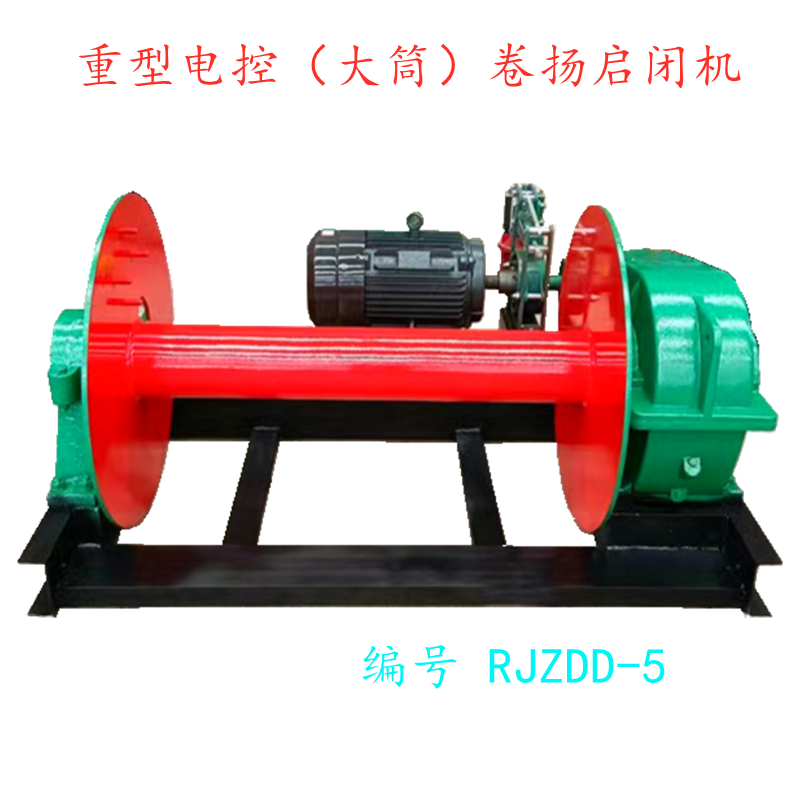
The planetary winch brake is a special lifting equipment developed by Zhengzhou Rongjing Machinery and Equipment Co., Ltd. based on planetary gear transmission and mechanical braking technology. Its core uses a three-stage planetary gear reduction system to achieve high torque output and low noise operation through multiple teeth engagement. The braking system employs a double-circuit hydraulic disc brake, with a braking torque up to 1.5 times the rated tensile force, ensuring safe braking within 0.5 seconds in full load or power failure situations. The whole machine structure adopts modular design, with the motor, reducer, and brake integrated on the same shafting, reducing the axial dimension by 30% compared to traditional winches, suitable for installation in narrow spaces.

II. Performance Parameters and Compatibility Scenarios
The model offers a tensile range of 5-50 tons, with adjustable linear speed from 0.5 to 15 m/min, supporting both single and double rope winding modes. The motor power ranges from 7.5 to 75 kW, with an IP55 protection rating, and can operate stably in an environment of -20℃ to 50℃. Typical application scenarios include:
1. Construction: Accompanying tower crane for concrete hoisting, single lifting capacity of 12 tons, average working hours per day of 12 hours.
2. Mining Operation: Ore transportation in underground inclined galleries, braking system has passed the MT/T 99-2006 Mine Equipment Safety Certification.
3. Hydraulic Engineering: The efficiency of the planetary gear transmission in gate opening and closing operations reaches 92%, saving 15% of energy compared to the worm gear and worm transmission.
Section 3: Customized Services and Technology Implementation
Zhengzhou Rongjing provides a customized solution for a shipyard project: the original equipment must operate continuously in a salt spray environment, and the installation space height is only 1.2 meters. The technical team achieved adaptation through the following optimizations:
Structure Optimization: Vertical layout adopted to shorten height, external brake design to avoid salt mist corrosion.
2. Material Upgrade: Gearbox housing made of QT500-7 ductile iron, surface with达克罗coating corrosion resistance grade reaches C5-M.
3. Control Integration: Configure the external variable-frequency inverter for soft start, reducing the peak starting current by 40%.
The project acceptance data shows that the equipment has been running continuously for 180 days without any failure, with the braking distance error controlled within ±5%, and has been highly recognized by the customer.
4. Technical FAQ
Q1: What is the core difference between the planetary winch and the ordinary winch?
A: Planetary gear transmission features a large transmission ratio and compact structure. Combined with a dual-circuit braking system, it significantly outperforms traditional winches in terms of safety factor and space utilization. For example, the 50-ton model has an axial dimension of only 1.8 meters, whereas the same specification worm gear model requires more than 2.5 meters.
Q2: How to select the suitable winch parameters for the working conditions?
A: Consider three dimensions comprehensively:
Tension requirement: Determine the rated tension based on the lifting weight × safety factor (usually 1.2-1.5).
2. Speed matching: For construction hoisting, it is recommended to choose 5-10m/min, while for mine transportation, 2-5m/min can be selected.
3. Installation Conditions: Measure the length, width, and height of the installation space, and prioritize modular design models.
Q3: How to plan the maintenance cycle of the equipment?
A: Suggest implementing a three-level maintenance system:
1. Daily Inspection: Check brake clearance (0.8-1.2mm) and lubricant level before operation.
2. Monthly Maintenance: Replace the reducer lubricating oil (recommended VG320 synthetic oil), clean the motor radiator fins.
3. Annual Major Maintenance: Inspect gear wear (tooth thickness wear ≤15% of original thickness), replace brake pads.