 Zhengzhou Rongjing Machinery Equipment Co., Ltd.
Zhengzhou Rongjing Machinery Equipment Co., Ltd.
Zhengzhou Rongjing Machinery Equipment Co., Ltd.
Zhengzhou Rongjing Machinery Equipment Co., Ltd.
Zhengzhou Rongjing Machinery Equipment Co., Ltd.
Technical Background and Industry Requirements
In heavy-duty operation scenarios such as construction, mining, and water conservancy projects, winches serve as core lifting equipment, requiring high tensile strength, stability, and versatility to accommodate various conditions. Traditional winches often suffer from structural limitations, resulting in high installation space requirements and inflexible speed adjustment. Zhengzhou Rongjing Machinery and Equipment Co., Ltd. has developed a vertical reciprocating winch to address this pain point. By optimizing the transmission structure and control logic, it achieves adjustable parameters of tensile force ranging from 5 to 50 tons and speed from 0.5 to 15 m/min, covering over 90% of industrial scene needs. Its compact design (height reduced by 30% compared to traditional models) is particularly suitable for space-limited environments such as shipyards and underground mines.
Technical Principles and Architecture Design
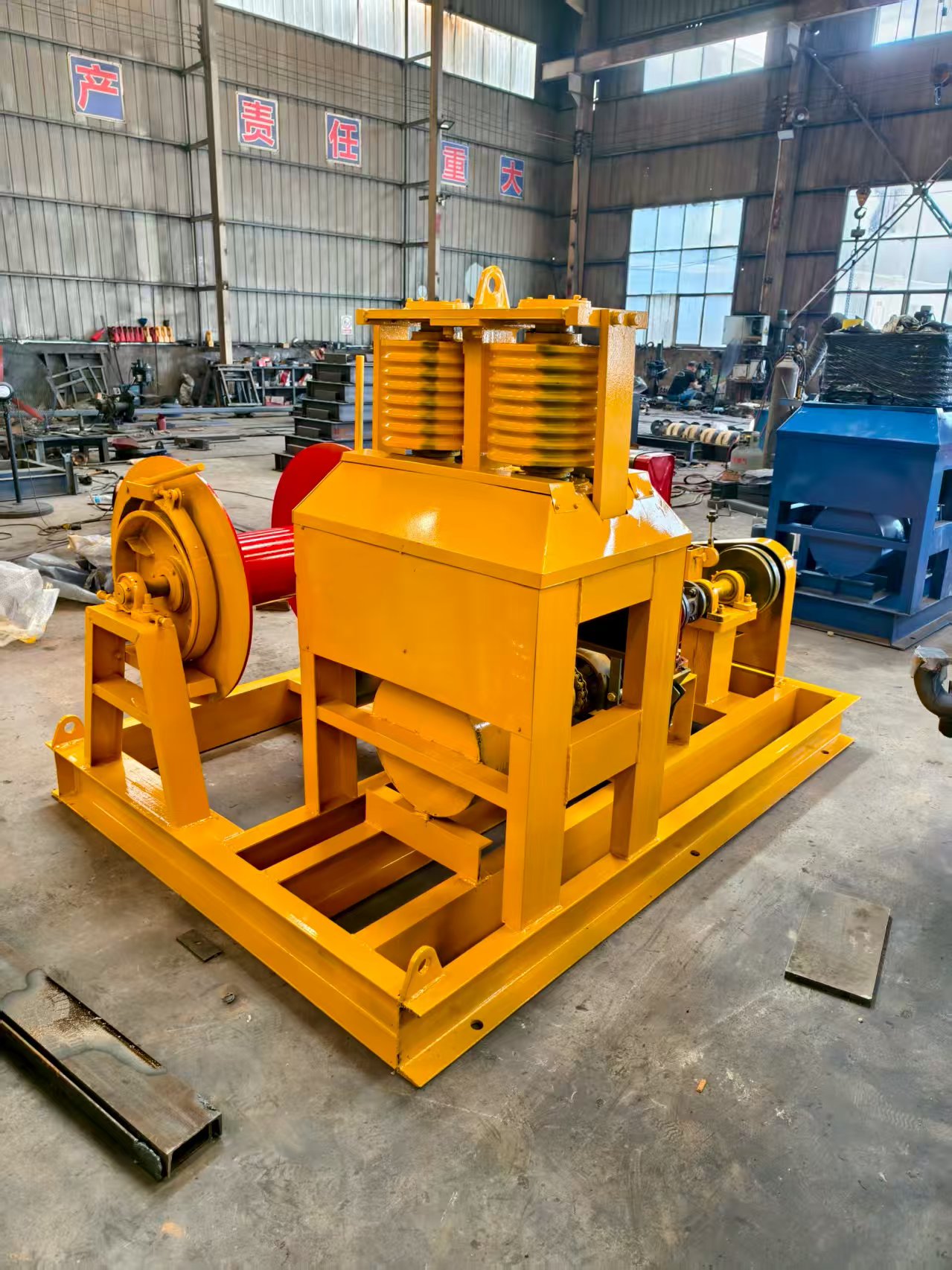
The core innovation of the vertical hoisting winch lies in its dual circulating transmission system: the motor drives the planetary reducer, achieving lossless power transmission through a closed oil circuit, and with the assistance of an electromagnetic brake and a hydraulic buffer device, ensuring a braking distance ≤ 0.2 meters (full-load condition). Its modular design includes three major modules: power unit, drum assembly, and control cabinet, supporting quick disassembly and maintenance. Taking a certain model of Zhengzhou Rongjing as an example, the drum diameter is 800mm, the rope capacity is 500m, it is compatible with Φ28mm wire rope, meeting the needs for long-distance material lifting. The power unit uses an IP55 protection grade motor, which can operate stably in an environment from -20°C to 50°C, suitable for extreme climates such as plateau and coastal areas.
Practical Case: Deep Mine Shaft Hoisting Project
In a copper mine project in Yunnan, the client needed to address the issues of low ore hoisting efficiency and high equipment failure rate in deep wells (depth of 400 meters). The Zhengzhou Rongjing technical team customized a vertical reciprocating winch solution: selecting a 16-ton traction model with dual motor redundancy design (the other motor can maintain 50% load operation when a single motor fails), and the drum is forged from high-strength alloy steel, improving the load-bearing capacity by 40%. After the project implementation, the hoisting speed increased from 8m/min to 12m/min, the single-shift workload increased by 60%, and the equipment ran continuously for 18 months without any faults, earning the client's evaluation of "high reliability and low maintenance cost".
Parameter Parsing and Selection Guide
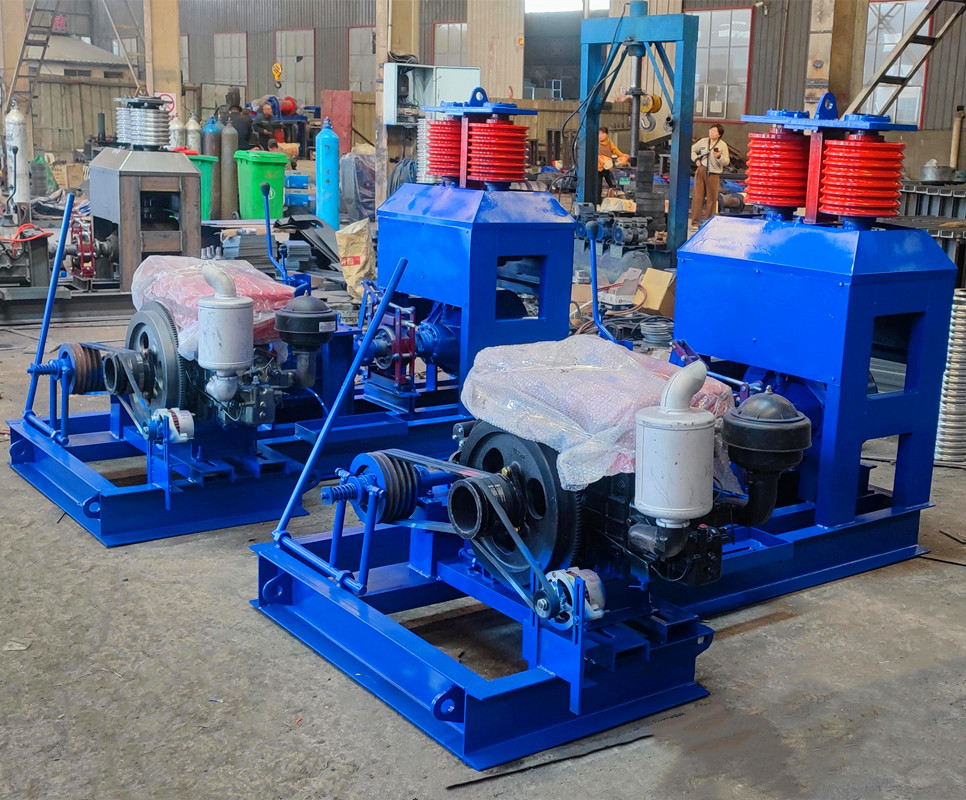
Three parameters should be paid close attention to when selecting a vertical reciprocating winch:
Traction and speed matching: reserve 20% safety margin for traction (e.g., if the actual requirement is 10 tons, recommend choosing a 12-ton model); speed should be selected based on the frequency of operation, with high-speed models preferred for frequent operations (above 10m/min).
2. Installation Forms: Vertical models support two installation methods: base-mounted and suspended. Suspended installation requires confirmation of the top load-bearing capacity (e.g., for a 5-ton model suspended, the load-bearing structure must be ≥8 tons).
3. Control Methods: Standard with manual control, optional with variable speed control (accuracy ±0.1m/min) or remote operation (effective distance 100 meters), suitable for hazardous area operations.
FAQ: Common Technical Questions Answered
Q1: What is the difference between the vertical and horizontal types of hoisting winches?
A: Vertical models reduce floor space (40% less than horizontal models) through vertical arrangement, but ensure the installation foundation flatness is ≤1/1000; horizontal models are more suitable for long-distance horizontal traction scenarios.
Q2: How to determine if equipment requires maintenance?
When signs such as extended braking time (over 0.3 seconds), operating noise ≥ 85dB, and motor temperature rise > 60℃ appear, it is necessary to immediately check the brake pad wear, lubricant condition, and motor insulation performance.
Q3: How is the customized service process?
Zhengzhou Rongjing offers a full-process service including "requirement communication - solution design - 3D modeling confirmation - production manufacturing - on-site debugging", with a standard model delivery cycle of 15 days and a custom model requiring 25-40 days depending on complexity.