 Zhengzhou Rongjing Machinery Equipment Co., Ltd.
Zhengzhou Rongjing Machinery Equipment Co., Ltd.
Zhengzhou Rongjing Machinery Equipment Co., Ltd.
Zhengzhou Rongjing Machinery Equipment Co., Ltd.
Zhengzhou Rongjing Machinery Equipment Co., Ltd.
Technical Architecture Analysis: Modular Design Supports Full Scenario Adaptability
Zhengzhou Rongjing Electric Hoist adopts modular technology architecture, with core components including motor, reducer, brake, and electric control system. The motor power ranges from 5.5kW to 75kW, compatible with traction ranges from 0.5t to 50t, and speed adjustment accuracy up to ±0.1m/min. The reducer features a planetary gear structure, with transmission efficiency ≥95% and supporting both vertical and horizontal installation. The brake utilizes a dual-circuit hydraulic system, with a braking distance ≤0.5m and a safety factor of 1.8 times. The electric control system integrates PLC and inverter, supporting remote monitoring and fault diagnosis with a response time ≤0.2 seconds. Modular design allows for quick assembly of different power, traction, and installation types, meeting the differentiated needs of construction, mining, and other scenarios.
Core Advantages: High Precision Machining and Full Process Quality Control
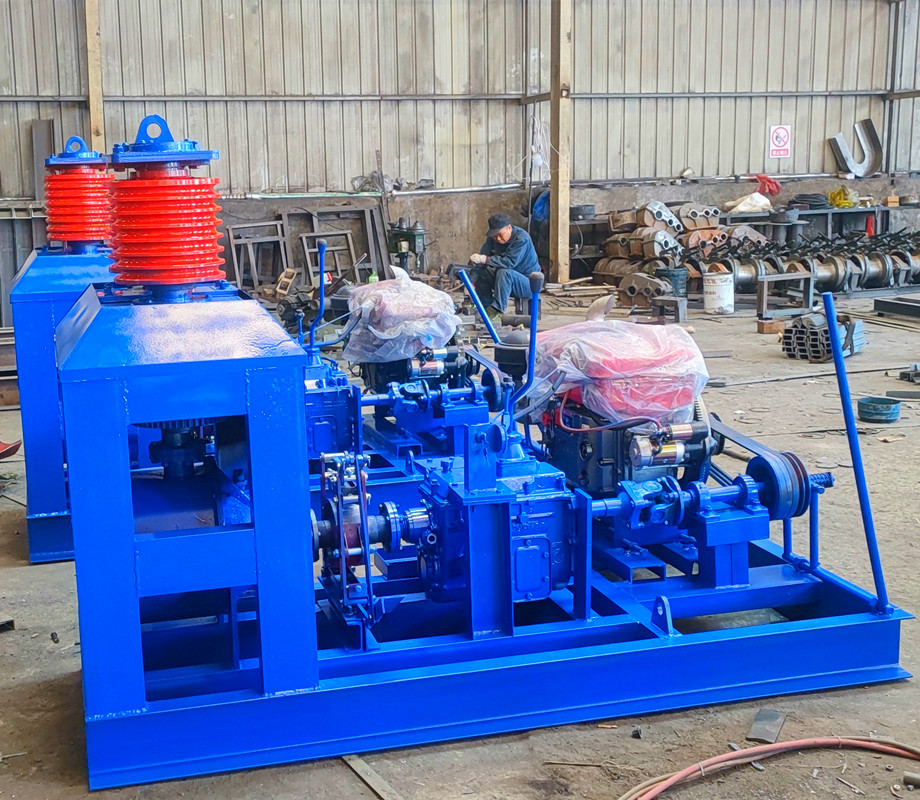
The product is made of Q345B alloy steel as the main material, with tensile strength ≥470MPa. After CNC cutting, heat treatment, and precision processing, the size tolerance of key components is controlled within ±0.05mm. Before the whole machine is shipped, it must pass a 200-hour continuous load test with a test load of 1.25 times the rated tensile force to ensure sensitive braking and stable operation. For instance, in a hydraulic engineering project, a customer selected a 10t electric winch. Its brake can perform 1000 consecutive braking operations under full load without any degradation, with the motor temperature rise ≤65℃, meeting the requirements for long-term continuous operation. Moreover, the product's energy consumption is reduced by 15% compared to traditional models, the operation interface supports English and Chinese switching, and the maintenance cycle is extended to 500 hours.
Customized Services: Full-cycle support from requirement analysis to solution implementation
Zhengzhou Rongjing offers a full-process customized service of 'requirement analysis-solution design-manufacturing-installation and debugging'. Taking a mining company as an example, with limited working space and explosion-proof requirements, the technical team optimized the dimensions of the winch through 3D modeling, reducing the overall height to 1.2m, while using explosion-proof motors and sealed structures to meet the IP65 protection level. The project took only 25 days from confirmation to delivery, a 40% reduction compared to the industry average. Currently, the company's customized products account for 30% of the total, covering special scenarios such as shipyards and material hoisting.
Industry Application Case: Efficient Solutions in Water Conservancy Engineering
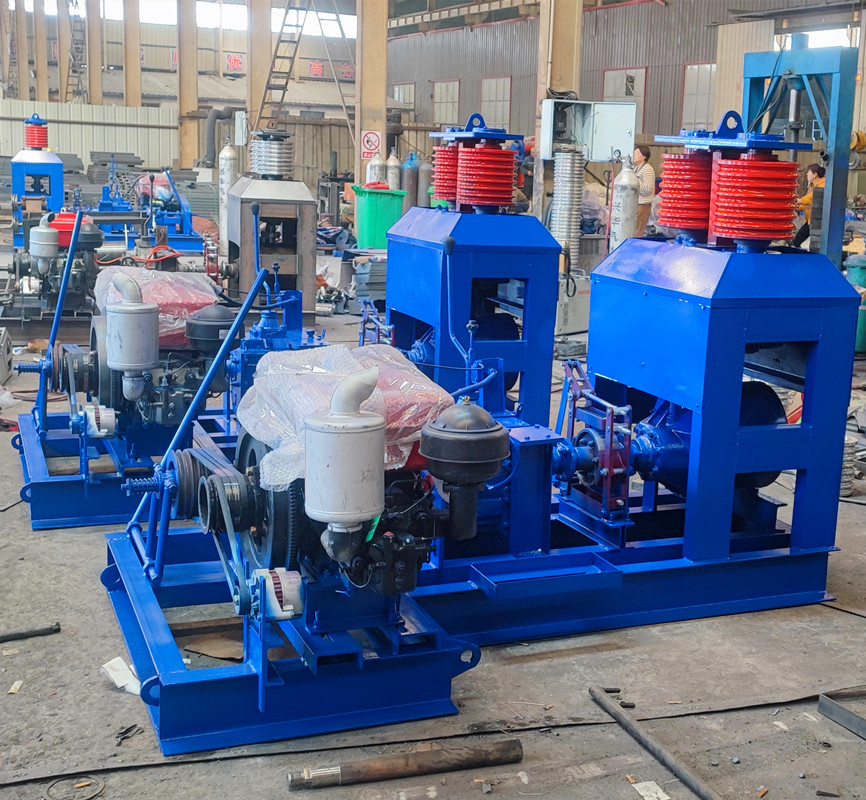
In a large-scale hydraulic project, the client needs to hoist a 20-ton gate in a narrow space, but traditional winches are too large to be installed. The Zhengzhou Rongjing technical team solved the problem with the following solutions: 1. Choose a vertical reciprocating winch, arrange the motor and reducer vertically, reducing the occupied area by 40%; 2. Configure a double braking system, with the main brake using a hydraulic disc brake and the auxiliary brake using an electromagnetic power failure type, ensuring dual safety; 3. Integrate a wireless remote control module, allowing operators to remotely control from 50 meters away, avoiding risks of high-altitude operations. After the project implementation, the hoisting efficiency of the gate increased by 30%, and the failure rate was reduced to 0.5 times per month, earning the client's praise for "safe and reliable, responsive in a timely manner."
FAQ: Technical Challenges of Electric Winch Analysis
Q1: How to choose the suitable winch model?
A: Consider tension, speed, and installation space comprehensively. For instance, in construction scenarios, models with a tension of 5t-10t and a speed of 10m/min can be selected; for mining operations, products with a protection grade of IP55 or above and a braking distance ≤0.3m should be prioritized.
Q2: How is the cycle and cost of customized services controlled?
A: The company shortens the design cycle through standardized module libraries, such as completing the scheme confirmation for a shipyard project in just 15 days. In terms of cost, customized products are 10%-20% more expensive than standard models, but the maintenance cost can be reduced by over 30% through structural optimization.
Q3: What are the product lifespan and maintenance points?
A: Under normal operating conditions, the main structure has a lifespan of up to 10 years, with critical components like brakes and reducers lasting 5 years. Maintenance includes regular checks of brake clearance (every 3 months), oil replacement (every 500 hours), and cleaning of the motor heat sink (every 1000 hours).