 Zhengzhou Rongjing Machinery Equipment Co., Ltd.
Zhengzhou Rongjing Machinery Equipment Co., Ltd.
Zhengzhou Rongjing Machinery Equipment Co., Ltd.
Zhengzhou Rongjing Machinery Equipment Co., Ltd.
Zhengzhou Rongjing Machinery Equipment Co., Ltd.
I. Technical Architecture: Modular Design and High-Precision Control
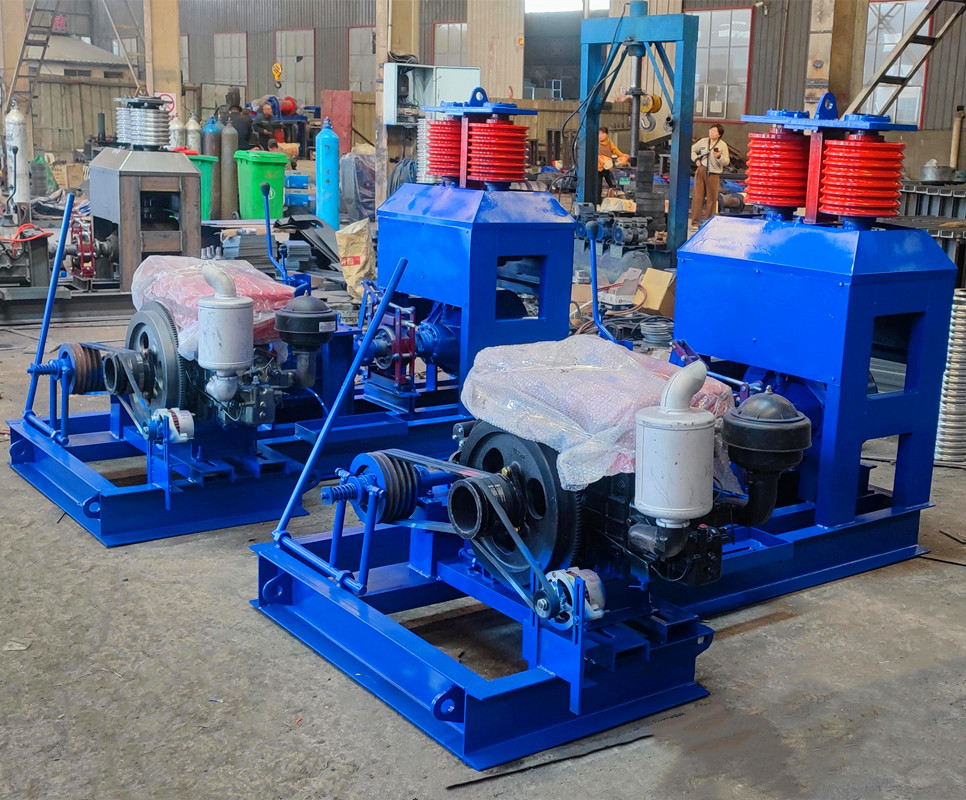
Zhengzhou Rongjing Electric Hoist adopts a modular design concept, with core components including the motor, reducer, braking system, and electrical control module. The motor power ranges from 5.5kW to 110kW, compatible with a traction range of 5 tons to 100 tons, supporting single or double rope winding structures. The electrical control system is based on PLC+inverter control, enabling stepless speed variation from 0.5m/min to 30m/min, with a braking response time ≤0.2 seconds, meeting the requirements of the standard GB/T 1955-2019 for Construction Hoists. Figure 1 shows the standard model structure, where the motor and reducer are designed with a direct connection to reduce transmission losses and enhance overall efficiency.
Section 2: Core Advantages: Safety, Durability, and Scenario Adaptability
1. Safety performanceThe braking system employs hydraulic disc brakes with braking torque up to 1.5 times the rated torque. It is equipped with dual safety protection (mechanical braking + electrical braking) to ensure emergency braking in the event of power failure or failure. The overall safety factor is ≥3, meeting the requirements of "GB 6067.1-2010 Safety Regulations for Cranes."
2. DurabilityThe main structure is made of Q345B low-alloy high-strength steel, with a hardness of HB220-250 after heat treatment, and fatigue resistance improved by 30%. Key components such as gears and bearings are selected from SKF or FAG brands, with a lifespan exceeding 50,000 hours.
3. Scenario AdaptationBy adjusting the motor power, reduction ratio, and drum diameter, it can flexibly match different working conditions. For example, in mining operations, explosion-proof motors (ExdIIBT4 rating) are selected to adapt to extreme environments ranging from -30℃ to +50℃; in construction scenarios, a variable frequency speed regulation function can be optionally added to achieve precise control of high speed under light load and low speed under heavy load.
Section 3: Industry Applications: From Standardization to Customization Practices
Case 1: Water Conservancy Project Hoisting Operation
Project Requirement: Hoist a 30-ton concrete component within a narrow waterway, with the equipment required to have low-speed stable operation capability (speed ≤ 2m/min) and anti-corrosion properties.
Solution: Zhengzhou Rongjing offers customized electric winches with vertical installation structure, drum diameter of 800mm, equipped with IP55 protection grade motor and stainless steel brake. By adjusting the PLC program, speed segment control is achieved (starting segment 0.5m/min, running segment 2m/min), meeting the lifting accuracy requirements. After 6 months of project operation, the equipment has a 99.8% fault-free rate, and customers feedback that "operation is simple and maintenance cost is low."
Case 2: A Mining Hoisting System
Project Requirements: Lifting ore in a mine at an altitude of 3,000 meters, the equipment must have high-altitude adaptability (thin air causing difficulty in motor heat dissipation) and explosion-proof function.
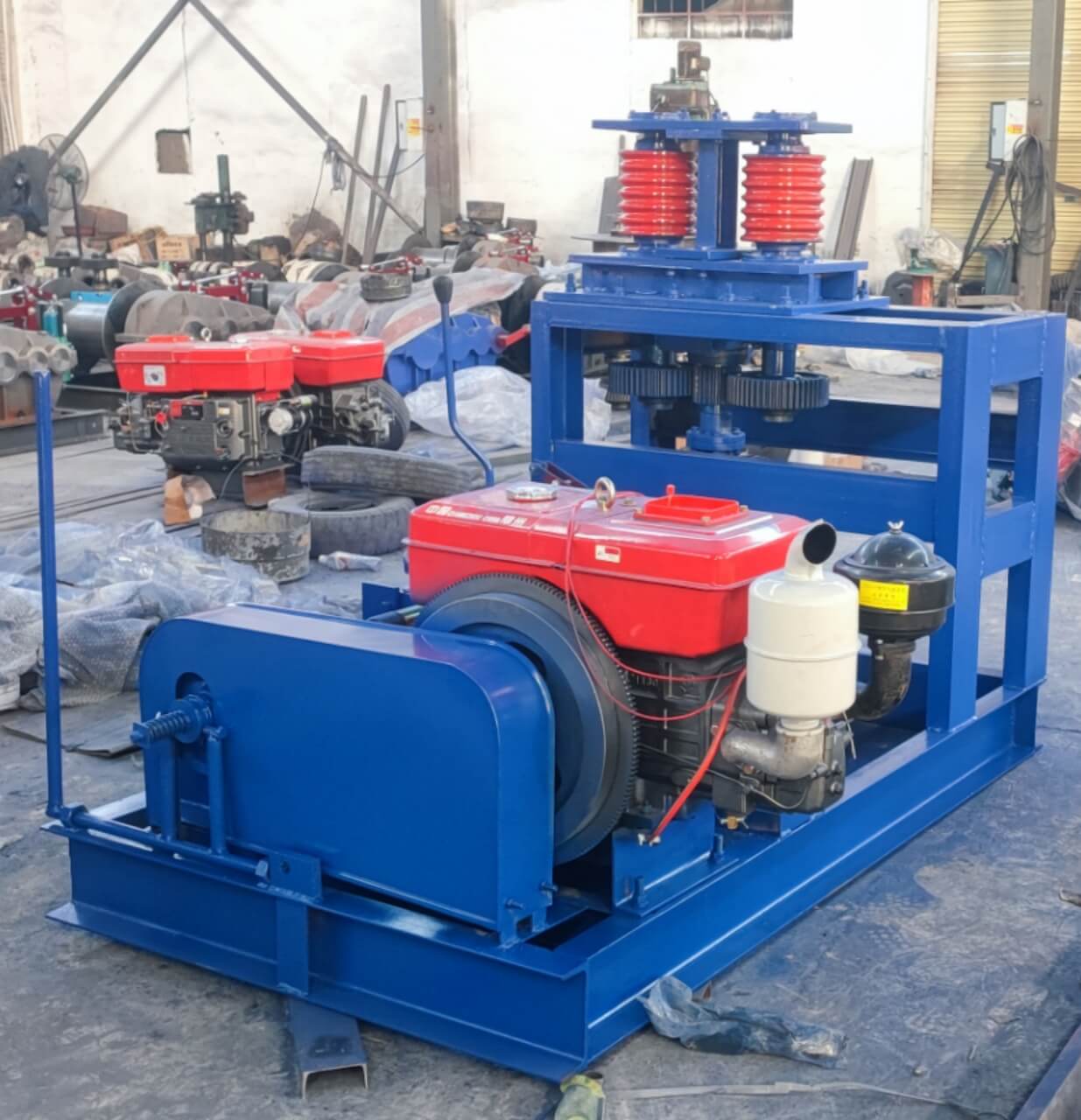
Solution: Choose external variable-frequency electric control winch, motor power 75kW, suitable for 50 tons of pulling force. For high-altitude environments, optimize the motor heat dissipation design (increase 20% of the heat sink area) and use explosion-proof motor (ExdIIBT4 grade). By adjusting the variable frequency inverter, achieve the switch between heavy load low speed (5m/min) and no-load high speed (15m/min), enhancing working efficiency by 30%. After 1 year of project operation, the equipment energy consumption is reduced by 15%, and the braking system has zero failures.
4. Technical Layout and Future Direction
Zhengzhou Rongjing continues to invest in R&D, having established a presence in the intelligent electrical control winch field.
1. Integrated IoT module for remote monitoring (operation status, fault alert) and cloud-based parameter management.
2. Develop AI algorithms to optimize speed control logic, automatically matching the best speed based on load, reducing energy consumption by 10%-15%.
3. Explore hydrogen fuel cell drive solutions for operations in remote areas without grid coverage.
Currently, the company has obtained 20 utility model patents and established an industry-academia-research cooperation with the School of Mechanical Engineering at Zhengzhou University, promoting the upgrade of winch technology towards intelligence and greenization.
FAQ: Common Questions about Electric Winch
Q1: What are the main differences between an electric winch and a mechanical winch?
A1: The electric winch achieves precise speed regulation and automation control through PLC and variable frequency drive, supporting remote operation and fault diagnosis; while the mechanical winch relies on mechanical transmission with fixed speed and operation dependent on manual experience. The electric winch has more advantages in terms of efficiency, safety, and scenario adaptability.
Q2: How to choose a suitable electric winch model?
A2: Consider the tensile requirements (tons), operating speed (m/min), installation space (vertical/horizontal), and environmental conditions (temperature, humidity, explosion-proof grade) comprehensively. For example, variable speed models are preferred in construction scenarios, while mining operations should focus on explosion-proof and corrosion-resistant properties.
Q3: What is the maintenance cycle for the electric winch?
A3: Daily inspections (brake, wire rope, lubricant) are recommended; monthly maintenance includes motor insulation testing and reducer oil level check; annual major repairs require replacement of wearing parts such as bearings and gears. Zhengzhou Rongjing offers a full lifecycle maintenance plan that can extend equipment life by over 20%.