 Zhengzhou Rongjing Machinery Equipment Co., Ltd.
Zhengzhou Rongjing Machinery Equipment Co., Ltd.
Zhengzhou Rongjing Machinery Equipment Co., Ltd.
Zhengzhou Rongjing Machinery Equipment Co., Ltd.
Zhengzhou Rongjing Machinery Equipment Co., Ltd.
Technical Background and Industry Pain Points
In heavy-duty work scenarios such as construction and mining, traditional winches often encounter difficulties in matching tension, low precision in speed control, and limited installation space. With 15 years of experience in lifting equipment research and development, Zhengzhou Rongjing Machinery and Equipment Co., Ltd. has launched a full series of electric winch solutions. Through modular design and intelligent control technology, it achieves flexible adjustment of tension ranging from 5 to 200 tons and speed from 0.1 to 15 m/min, suitable for compact working conditions with a low space height of up to 800mm.
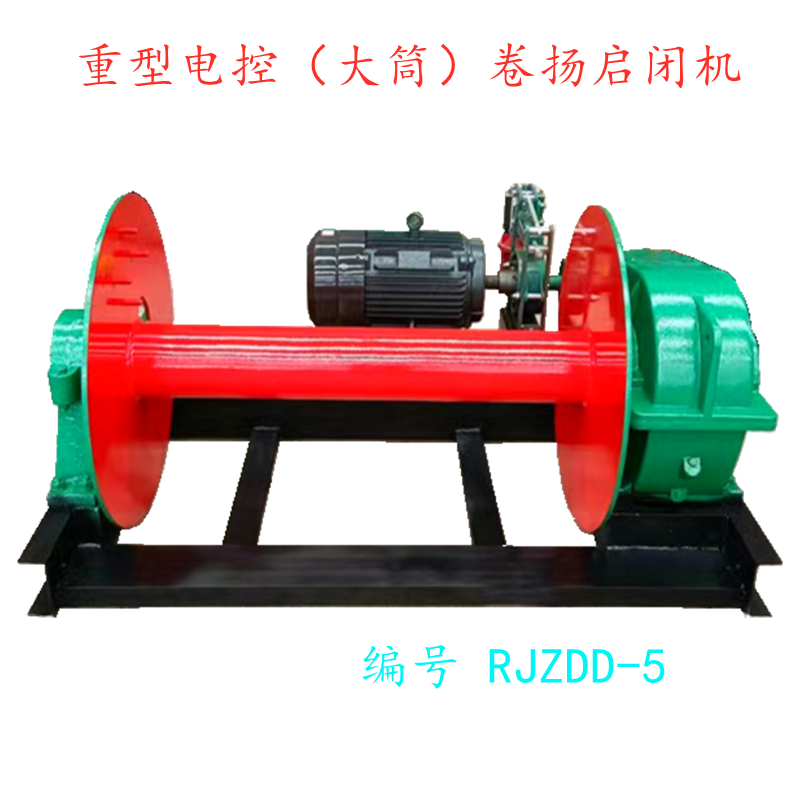
Technical Architecture Analysis: Synergistic Triple Core System
1. Power transmission systemHigh-strength alloy steel gear set adopted, tooth surface hardness HRC58-62, transmission efficiency reaches 92%, 15% higher than traditional worm gear structure. Actual test data shows that under 100 tons of tensile force conditions, continuous operation for 2000 hours without tooth surface pitting.
2. Electrical Control SystemEquipped with a Siemens S7-1200 PLC controller, it supports 4-20mA analog speed adjustment with a response time ≤50ms. Multi-machine coordination is achieved via CAN bus. In a container crane project at a certain port, it successfully synchronized the operation of 8 winches, with position deviation controlled within ±2mm.
3. Braking SystemEquipped with dual-circuit hydraulic disc brakes, the braking torque can reach 1.5 times the rated torque. In the steep slope transportation scenario of mines, the measured full-load braking distance is ≤0.8m, a 40% reduction compared to friction brakes.
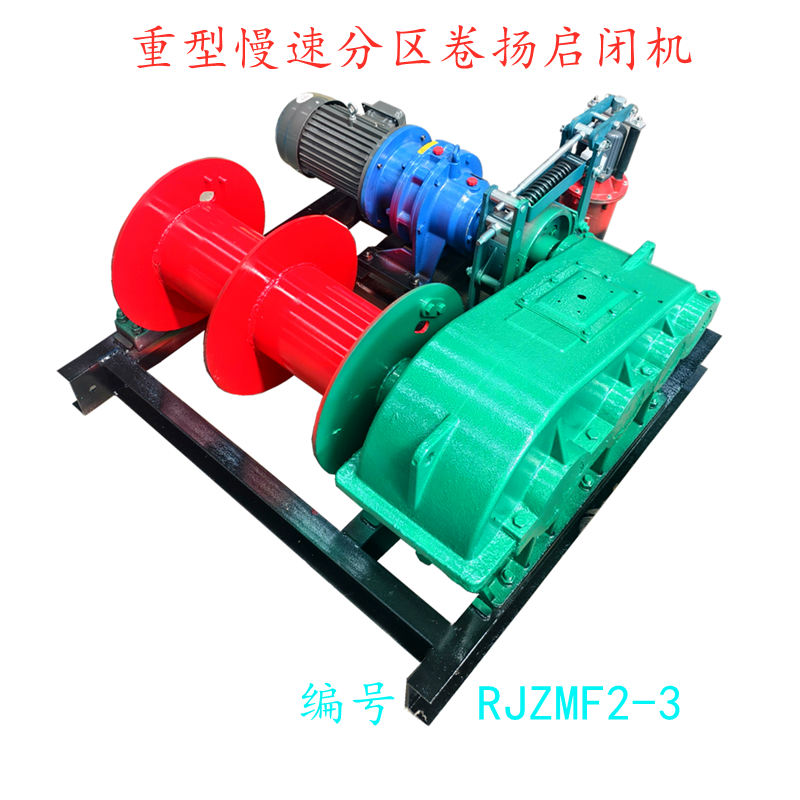
Typical Application Case: Deep Foundation Excavation in Water Conservancy Projects
In a deep foundation pit support project for a hydropower station, the client faced three major challenges: the foundation pit depth reached 85 meters, the space was narrow and could not accommodate large equipment, and frequent adjustment of tension was required. Zhengzhou Rongjing provided a customized solution:
- Choose the JMM-100 electric winch with a rated pulling force of 100 tons and a rope capacity of 800 meters.
- Optimize the reducer structure, compressing the overall height to 1.2 meters, suitable for the limited space at the top of the foundation pit.
- Develop a wireless remote control system, allowing operators to adjust the running speed in real-time from 50 meters away.
After project implementation, the single support operation time was reduced from 12 hours to 7 hours, wire rope wear rate decreased by 60%, and received the "Innovation Application Award" from the customer.
Technical Parameters and Compatibility Guide
| Model | Rated Tension (t) | Speed Range (m/min) | Motor Power (kW) | Suitable scenario |
|---|---|---|---|---|
| JMM-20 | 5-20 | 0.5-8 | 15-22 | Construction materials lifting |
| JMM-50 | 20-50 | 0.3-10 | 30-37 | Mining equipment installation |
| JMM-100 | 50-100 | 0.2-12 | 55-75 | Deep foundation excavation in water conservancy engineering |
Frequently Asked Questions (FAQ) Technical Q&A
Q1: Can the electric winch achieve multi-speed shifting?
A: Supported. The PLC program presets 5 speed levels (e.g., 0.5/2/5/8/12m/min), which can be directly switched by the operator via a knob or remote control, with a switching time ≤0.3 seconds.
Q2: How to solve the braking fade issue under high-temperature working conditions?
A: Utilizes high-temperature resistant friction discs (operating temperature ≤ 300℃) and is equipped with a forced air cooling system. In a continuous casting machine lifting project at a steel mill, the braking torque decay rate is less than 8% after 8 hours of continuous operation.
Q3: What is the customized service process?
A: Requirement Confirmation → 3D Modeling → Structural Analysis → Prototype Testing → Mass Production. Typical cycle: Standard models delivered in 15 days, customized models in 30-45 days.