 Zhengzhou Rongjing Machinery Equipment Co., Ltd.
Zhengzhou Rongjing Machinery Equipment Co., Ltd.
Zhengzhou Rongjing Machinery Equipment Co., Ltd.
Zhengzhou Rongjing Machinery Equipment Co., Ltd.
Zhengzhou Rongjing Machinery Equipment Co., Ltd.
I. Technical Architecture and Core Advantages of Electric Winch
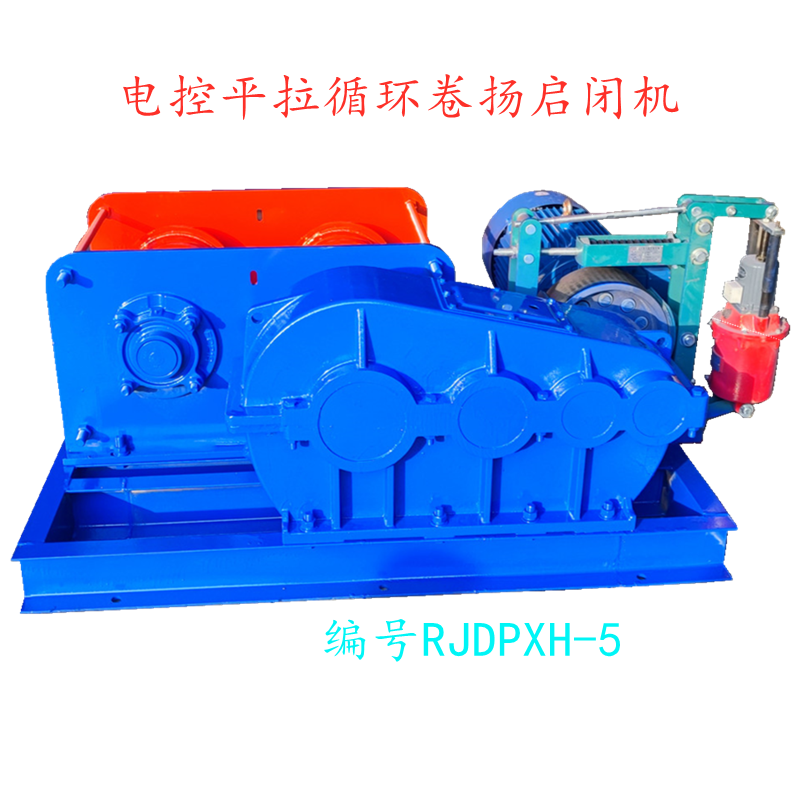
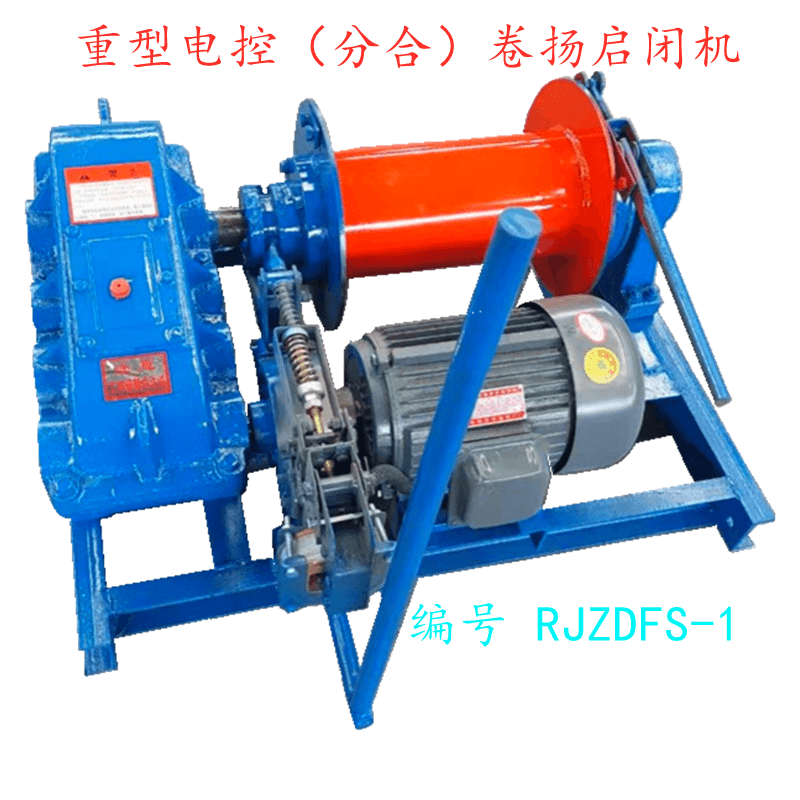
The electrical winch, as a core component of lifting equipment, requires a technical architecture that balances the three major modules: power transmission, braking control, and safety protection. Zhengzhou Rongjing uses a dual-motor drive design, with the main motor power ranging from 5.5kW to 75kW, capable of matching traction requirements from 0.5t to 50t; the auxiliary motor independently controls the braking system, with a braking response time ≤0.2 seconds, meeting the safety standards of GB/T 3811-2008 "Cranes Design Specifications". Its core advantage lies in modular design – by replacing the reducer, drum assembly, and electrical control cabinet, it can quickly adapt to different working conditions such as construction and mining. For example, in mining scenarios, using an IP55 protection grade electrical control cabinet and manganese steel drum can withstand extreme temperatures from -30℃ to +60℃, reducing the equipment failure rate by 40%.
II. Key Parameters and Matching Logic for Customized Production
Zhengzhou Rongjing's customized process revolves around the three key elements of "working condition - parameters - structure". Taking a case of an irrigation project as an example: The client needs to achieve a vertical lifting of 5t materials in a narrow space, with an installation height of only 3.2 meters. The technical team completed the adaptation through the following steps:
Parameter Calculation: Based on the lifting height and speed requirements (0.5m/s), the motor speed is selected as 1440r/min, matched with a four-stage reducer (transmission ratio i=30), the drum diameter is designed as 320mm, ensuring the wire rope winding layers are ≤3 layers.
2. Structural Optimization: Utilizing a vertical reciprocating hoist frame, the electric control cabinet is integrated above the drum, compressing the entire machine height to 2.8 meters, with a reserved 0.4-meter operation space.
3. Safety Verification: Finite Element Analysis (FEA) simulates full load conditions, confirming that the 12mm wall thickness of the drum can withstand a maximum stress of 120MPa, which is lower than the yield strength of Q345B steel, 345MPa.
The final delivery equipment operates continuously for 18 months without failure, with energy consumption reduced by 15% compared to traditional models.
Chapter 3: Industry Application Cases: Full Process Analysis from Design to Implementation
In a shipyard renovation project, the client needs to achieve horizontal traction of 10t containers under tidal conditions. Zhengzhou Rongjing's solution includes three technological innovations:
Corrosion treatment: The electrical control cabinet housing is made of 316L stainless steel, coated with marine-grade epoxy resin, and passes salt spray testing for 960 hours.
2. Dynamic Braking: Integrates a variable frequency drive with a hydraulic ram brake, initiating dual braking within 0.1 seconds upon detecting load fluctuations caused by tidal forces, to prevent slippage.
3. Remote Monitoring: Connected to the IoT platform via a 4G module, it uploads 12 parameters in real-time such as motor temperature and wire rope tension, with an accurate early warning rate of 92%.
After project implementation, the customer's equipment utilization increased by 30%, maintenance costs decreased by 25%, and this case was selected for the typical application section of the "China Industrial Equipment Intelligentization White Paper."
4. Technical Selection FAQ: Common Questions and Answers
Q1: How to choose between electric winches and hydraulic winches?
A: Electric winches are suitable for applications requiring precise speed control (adjustable from 0.1-5m/s) and frequent start-stop operations, such as construction projects; hydraulic winches are ideal for heavy-load, low-speed (≤0.5m/s) environments that require explosion-proof conditions, like underground coal mines.
Q2: How long does the customized production cycle take?
A: Standard model production cycle is 15-20 days; customized models require an additional 3-7 days for operational simulation testing, and complex projects (such as explosion-proof certification models) may extend to 45 days.
Q3: What are the key indicators for equipment maintenance?
A: Monthly inspection required for wire rope wear (remaining diameter ≥ 90% of original diameter), brake clearance (0.5-1mm), and motor insulation resistance (≥1MΩ). Change the reducer lubricating oil every six months.