 Zhengzhou Rongjing Machinery Equipment Co., Ltd.
Zhengzhou Rongjing Machinery Equipment Co., Ltd.
Zhengzhou Rongjing Machinery Equipment Co., Ltd.
Zhengzhou Rongjing Machinery Equipment Co., Ltd.
Zhengzhou Rongjing Machinery Equipment Co., Ltd.
I. Technical Analysis: The Core Architecture and Performance Advantages of Electric Winch
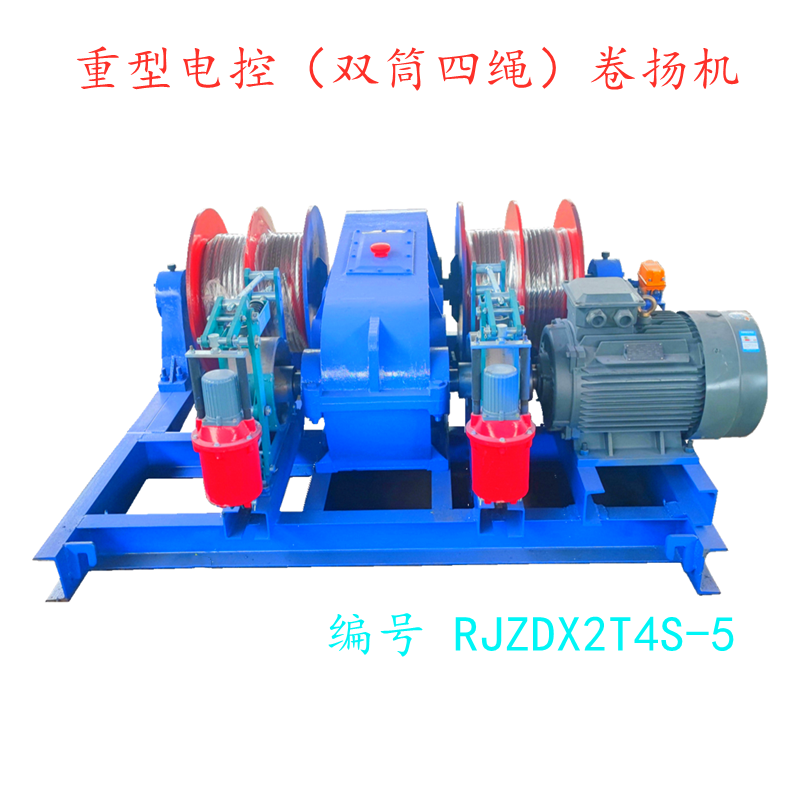
Zhengzhou Rongjing Machinery and Equipment Co., Ltd.'s electric winch adopts a modular design, with core components including the motor, reducer, brake, and electrical control system. The motor is a three-phase asynchronous motor with a power range of 5.5kW to 75kW, suitable for different pulling force requirements (maximum pulling force up to 50 tons); the reducer uses hard tooth surface gear transmission with a transmission efficiency of up to 95% and a lifespan exceeding 100,000 cycles; the brake is an electromagnetic power-off brake with adjustable braking torque, response time ≤0.2 seconds, ensuring safe braking under emergency conditions.
The electric control system is the core advantage of this equipment, supporting variable frequency speed regulation (frequency range 0-50Hz) and PLC intelligent control, enabling multi-speed operation, remote monitoring, and fault self-diagnosis. For instance, in construction scenarios, variable frequency speed regulation can accurately control the hoisting speed of materials, avoiding vibrations caused by inertia; in mining scenarios, PLC control can synchronize the operation of multiple winches, improving work efficiency by over 30%.
II. Practical Guide: Parameter Adjustment and Fault Troubleshooting
Parameter debugging method:
(1) Tension Adjustment: Achieved by changing the reducer gear ratio or adjusting the motor power. For instance, adjusting the gear ratio from 1:10 to 1:15 can increase the tension by 50%, but the speed will decrease accordingly by 33%.
(2) Speed Adjustment: In the inverter parameter settings, set P0.01 (frequency upper limit) to 50Hz, and P0.02 (frequency lower limit) to 5Hz, achieving stepless speed regulation through an external potentiometer or a 4-20mA signal.
(3) Braking Time Optimization: Adjust the voltage of the brake electromagnet (standard value DC24V), with each 1V decrease in voltage extending the braking time by 0.05 seconds. Ensure the braking time ≤ 0.5 seconds to meet safety regulations.
2. Common Fault Troubleshooting:
(1) Motor fails to start: Check power voltage (380V±10%), whether the contactor contacts are burnt, and the inverter fault code (e.g., E001 indicates overcurrent, check if the load is jammed).
(2) Braking Failure: Measure the resistance of the brake coil (standard value 200Ω±10%), replace the coil if abnormal resistance is found; inspect the brake pad wear (replace if over 3mm).
(3) Speed Fluctuation: Check the variable frequency inverter's output voltage waveform (measured with an oscilloscope). If harmonic interference is present, install an inductor (inductance of 10mH) at the motor terminal.
Section 3: Case Dissection: On-the-ground Practice in Mining Exploration Scenario
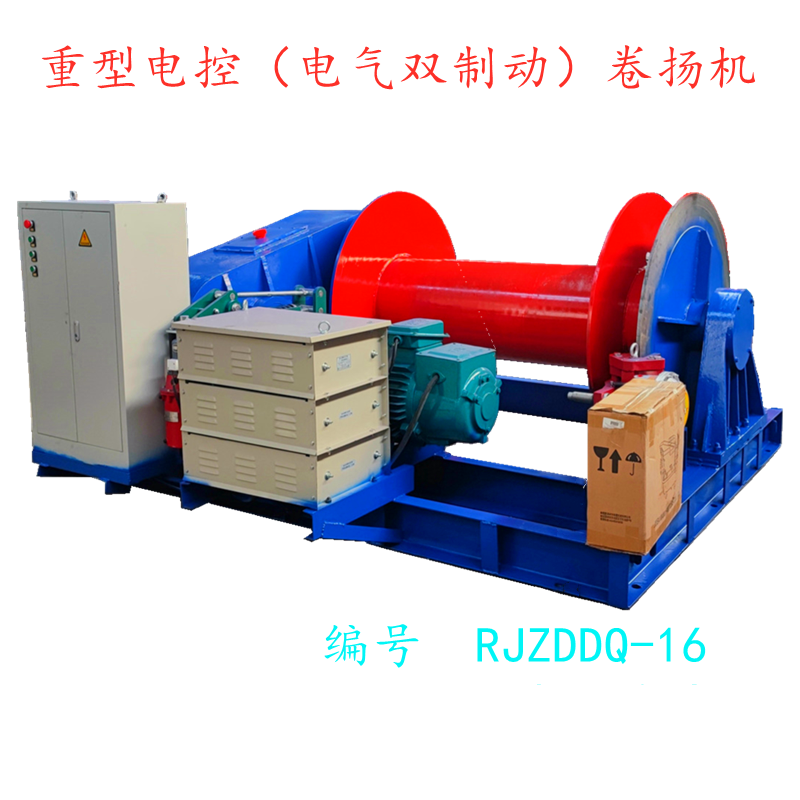
A large mining enterprise needs to hoist ore underground at a depth of -300 meters, with an environmental temperature of 40℃ and humidity of 90%, which places extremely high requirements on the equipment's corrosion resistance and reliability. Zhengzhou Rongjing has customized a explosion-proof electric control winch for them, with core parameters as follows:
(1) Protection Grade: IP65 (motor), IP55 (electrical control box), meeting the dust and water-proof requirements for underground environments.
(2) Material: Coils are made of Q345B low-alloy steel, with hot-dip galvanized surface treatment (coating thickness ≥ 80μm).
(3) Braking System: Dual brake design, main brake is electromagnetic power-off brake, auxiliary brake is hydraulic disc brake, braking torque redundancy ≥150%.
After the project implementation, the equipment operated continuously for 12 months without any faults, with the daily lifting capacity increased from 800 tons to 1200 tons, and the energy consumption reduced by 15% (original equipment power factor 0.75, customized equipment power factor 0.92). Customer feedback: "Zhengzhou Rongjing's customized solution accurately addressed the equipment corrosion issue under the high temperature and humidity environment underground, and the remote monitoring function of the electrical control system significantly reduced the frequency of manual inspections."
4. FAQ: Technical Challenges of Electric Hoist
Q1: What is the core difference between an electric winch and a hydraulic winch?
A1: Electric winches are driven by motors with a wide speed range (0-50Hz) and fast response time (millisecond level), but their pulling force is limited by the motor's power. Hydraulic winches are powered by hydraulic pumps, offering a high pulling force (up to thousands of tons), but with low speed regulation accuracy (usually ±5%) and higher energy consumption.
Q2: How to select the specifications and model of a winch?
A2: Comprehensive consideration is required for tensile force (tonnage), speed (m/min), installation type (horizontal/vertical), and environmental conditions (temperature, humidity, corrosiveness). For example, in construction scenarios, vertical overhead winches are preferred (space-saving), while explosion-proof electric-controlled winches are necessary for mining operations.
Q3: What is the maintenance cycle for an electric winch?
A3: Weekly inspection required for brake pad wear and motor temperature (≤80℃); replace gear oil (GL-5 85W-140) every quarter; conduct overall machine load test (tensile test value ≥ 110% of rated value) annually.